Early winter has its own rules.
Not the dramatic kind, the kind that arrive quietly and simply change what’s possible. October doesn’t announce itself. It just sets different terms.
On the Helen Lake trail, you can see those terms laid out in front of you. Bow Lake sits below in clean blue-grey stillness. The Bow River gathers itself at the outlet, the place I’ve crossed later in the season on the way toward Crowfoot Glades. And beyond that, the glades themselves, terrain I know well on skis, waiting for deeper winter.
It’s all one landscape, but it holds multiple versions of itself at once: summer trail, winter travel lines, spring melt routes. That layering always makes me pause. It reminds me that conditions don’t just change the surface, they change what skill looks like.
And that’s what I love about October. It forces you into a different relationship with time.
The pace isn’t something you choose. It’s something you accept.
The trail begins gently, winding through forest with a steady, honest climb. Early on there are the usual small crossings, narrow creeks and drainages that are easy in summer but deserve attention once winter starts building bridges and hiding water beneath snow. I moved slowly through that section, watching for hollow spots, listening for the subtle sound of flow underneath, testing the surface when it didn’t feel solid.
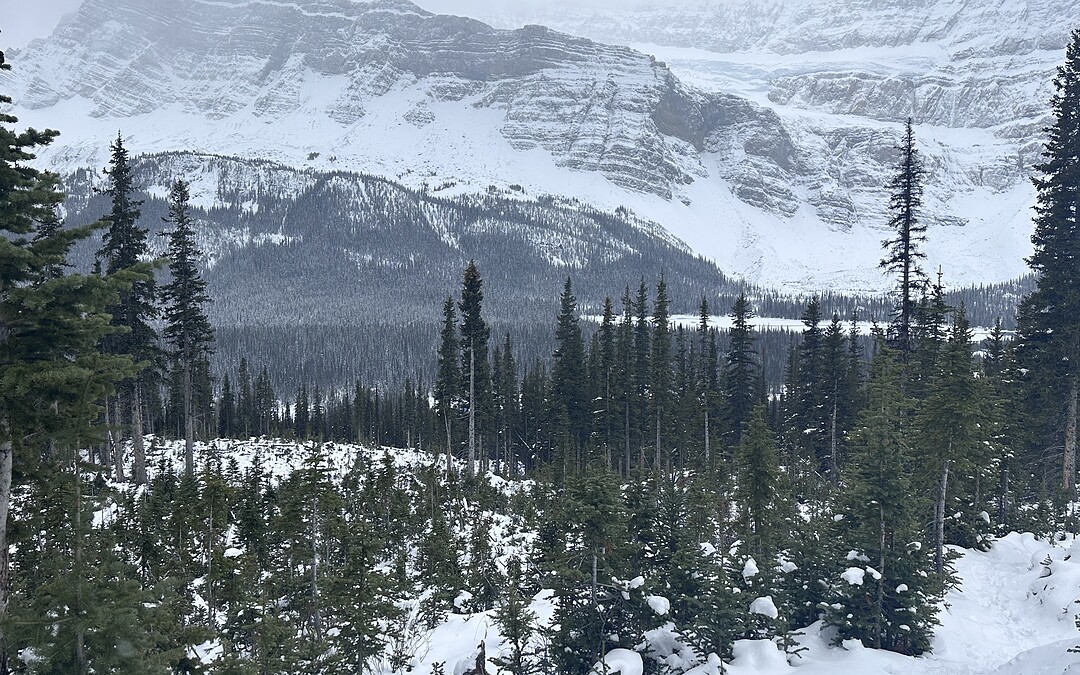
The snow showed up early, then deepened with elevation. At first it was just soft coverage, enough to quiet the trail, enough to erase detail. But by the time I was pushing higher, I was breaking trail through close to a foot of fresh snow, no snowshoes, just boots.
That changes everything.
Without flotation, every step costs. You sink, lift, push forward, repeat. The trail stops being something you travel on and becomes something you travel through. The pace slows not because you’re tired, but because the terrain is asking for a different kind of movement. It’s not negotiable. It’s just physics.
There’s a moment on days like this when you stop wishing the conditions were different and start moving in a way that matches what’s in front of you. That shift always feels like the real beginning of the day.
As I climbed toward treeline, the snow started to vary. In sheltered pockets it was deep and soft, almost weightless. On exposed rolls it was more compacted, shaped into ripples where the wind had been moving across it. The contrast is one of the clearest tells in early winter: the same storm can leave three completely different surfaces depending on aspect and wind.
Above treeline, the landscape opens, and so does the responsibility.
Wind has more room. Visibility changes quickly. The slope angles begin to matter more. My pace slowed even further, not just because of the snow depth, but because everything up there asks to be read. I paid attention to where the snow was smooth versus textured, where it had drifted, where it had been stripped. I watched for subtle hardness under the surface. I kept checking my body — temperature, sweat level, how much effort I was spending just to keep moving forward.
The steady climb became less about reaching a lake and more about staying aligned with the day.
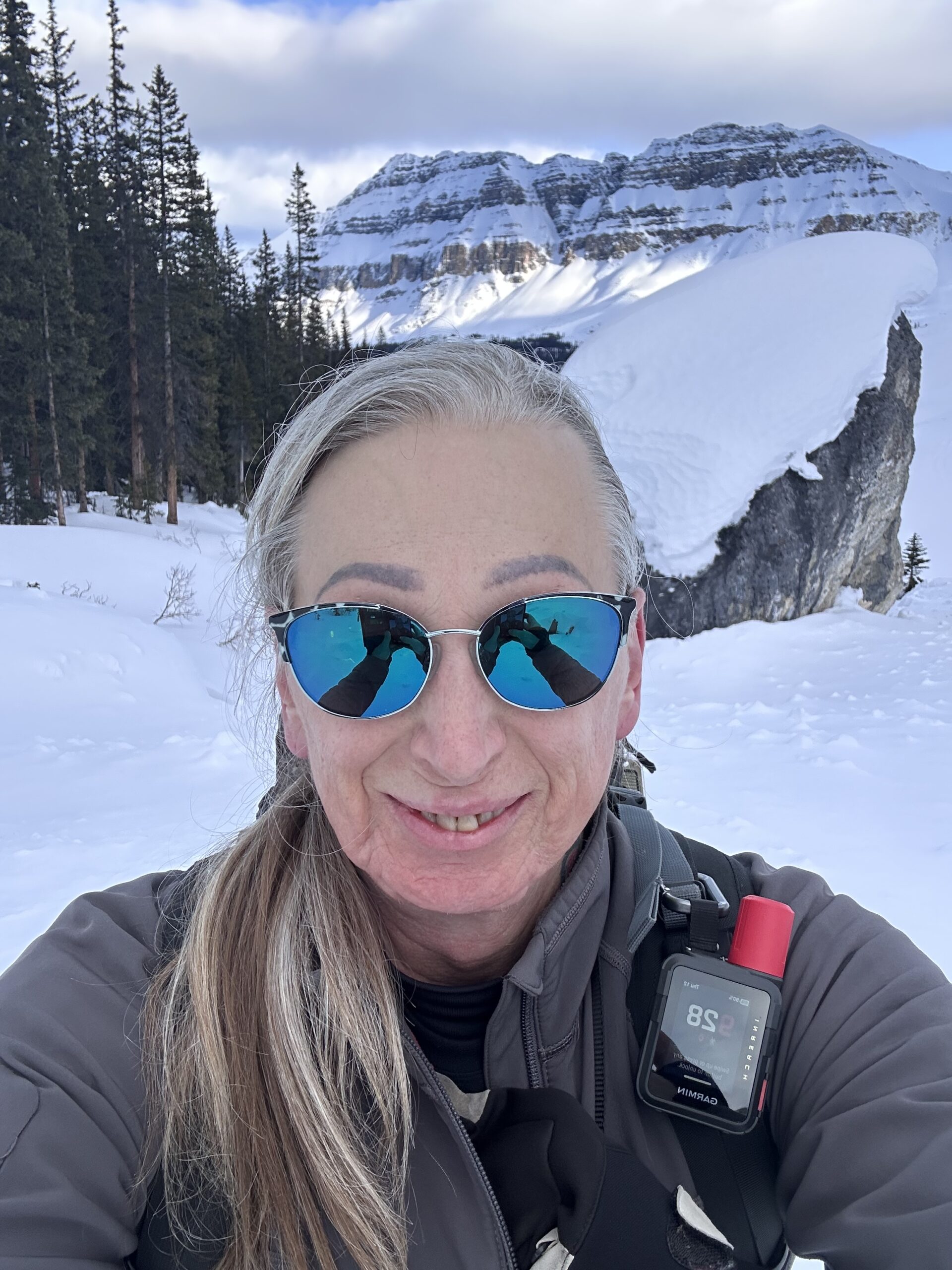
Helen Lake arrived like a quiet basin, snow-covered, softened, unmistakable even without seeing water. In summer it’s a bright, open destination. In October, it feels like a pause point: a wide space that gathers weather and holds silence.
From there, the push to Katherine Lake felt like commitment to the same principle: don’t rush. Don’t fight. Keep moving well.
Breaking trail in deep snow is strangely meditative. It takes your mind away from distance and puts it into repetition: step, breath, step, breath. And because I was alone, there was no external rhythm to borrow — no conversation to mask fatigue, no shared momentum. Just the pace that made sense for the conditions and the time of year.
At some point I realized I wasn’t thinking in kilometres at all. I was thinking in steps.
When I reached Katherine Lake, it didn’t feel triumphant. It felt still. Like the day had narrowed everything into a single, simple kind of presence, and the lake was just where that presence could settle.
I stood for a while without doing much of anything. The snow had softened the whole basin. The wind moved lightly across the surface. Everything felt muted and clean.
And what I noticed most wasn’t the view, it was the feeling of arriving without urgency. The feeling of having reached the far point of the day without pushing myself into a corner.
That’s what pacing gives you. Not speed, clarity.
A way to arrive with enough calm left to turn around and do the work again.
On the way back, my track was a thin thread through the snow. It made the return easier, but the effort was still real, just quieter now. Breaking trail teaches you something practical: the same distance will take longer, and the return is never guaranteed to be easier unless you leave enough energy for it.
As Bow Lake came back into view, I could see the river outlet again, and the line toward Crowfoot Glades, places I’ve moved through in other seasons, under different rules. It reminded me that the mountains are never one thing. They’re a whole conversation across time.
And October is part of that conversation.
It’s the season that teaches you something simple and durable:
some days don’t reward force. They reward rhythm.
Not just in snow, but in everything
This was a personal day, the kind of outing I choose for myself , and it’s different from the way I design guest experiences.
When I guide, the focus is always calm pacing, steady terrain choices, and creating an experience that feels supported from start to finish.
If you’re exploring thoughtful travel in the Rockies, you’re welcome to begin a conversation.
Certified private hiking guide and professional interpretive practitioner based in the Canadian Rockies. With over 25 years of four-season mountain experience, she offers thoughtfully paced hiking experiences that help active adults explore mountain landscapes with care, confidence, and understanding. Meet Niki