The sky was clear enough that morning light felt sharp, the kind of winter clarity that makes everything look closer than it is.
We met in the cold with that familiar mix of excitement and uncertainty people bring to their first steps into snow. The group was small, packs snug, snowshoes clipped on. Someone adjusted a neck warmer and said, “Okay… this is already prettier than I expected.”
We started moving through the trees at an easy pace, the trail quiet under fresh snow. That’s one of my favourite things about winter days like this, the way the forest immediately softens sound. Conversation becomes smaller. Footsteps become rhythm. The whole group settles without being asked.
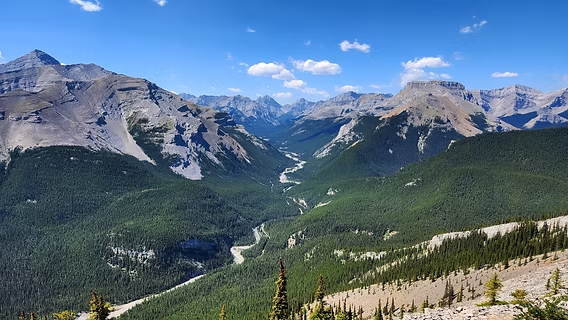
As we climbed, the views opened in little windows. A ridge line appeared through the trees. A valley dropped away, blue-white and wide. Someone stopped and said, almost laughing, “I can’t believe we’re here.”
It wasn’t a hard day. But winter makes even simple days feel real. You can’t fake comfort in cold temperatures. You can’t ignore your layers. You can’t pretend you’re not thirsty because you’ll feel it later. Everything asks for a little more honesty.
And that’s what makes winter so good at teaching.
We reached a small clearing, a natural pause point where the trees thinned and the terrain flattened. Everyone had that warm glow you get when your body finds its rhythm: cheeks pink, breathing steady, eyes bright.
“Let’s circle up for a moment,” I said. “If you need water, a snack, or want to add a layer, go ahead.”
Zippers opened. Gloves came off. One guest said, “I didn’t think I’d be warm enough — but I’m actually perfect.”
“That means you’re moving well,” I said. “Winter likes steady.”
Someone laughed. “Winter likes steady. Noted.”
I smiled, and then I offered the group something small, not a lesson, just an invitation.
“Before we start,” I said, “close your eyes for one breath.”
They did.
“Take a slow inhale… hold it… and exhale.”
We stood in stillness for a moment. You could hear snow settling in the trees.
“You can almost taste the cold, right?” I said.
A couple of people nodded.
“Winter sharpens your senses,” I said. “And it asks for something very specific from everything that lives here.”
I paused and then offered the theme in the simplest way:
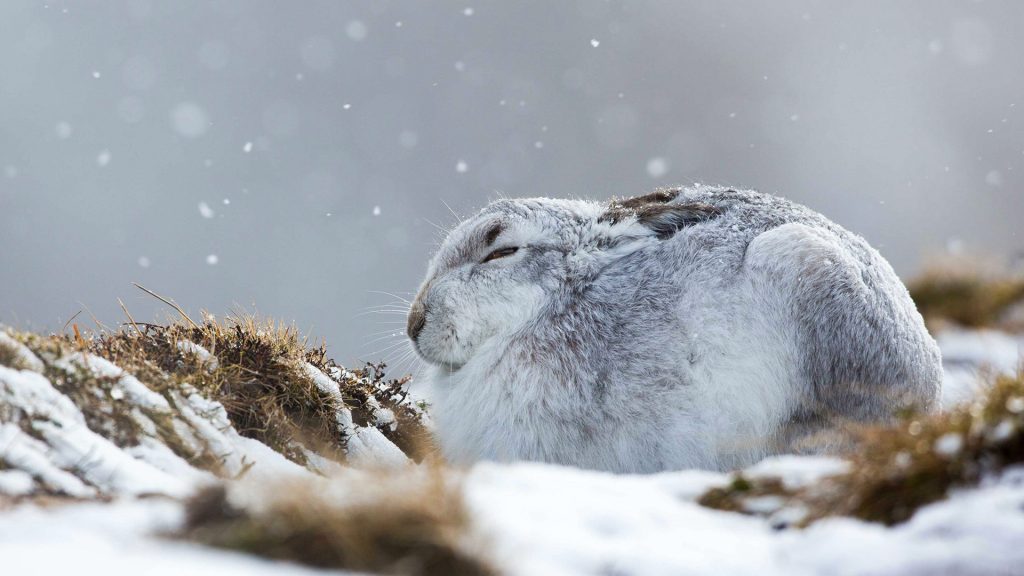
“In the Rockies, winter survival depends on awareness, and the snowshoe hare is a perfect example of that.”
That’s when I pulled a snowshoe hare pelt from my pack.
The effect is immediate every time. People lean in. Curiosity comes alive. Even the quietest guest reaches out.
“Ooooh,” someone said softly, running their fingers along the fur. “It’s so… soft.”
“Her awareness starts with the one thing everybody notices first,” I said. “Her coat.”
I let the pelt move around the circle, hand to hand. A guest held it against their mitten like they were testing it.
“In summer she’s brown,” I said. “In winter she turns white.”
Someone’s eyes widened. “So, she just… becomes snow?”
“Almost,” I said. “Out here, we call her Hare-yet Houdini, because she disappears so well.”
That got a laugh, the kind that warms a group instantly.
I asked one guest to drop the pelt gently onto the snow.
They did, and for a second it blended so completely into the surface that another guest stepped forward and said, “Wait, where is it?”
The group laughed again.
“Exactly,” I said. “One snowfall and — POOF — one less visible resident.”
“But here’s what most people don’t know,” I added. “That coat isn’t only camouflage. It’s insulation too.”
A guest asked, “How does fur actually do that?”
“Here’s the secret,” I said. “Every hair is hollow, like a tiny thermos bottle trapping heat.”
Someone made that quiet sound of appreciation people make when something is both simple and brilliant.
“Even warmth is awareness,” I said. “It’s responding to winter, not muscling through it.”
We stayed light and playful for a moment, because that matters too. Winter trips don’t need seriousness to be meaningful.
Then I said, “But awareness isn’t just something she wears, it’s something she does.”
I told them how sometimes her best strategy isn’t running.
It’s stillness. Freezing so completely that even a predator can pass right by.
A guest said quietly, “That’s… kind of beautiful.”
“It is,” I said. “Stillness is its own kind of awareness.”
Then I pulled out the photo of her feet.
“Look at these,” I said. “Nature’s original snowshoes.”
One guest looked down at their own snowshoes and grinned.
“So we stole her whole thing.”
“Completely,” I said. “She glides across powder while other animals punch straight through.”
“It’s not strength,” I added. “It’s knowing how to move.”
And then I kept it simple, a gentle bridge, not a deep one.
“We all have days like that too,” I said. “When changing how we move through something makes the difference.”
Someone asked, “So what hunts her?”
The guesses came quickly: fox, coyote, owl, lynx.
“You’re all right,” I said. “Just about everything hunts her… including the lynx.”
When I held up the lynx photo, the group got quiet.
Because winter suddenly felt more real, not scary, just alive.
“And here’s the wild part,” I said. “She can see almost behind her own head. Her field of view is huge.”
Someone said, “That would stress me out.”
I laughed. “It might. But for her, it’s survival.”
“Imagine noticing that much,” I said. “The things beside you, behind you… the small shifts most of us miss.”
We could have stayed there all day. But the best interpretive moments don’t take over the trip — they deepen it and then you keep moving.
“Alright,” I said, “let’s carry that awareness with us as we continue.”
Packs went back on. Snowshoes tightened. And something about the group shifted, not into solemnity, but into attention.
As we moved, people started pointing things out.
“Are those hare tracks?” someone asked.
We stepped closer and looked together: two large hind-foot prints ahead of two smaller front prints. Clean and clear in fresh snow.
“I would’ve walked right past that,” a guest said.
“That’s winter’s invitation,” I said. “You start noticing.”
A little later someone paused and said, “The light is different here.”
It was, filtering through the trees in pale gold bands, turning the snow surface into a textured map: sparkles in one pocket, smooth wind sheen in another.
As the trail rose, the views opened again, ridge lines, valley depth, the quiet geometry of winter slopes. Someone took a photo and said, “I’ve never seen this place look like this.”
And then, almost as a side comment, another guest said:
“I didn’t realize how much I miss when I’m always trying to get somewhere.”
No one responded right away. Not because it was too deep, but because it was true.
The forest doesn’t demand reflection. It just offers it.
By the time we turned back, everyone looked different than they had at the trailhead — not exhausted, not transformed in some dramatic way, just softer. More settled. More present.
The kind of shift winter gives when you move steadily and let the day unfold.
And I kept thinking about the hare, how she survives winter through tiny decisions: coat, stillness, timing, movement.
Not force. Not drama.
Awareness.
And honestly, that’s what the best days in the mountains ask of us too.
If you’re exploring thoughtful travel in the Rockies, you’re welcome to begin a conversation.
Certified private hiking guide and professional interpretive practitioner based in the Canadian Rockies. With over 25 years of four-season mountain experience, she offers thoughtfully paced hiking experiences that help active adults explore mountain landscapes with care, confidence, and understanding. Meet Niki