Wildlife corridors in the Bow Valley are not abstract conservation concepts. They are active migration routes that cut across highways, valley bottoms, and popular hiking areas every day. When tourism pressure increases, those corridors narrow in practical ways most visitors never see.
If you spend time in Banff National Park long enough, you begin to notice how infrastructure and wildlife coexist uneasily in the same terrain.
What Wildlife Corridors Actually Do
The Bow Valley is a movement landscape.
Elk shift between seasonal grazing zones.
Wolves follow prey patterns.
Bears move between berry slopes and river corridors.
Cougars track quietly along forested benches above town.
Wildlife migration routes Rockies depend on connected terrain. When those connections are severed, populations become isolated. Isolation reduces genetic diversity. Over time, that weakens ecological integrity Banff was established to protect.
This is not theoretical. It is structural.
The Trans Canada and the Overpass System
The TransCanada Highway runs directly through the Bow Valley. Without intervention, it would function as a hard barrier.
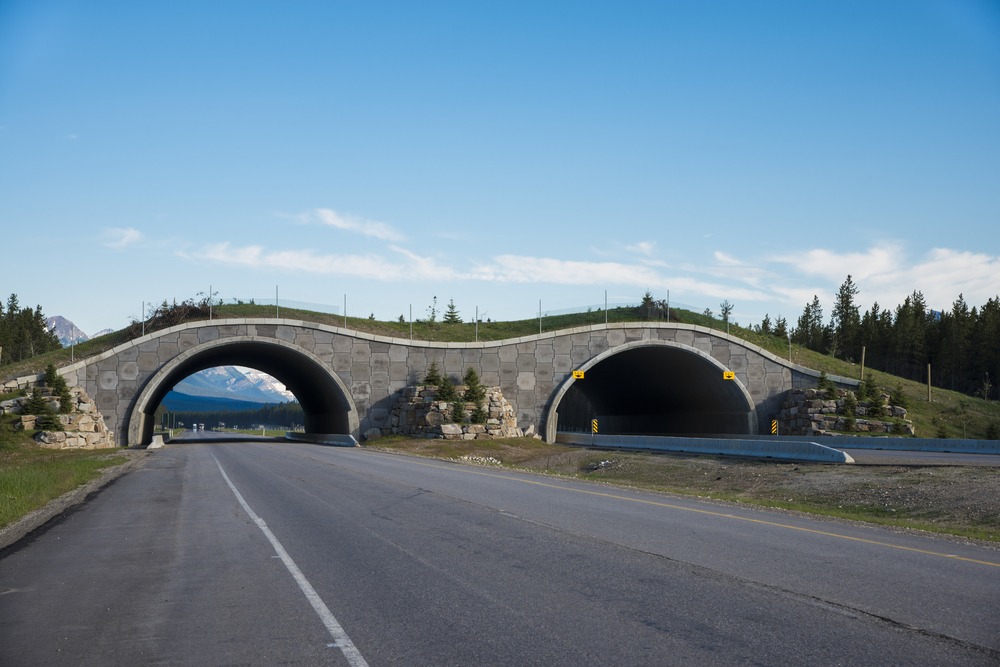
The TransCanada wildlife overpass system was designed to counter that. Broad vegetated bridges and underpasses allow animals to cross without entering traffic. Cameras confirm regular use by bears, elk, deer, and predators.
But here’s what is less discussed.
Highway crossings are only one part of the equation. Corridors also extend through forested valley bottoms, riparian areas, and side drainages that are increasingly popular with hikers, cyclists, and photographers.
Infrastructure solved one pressure point. Tourism creates others.
Banff’s crossings are now a global reference point in road ecology. Parks Canada notes Banff has the highest concentration of wildlife crossing structures and highway fencing in a single location, supported by the longest ongoing monitoring program—and delegations regularly visit to see what’s working here and apply it elsewhere. This matters because Parks Canada is legally required to treat ecological integrity as the first priority in national park management decisions. In the bigger picture, the Bow Valley is also part of a continental connectivity story—what Yellowstone to Yukon describes as keeping habitat connected along the spine of the Rockies.
A Real Route Decision in Late Spring
In late May, I had a private group hoping to explore a lower-elevation trail near the Bow River. Snow was gone at valley bottom. Early season hiking looked ideal.
But that corridor is also a transitional wildlife movement zone.
Tracks were fresh. Scat was recent. The vegetation was just beginning to green, which attracts ungulates and the predators that follow them.
We chose a different objective.
Not because the trail was closed.
Not because of immediate danger.
Because consistent human presence in a narrow corridor during sensitive periods compresses wildlife movement.
Instead, we shifted to a higher, more open route where human use is already concentrated and wildlife movement patterns differ seasonally.
Season matters here as well. Wildlife movement, visitor pressure, and route choice all shift through the year across Banff, Lake Louise, and the wider Rockies. For a broader look at how those seasonal patterns unfold, see When Is the Best Time to Visit the Canadian Rockies.
That’s ecological responsibility practiced quietly.
Most visitors would never know the difference. The day still felt full and satisfying. But the decision protected margin for something larger than our group.
Tourism Pressure Is Not Always Obvious
When people think of overcrowding, they picture Lake Louise in July. I’ve written about that directly in Overcrowding at Lake Louise.
Corridor pressure is different.
It happens when:
-
Informal social trails widen into braided paths.
-
Dogs move off-leash in valley bottoms.
-
Photographers leave established trail to track wildlife.
-
Sunrise and sunset visits cluster along river flats.
None of these feel dramatic individually. But cumulative disturbance changes animal movement timing and route selection.
Wildlife corridors Bow Valley function best when disturbance is predictable and spatially contained.
Unpredictable spread reduces effectiveness.
Ecological Integrity in Practice
Ecological integrity in Banff is a management principle, not a slogan. It means ecosystems function with minimal impairment from human activity.
For a visitor, that translates into small choices:
-
Staying on established trails.
-
Respecting seasonal closures.
-
Not pressing deeper into low-elevation forest in spring.
-
Avoiding wildlife approach, even at distance.
In my own guiding practice, this shows up in route design.
I avoid certain valley bottom corridors in peak wildlife movement periods. I prefer terrain where impact is already concentrated rather than expanding new footprint. I maintain conservative spacing when wildlife is observed rather than shifting into pursuit behavior.
There is no announcement. No lecture. Just calm adjustment.
What Most Travellers Overlook
Active adults hiking Canada often assume that protected park status equals ecological stability.
Protection reduces industrial development. It does not eliminate tourism impact.
Banff is one of the most visited national parks in North America. Every parking lot expansion, shoulder pullout, and social trail changes animal behaviour incrementally.
The wildlife migration routes Rockies depend on are dynamic. They respond to pressure.
That does not mean visitors should avoid the park.
It means presence should be thoughtful.
Infrastructure Is Only Part of the Solution
The TransCanada wildlife overpass is a remarkable engineering achievement. It reduces wildlife-vehicle collisions and reconnects habitat.
But corridors are not only concrete structures. They are living landscapes.
Riparian benches along the Bow River.
Forested transitions below Cascade.
Open flats near Vermilion Lakes.
When we treat every accessible space as recreational terrain, corridor function narrows.
When we concentrate use intelligently, corridors remain viable.
That distinction matters
Sharred Resposibility
As a guide, my responsibility extends beyond reaching viewpoints. It includes understanding seasonal wildlife movement, reading sign, and choosing routes that preserve ecological function.
Visitors share that responsibility too, even if they never use the phrase “ecological integrity.” You don’t have to be a biologist to respect a corridor. You just have to recognize that your route overlaps with another life moving through the same valley.
Wildlife corridors Bow Valley are part of what keeps this place alive. The overpasses are visible. The quieter movement under the forest canopy is not.
In a future article, I’ll zoom out to the bigger connectivity picture Yellowstone to Yukon points to, and what that scale of habitat connection looks like here in practical terms
When travel decisions consider both scenery and ecological function, the landscape holds up over time. That is how I approach guiding here.
Frequently Asked Questions About Wildlife Corridors in the Bow Valley
What is a wildlife corridor in the Canadian Rockies?
A wildlife corridor is a connected stretch of landscape that allows animals to move safely between different habitats. In the Bow Valley, these corridors help species such as elk, bears, wolves, and cougars travel between feeding areas, seasonal ranges, and breeding grounds without becoming isolated.
Why are wildlife corridors important in Banff National Park?
Wildlife corridors maintain ecological connectivity across the mountains. When animals can move freely between valleys and habitats, populations remain genetically healthy and ecosystems function more naturally. Protecting these movement routes is one of the ways Banff National Park supports long-term ecological integrity.
How do highways affect wildlife movement in the Bow Valley?
Highways can act as barriers that prevent animals from crossing between habitats. In Banff National Park, wildlife overpasses and underpasses along the Trans-Canada Highway allow animals to cross safely, helping reconnect landscapes that would otherwise be divided by traffic.
How does tourism affect wildlife corridors?
Tourism pressure can narrow wildlife corridors when human activity spreads into valley bottoms and forest benches that animals use for movement. Frequent off-trail travel, dogs off leash, and concentrated visitation in sensitive areas can cause animals to shift their movement patterns or avoid certain routes entirely.
How can hikers help protect wildlife corridors in Banff?
Visitors can reduce disturbance by staying on established trails, respecting seasonal closures, keeping dogs under control, and giving wildlife space. Concentrating use on designated trails helps maintain quieter areas where animals can continue moving through the landscape.
Are wildlife corridors only found in remote areas?
No. Many wildlife corridors pass close to roads, towns, and popular hiking areas. In the Bow Valley, animals often move through valley bottoms and forested benches that overlap with recreational trails, which is why thoughtful visitor behavior plays an important role in maintaining corridor function.
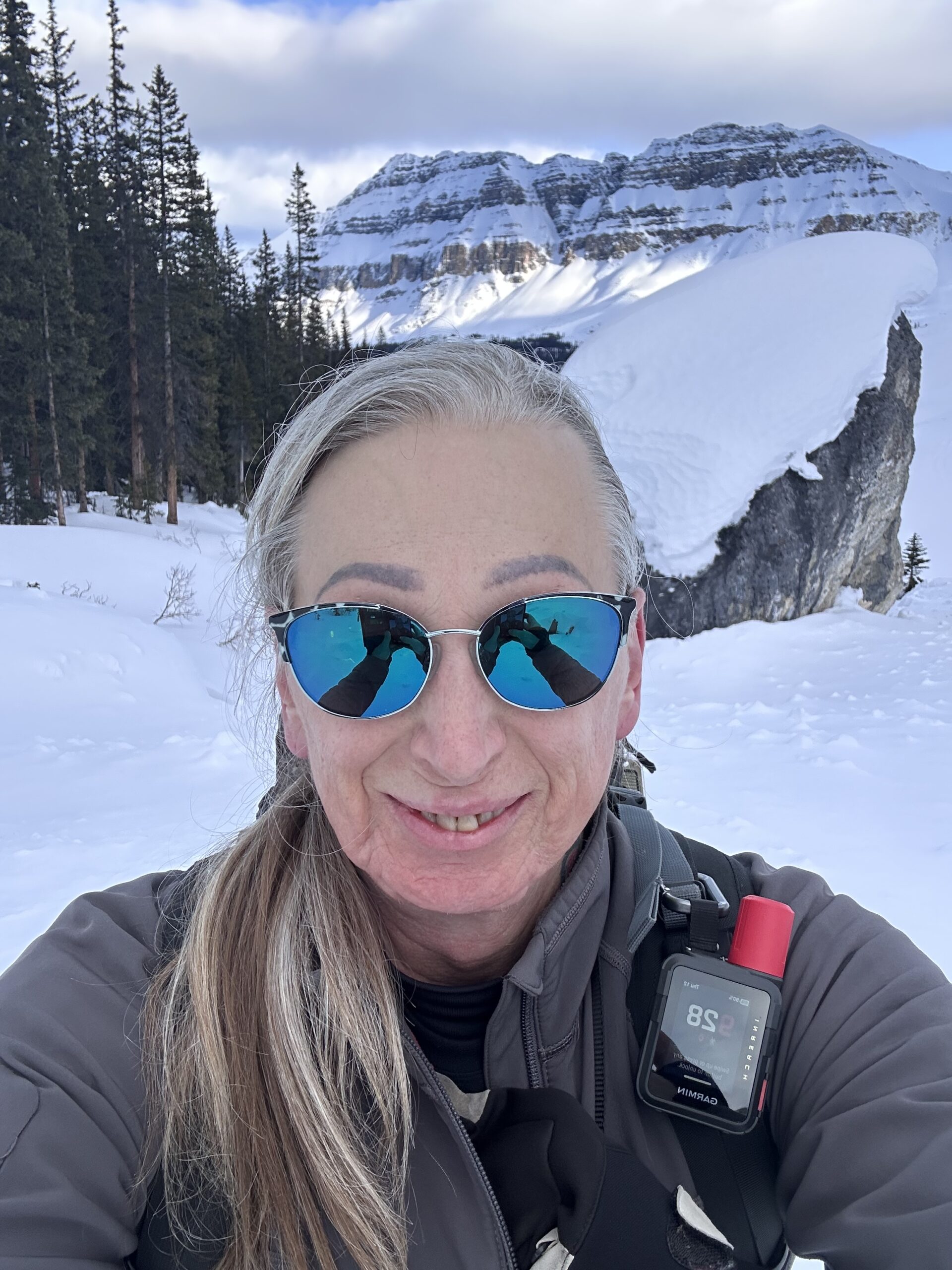
Certified private hiking guide and professional interpretive practitioner based in the Canadian Rockies. With over 25 years of four-season mountain experience, she offers thoughtfully paced hiking experiences that help active adults explore mountain landscapes with care, confidence, and understanding. Meet Niki