It’s a quiet question.
Most people don't ask it out loud, but it sits just beneath the surface when booking a guided hike:
Am I too slow for this?
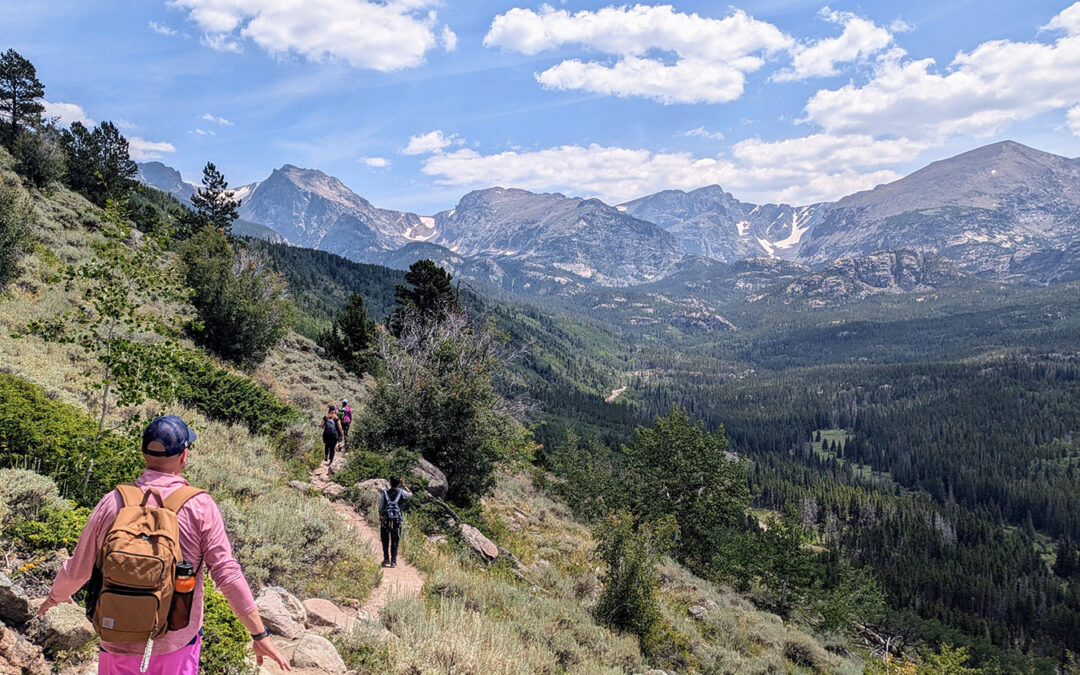
Maybe you’ve felt it before, falling slightly behind on a group trail, noticing others move more easily on the incline, feeling your breathing regulate a little later than everyone else’s. Maybe no one said anything. Maybe the guide was kind. But something shifted internally.
You began measuring yourself against the pace of the day.
And once that happens, the hike changes.
Pace Is Often Structural, Not Personal
When people wonder if they’re “too slow,” they usually assume it’s about fitness or age. But more often, it’s about structure.
In most cases, this has less to do with ability, and more to do with how the day is built.
Most guided hikes, especially group formats, operate on a single shared pace. That’s common on group hikes in places like Banff, Lake Louise, and along the Icefields Parkway, where timing windows and logistics often shape the day. That pace may not be aggressive, but it is fixed. It reflects group logistics, itinerary timing, transportation schedules, and the guide’s own rhythm. Even well-intentioned guides can default to what feels natural for them physically.
When a day is built around one default pace, anyone slightly outside that rhythm can begin to feel like they are compensating.
That doesn’t mean they are incapable.
It means the structure wasn’t built for variability.
If you want a clearer sense of how a day feels when it’s designed differently from the beginning, you may also want to read What a Private Guided Hiking Day Feels Like.
Vacation Pace Is Different From Training Pace
Many active adults over 50 are strong and experienced. They hike regularly, ski, and stay active. The question usually isn’t whether they can do it, but whether the structure of the day fits how they want to move through the mountains.
But they no longer want to “prove” anything.
Vacation pace is different from training pace. It includes room to warm up. Room to notice. Room to regulate breathing without feeling observed. Room to pause before fatigue accumulates instead of after it announces itself.
If you’ve ever felt subtly rushed on a guided hike, it may not have been because you were slow. Sometimes that pressure has less to do with terrain and more to do with how the day was structured. For many people, that is when a guided day begins to feel harder than it should. If that feels familiar, you may also relate to When a Guided Day Feels Harder Than It Should It may have been because the day was designed for efficiency rather than presence.
The Accordion Effect
On many group hikes, pace doesn’t feel fast, it feels inconsistent.
A few naturally faster walkers drift to the front. The guide adjusts slightly to them. The middle compresses. The back works a little harder to close the gap. By the time everyone regroups, the next movement begins.
No one intends for this to happen.
But over the course of a few miles, it creates a subtle pressure. You may not be dramatically behind. You may simply be the last to arrive at each stop.
And when breaks are short or standing, recovery never quite catches up.
That experience has less to do with slowness and more to do with how group dynamics shape rhythm on the trail.
Fitness and Pace Are Not the Same Thing
Being slower on an incline does not mean you are unfit.
It may mean:
-
You warm up more gradually.
-
You regulate breathing deliberately.
-
You prefer steady effort over bursts.
-
You value consistency over speed.
Those are not deficits. They are differences in pacing style.
A comfort-forward day accounts for that from the beginning. It does not wait for someone to struggle before adjusting.
When Pace Is Designed, Not Managed
There’s a difference between managing pace and designing it.
Managing pace means adjusting after someone falls behind.
Designing pace means beginning with enough margin that no one needs to fall behind at all.
That can look like:
-
Starting more slowly than strictly necessary.
-
Building sit-down recovery stops into the plan.
-
Choosing routes that allow for steady rhythm rather than constant grade changes.
-
Leaving room in the timeline so breaks are not compressed.
In practice, that often means slowing the first section before anyone needs it, stopping early rather than late, and choosing terrain where the day can hold a steady rhythm without comparison becoming part of the experience.
When pace is designed intentionally, the question “Am I too slow?” rarely arises, because there is no visible benchmark to measure against.
The day feels coherent rather than comparative.
The Emotional Weight of “Holding the Group Back”
For many adults over 50, the deeper concern isn’t speed. It’s burden.
No one wants to feel like they are holding others back.
That feeling alone can lead to overexertion. People push slightly harder than they need to. They shorten breaks. They downplay fatigue. They hesitate to ask for a slower start.
The result isn’t empowerment. It’s quiet depletion.
And often, the person asking “Am I too slow?” is actually one of the more self-aware members of the group.
You May Not Be Slow. The Structure May Be Tight.
If you’ve asked yourself this question, it doesn’t automatically mean something is wrong with you.
It may mean you’ve experienced a pace that didn’t account for variability. It may mean you prefer steadiness over urgency. It may mean you value breathing room over efficiency.
Those preferences don’t reduce your capability.
They simply change what kind of structure feels aligned.
A Different Kind of Day
On a well-designed guided hike, pace doesn’t feel like something to keep up with.
It feels natural.
Breathing regulates without pressure. Breaks feel restorative rather than abbreviated. Movement feels sustainable rather than slightly stretched. No one arrives last in a way that feels visible.
The question “Am I too slow?” quietly disappears, not because you moved faster, but because the day never required comparison in the first place.
If that question has ever lingered for you, you are not alone. And more often than not, the issue is not your ability.
It is how the day was built.
If you want to understand how that shows up on the trail, When a Guided Day Feels Harder Than It Should is a helpful next read. If you are deciding between formats, Private vs Group Guided Hikes: Which Is Right After 50? explains more. If you are exploring a day built around steadiness rather than comparison, you can also learn more about Private Guided Hiking in the Canadian Rockies
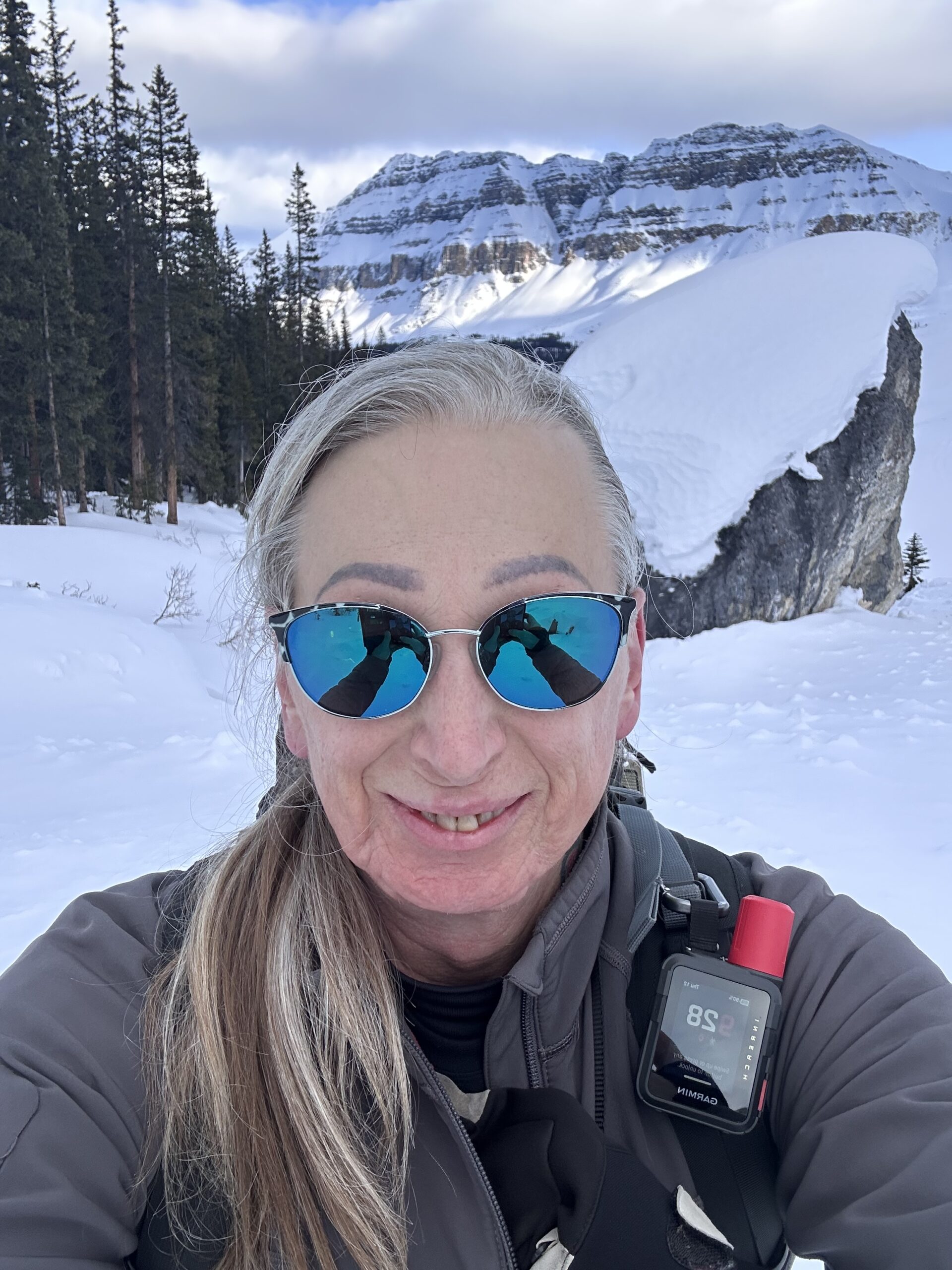
Certified private hiking guide and professional interpretive practitioner based in the Canadian Rockies. With over 25 years of four-season mountain experience, she offers thoughtfully paced hiking experiences that help active adults explore mountain landscapes with care, confidence, and understanding. Meet Niki