When people ask about hiking risk in the Canadian Rockies, the question usually sounds simple.
Is it dangerous?
But beneath that question is something quieter.
Will I be safe?
Will I feel overwhelmed?
Will something happen that I don’t see coming?
The Canadian Rockies look serious. Sharp ridgelines. Fast-moving weather. Wildlife warnings at trailheads. The landscape carries visual intensity.
And yet, on well-defined, non-technical hiking trails in Banff, Lake Louise, Jasper, and along the Icefields Parkway, most days unfold steadily and without incident.
The gap between perceived risk and actual hiking dangers is often wider than people expect.
Understanding that gap changes how the mountains feel.
The Risk People Imagine
Most first-time visitors imagine risk as sudden and dramatic.
A storm rolling in unexpectedly.
A close wildlife encounter.
A slip on exposed terrain.
These events are possible. Mountains are dynamic environments.
But on maintained hiking routes, the kind most travellers walk, these are not the most common sources of strain.
In reality, hiking risk perception is heavily influenced by scenery. The peaks are dramatic. The valleys are steep. The sky feels bigger.
The visual language suggests high consequence.
But the actual hiking dangers most people encounter are quieter and more ordinary.
How Hiking Risk Actually Builds on Trails
On a typical mountain hike, risk rarely begins with a single event.
It builds gradually.
Starting a little too quickly on the first incline because everyone feels fresh.
Waiting to drink water until thirst appears.
Keeping gloves off because “it’s not that cold yet.”
Skipping the first seated break because the group is moving well.
None of these choices are reckless.
But over three or four hours, they compound.
Breathing becomes slightly strained.
Energy dips earlier than expected.
Weather shifts feel more dramatic because reserves are lower.
This is how hiking risk in the Canadian Rockies most often shows up, not as catastrophe, but as compression.That quieter side of mountain risk is part of what How Good Guiding Holds Risk Quietly is really about.
Compression of energy.
Compression of timing.
Compression of flexibility.
Another quiet variable in hiking risk in the Canadian Rockies is water.
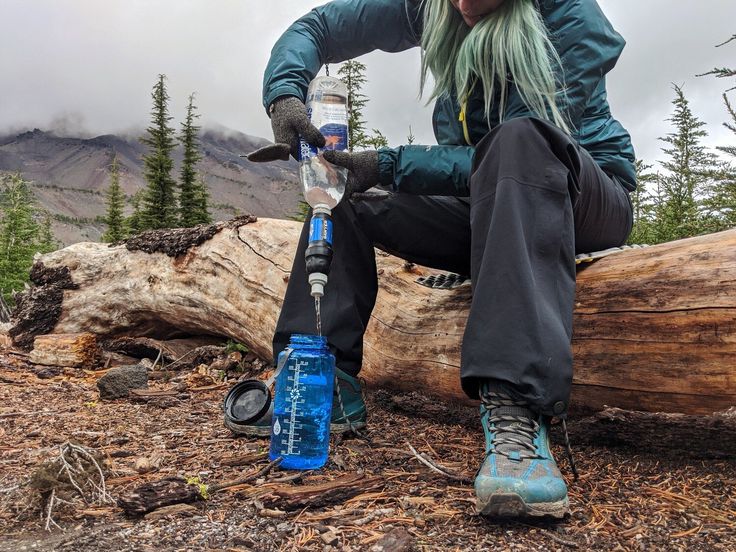
Mountain streams often look pristine, clear, fast-moving, snow-fed. It’s easy to assume that alpine water is automatically safe. But untreated surface water can carry bacteria or parasites, even in remote areas. Wildlife, upstream traffic, and seasonal runoff all influence quality.
The more common issue, however, is not unsafe water, it’s under-hydration.
At altitude, in dry air, people lose fluid steadily without noticing. Cool temperatures can mask thirst. By the time someone feels thirsty, they are often already slightly depleted.
Filtering water is simple with modern tools, and it can extend a day comfortably. But the real protection comes from drinking early and consistently, not reactively.
Like many mountain risks, hydration issues are rarely dramatic. They accumulate quietly, and are easily prevented with attentiveness.
Expectation Pressure and Risk Tolerance
Another layer of risk isn’t environmental at all.
It’s expectation.
When a day is built around a specific endpoint, a named lake, a viewpoint seen online, a landmark with emotional weight — flexibility can quietly shrink.
Breaks shorten.
Turnaround decisions get postponed.
Weather is interpreted optimistically.
Not because anyone is careless.
Because attachment subtly influences risk tolerance.
The mountains haven’t changed. The structure of the day has.
When a hike is framed around experience rather than arrival, pressure drops. And when pressure drops, risk perception shifts with it.
Hiring a Guide Dosen't Remove Risk
There’s another misconception worth addressing gently.
Hiring a guide does not eliminate risk.
Mountains are living systems. Weather still moves across the Bow Valley. Freeze–thaw cycles still affect trail surfaces in shoulder seasons. Altitude still influences hydration and breathing.
What changes with professional guidance is not the existence of risk.
It’s how early decisions are made.
Layer adjustments before hands go numb.
Pacing moderated before breathing becomes labored.
Route adjustments before parking congestion compresses options.
Turnarounds chosen while energy is steady rather than declining.
When judgment is applied early and conservatively, cumulative strain rarely builds.
After more than 25 years guiding in these valleys across all seasons, I’ve found that most mountain strain isn’t dramatic, it’s preventable. The difference almost always comes down to early decisions, preserved margin, and pacing that respects the day rather than tests it.
This is less about heroics and more about timing.
If you’re curious about that framework, I describe it more fully in What Conservative Guiding Looks Like in the Mountains and on the How I Guide page.
Shared Responsibility — Without Alarm
It’s also important to say this clearly, without drama.
Mountain hiking is not an “unsafe system.”
But it is a shared system.
Even on guided hikes, guests remain part of the equation. Hydration still matters. Honest communication about fatigue still matters. Layering and sun protection still matter.
That can include water decisions too. Mountain streams may look pristine, but untreated surface water can still carry contaminants. I carry a simple filtration system on every guided day, so topping up safely is easy.
The larger pattern stays the same: steady hydration, early adjustments, and honest communication tend to keep the day feeling clear.
A well-held day doesn’t remove personal awareness. It supports it.
When people assume that hiring a guide means they no longer need to pay attention to their own energy, cumulative strain can creep in unnoticed. But when attention is shared calmly, not anxiously, days tend to unfold with steadiness.
Most hikes in the Canadian Rockies, especially on non-technical terrain, are not extreme undertakings. They are moderate mountain days. And moderate mountain days respond well to attentiveness.
Risk Tolerance Evolves Over Time
For many active adults, especially over 50, something shifts subtly over the years.
Not strength.
Not capability.
Calibration.
You notice weather patterns earlier.
You recognize fatigue sooner.
You value recovery more deliberately.
Risk tolerance narrows slightly, not out of fear, but out of experience.
But commercial imagery around mountain travel often celebrates boldness, distance, or iconic checklists.
When internal calibration meets external pressure, hiking risk perception can feel amplified.
The terrain hasn’t changed.
Your awareness has.
When structure accounts for that awareness, with steadier pacing, built-in recovery, and flexible endpoints, tension drops noticeably.
Environmental Risk vs Structural Risk
There are real environmental variables in the Rockies:
Rapid weather shifts.
Altitude-related dehydration.
Shoulder-season ice on shaded trails.
Wildlife movement corridors.
Those cannot be eliminated.
But structural risk, how a day is organized around those realities, is human-designed.
For example:
Cold air moving through a pass is environmental.
Standing exposed for 25 minutes without adding a layer is structural.
A long steady incline is environmental.
Pushing pace on that incline because the group wants to “get it over with” is structural.
When structure is calm, environmental variables feel manageable rather than threatening.
That difference is one reason some days feel steady and others feel subtly strained. When a Guided Day Feels Harder Than It Should looks at that pattern from the guest side of the experience.
Why Two Groups Can Have Very Different Experiences
Two groups can hike the same trail on the same day.
One finishes steady and reflective.
The other finishes slightly depleted.
The difference is rarely terrain alone.
It is pacing decisions.
Break rhythm.
Turnaround timing.
Communication clarity.
Early versus late adjustments.
These are not dramatic interventions.
They are subtle calibrations.
When those calibrations happen early, hiking risk in the Canadian Rockies feels proportionate rather than amplified.
Reassurance — Most Mountain Days Are Steady
It’s worth stating plainly:
Most non-technical hikes in Banff, Lake Louise, and the surrounding valleys are not extreme undertakings.
They require preparation.
They require awareness.
They benefit from thoughtful structure.
But they are not inherently dangerous.
What often changes how they feel is not the mountains themselves, it is whether the day has been designed with margin, flexibility, and attentiveness.
When that structure is present, perceived risk softens.
Breathing regulates naturally.
Breaks feel restorative.
Energy remains coherent through the return.
The landscape remains dramatic.
But the experience feels steady.
A More Useful Question
Instead of asking, “Is hiking in Banff dangerous?” a more useful question might be:
How is the day being built?
Are early decisions prioritized?
Is pacing designed rather than corrected?
Is flexibility preserved rather than compressed?
The Canadian Rockies deserve respect.
But they are not waiting to overwhelm anyone.
They respond well to attentiveness.
And when structure supports attentiveness, hiking risk perception aligns more closely with reality.
Questions About Hiking Risk
Is hiking in Banff dangerous?
Most well-defined hiking trails in Banff are not inherently dangerous when approached with preparation and awareness. The terrain is dynamic, but risk typically increases through fatigue, dehydration, or late decisions, not through dramatic exposure on standard routes.
What are the most common hiking risks?
The most common issues are cumulative: under-hydrating, starting too quickly on elevation, weather exposure without early layering adjustments, and pushing past fatigue to reach an endpoint. These variables are manageable when addressed early.
Does hiring a guide make hiking completely safe?
No mountain environment is completely risk-free. A guide does not remove weather, altitude, or terrain variables. What professional guidance changes is timing — pacing decisions, route flexibility, early adjustments, and calm judgment before strain accumulates.
Why can hiking feel riskier than it actually is?
The visual intensity of the Rockies amplifies perception. Sharp peaks and open valleys can make moderate terrain feel more intimidating than it objectively is. When structure is steady and decisions are made early, perceived risk usually softens.
If you’d like to understand how that framework shapes a private hiking day in the Canadian Rockies, you can explore Private Guided Hiking
Because in most cases, the difference isn’t the mountain. It’s how the day is held.
Certified private hiking guide and professional interpretive practitioner based in the Canadian Rockies. With over 25 years of four-season mountain experience, she offers thoughtfully paced hiking experiences that help active adults explore mountain landscapes with care, confidence, and understanding. Meet Niki