If you’ve ever returned from a guided hike feeling more tired than the terrain justified, you’re not alone.
Not physically spent in a satisfying way.
But subtly depleted.
The incline began sooner than expected.
The first stop came later than your lungs preferred.
You stood while listening, when what you needed was to sit.
You weren’t sure how much uphill remained.
You hesitated to ask how bathroom breaks would work.
You drank water when you remembered, not when your body needed it.
You’re capable.
You walk regularly.
You’ve traveled widely.
So why did the day feel slightly misaligned?
Most people assume the answer is personal.
Maybe I’m not as fit as I used to be, maybe I’ve changed.Maybe guided tours just aren’t for me anymore.
Sometimes it shows up as a quieter question: Am I too slow for guided hikes. If that questions feels familiar, you may also want to read Am I Too Slow for Guided Hikes?
In most cases, it isn’t about fitness.
And it isn’t about age.
It’s about how the day was designed.
This is one expression of a broader structural mismatch many capable adults notice when tours start to feel subtly off. What follows is the on-trail version of that pattern: how it shows up in the rhythm of a single day.
The Quiet Friction of Design
Many guided days are organized around movement efficiency.
A route must be completed.
A schedule must be respected.
A trailhead parking window may influence timing.
A shuttle must be caught.
A viewpoint must be reached before crowds thicken.
These are the pressures that shape group hiking dynamics even when the guide is thoughtful.
Even thoughtful guides often work within structures that prioritize forward motion.
When forward motion becomes the organizing principle, other elements quietly adjust around it:
Breaks are brief and often taken standing.
Educational moments double as rest stops.
Layer changes happen after someone gets cold.
Water is mentioned once, and people quietly self-manage the rest.
The downhill is managed for time rather than for knees.
Phrases like “just around the corner” are offered as encouragement.
None of this is careless.
It’s structural.
For many adults over 50, even those who are quietly capable, the body asks for something slightly different:
A gradual warm-up at altitude.
Early and frequent micro-pauses.
Intentional sit-down recovery stops.
Clear communication about what remains.
Permission to move without performance.
When those elements aren’t accounted for, the nervous system never quite settles.
The day feels subtly effortful instead of restorative.
The Accumulation Effect
On many trails, the friction is small but cumulative.
The incline begins immediately instead of progressively.
The first stop comes after twenty minutes rather than ten.
No one suggests sitting.
Water isn’t prompted until someone asks.
The group moves through a breezy overlook without adding a layer first.
The downhill quickens to “make good time.”
By midday, the body has been compensating for hours.
None of these moments are dramatic on their own. Together, they change the tone of the day. This is part of why Margin Is What Makes A Day Feel Calm matters so much.
This is not about slowness.
It is about rhythm.
Pace is not a measure of strength.
It is a design decision.
When pace is structured around breathing patterns rather than itinerary pressure, something shifts.
When hydration is prompted before thirst appears, headaches don’t develop.
When breaks distinguish between listening and recovering, joints soften.
When elevation is described honestly, trust remains intact.
The body relaxes because it is being accounted for.
The Things People Rarely Say
In private conversations, guests often name concerns they’ve never voiced on past tours:
What if the incline is steeper than it sounds?
What if I need to adjust my layers more often than others?
What if I don’t want constant information?
What if I’m quietly anxious about wildlife but don’t want to appear worried?
Many guests also carry a quiet question that rarely gets handled well on standard tours: how bathroom breaks actually work when there isn’t an outhouse.
For women especially, this isn’t a small detail. It affects comfort, hydration decisions, pacing, and whether the day feels relaxed or quietly stressful. When it isn’t named, people often drink less than they should, or hold discomfort for hours, simply to avoid having to ask.
This is one expression of a broader structural mismatch many capable adults notice when tours start to feel subtly off. What follows is the on-trail version of that pattern: how it shows up in the rhythm of a single day. It’s a small design choice, but it changes the emotional tone of the day.
These are not dramatic fears.
They are questions of dignity.
When the day anticipates these needs, through transparent communication, proactive layering, thoughtful route choice, realistic emergency context, and unhurried pacing, the experience feels different.
Not easier.
Attentively held.
Crowds and Compression
High-traffic locations introduce another subtle pressure.
Noise increases.
Space narrows.
Photo-taking becomes hurried.
Movement compresses.
Even capable hikers can feel slightly rushed when the environment itself encourages throughput.
We address it directly in the planning conversation, alongside layering, pacing, altitude response, and trail choice, so nothing becomes an awkward surprise on the day. We also supply a simple, discreet solution so guests do not have to improvise or feel self-conscious.
Discernment, Not Decline
Very little changes in capability for active adults.
What often changes is tolerance for unnecessary friction.
You may no longer enjoy:
Rigid timelines.
Standing for long explanations.
Feeling subtly hurried on descents.
Not knowing how much effort remains.
Not because you are less able.
Because discernment has increased.
Experience teaches you the difference between meaningful effort and performative urgency.
Not every guiding structure accounts for these variables.
Some do.
The difference is rarely dramatic, but it is often felt.
If you’ve ever wondered why a guided day felt harder than it should have, the answer is rarely personal decline.
It is usually a matter of design.
If this feels familiar, you’re not alone.
These patterns are structural, and they can be accounted for.
If you’re curious what a day feels like when those elements are designed differently, What a Private Guided Hiking Day Feels Like offers a more grounded picture of how the experience can unfold.
If you’re weighing whether a more private format would change the feel of the day, you may also want to read Private vs Group Guided Hikes: Which Is Right After 50?
And if you want to understand how that kind of steadiness is created, What Conservative Guiding Looks Like in the Mountains explores the structure behind it.
If you’re exploring thoughtful travel in the Rockies, you can learn more about Private Guided Hiking in the Canadian Rockies
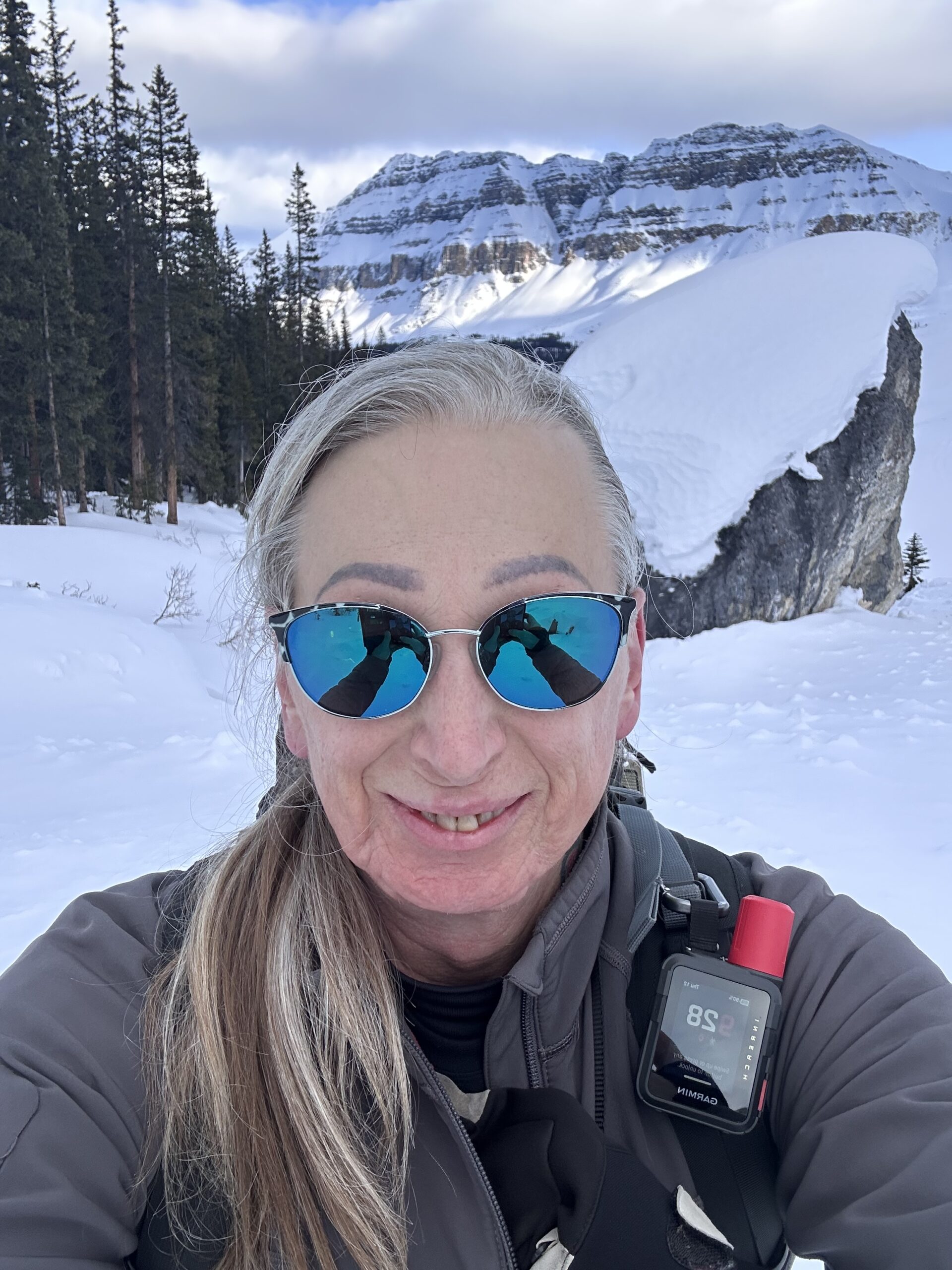
Certified private hiking guide and professional interpretive practitioner based in the Canadian Rockies. With over 25 years of four-season mountain experience, she offers thoughtfully paced hiking experiences that help active adults explore mountain landscapes with care, confidence, and understanding. Meet Niki