People often ask about the best time to visit Banff for hiking, expecting a simple answer. In reality, hiking conditions in the Canadian Rockies change gradually through the season, and what feels like the “best time” depends on snowpack, trail elevation, crowd patterns, and what kind of day a person hopes to have.
For many thoughtful travelers, the real question is not just when trails are open, but when hiking in Banff feels most enjoyable. That can mean stable weather, accessible trails, and enough space on the path to move at a comfortable pace.
Most of the people I guide are fit, experienced travelers who don’t want to rush—so the “best time” is usually the season that protects pace, comfort, and the kind of day they came for.
Timing Banff hiking well takes more than checking average weather. Snowline, trail aspect, crowd timing, and daylight all influence whether a hike feels steady and spacious or rushed and compromised.
Conditions can also vary significantly between places like Banff townsite, Lake Louise, and the Icefields Parkway, where elevation and weather patterns shift quickly across relatively short distances.
Over time you begin to notice patterns. Snow melts from south-facing slopes first. High passes hold winter long after the valley is green. Crowds build quickly once conditions stabilize. Understanding these seasonal rhythms makes it much easier to plan a trip that actually matches your expectations.
If you're planning a broader trip beyond Banff itself, When Is the Best Time to Visit the Canadian Rockies looks at how conditions unfold across Banff, Lake Louise, Jasper, and the Icefields Parkway.
For a broader overview of how timing fits into a full itinerary, see How to Plan a Trip to the Canadian Rockies
A Simple Planning Framework That Works Better Than “Pick a Month”
A more useful way to plan Banff hiking is to reverse the usual approach. Start with elevation, not the calendar. A valley trail and an alpine pass can be in completely different seasons on the same day. Choose the experience first, then the season that supports it, and only then the trail. When you plan that way, you usually get more of what you came for: better walking, better views, and a day that feels like yours.
Across the Rockies, that might mean choosing a quieter valley trail near Banff or the Bow Valley, or heading toward higher terrain around Lake Louise or along the Icefields Parkway when conditions align.
Banff Hiking Season by Month: What Conditions Are Really Like
If you want the simplest planning lens, this is it.
April–May
Lower valley hiking begins. Expect lingering snow in shaded forest sections and higher terrain.
June
Trail access expands quickly. Snow still lingers at elevation, and creeks run high during melt.
July–August
The most reliable alpine access of the year, along with the highest visitor numbers.
September
Cooler temperatures, calmer trails, and often excellent hiking conditions.
October
Shorter days and early snow at elevation. Lower elevation trails can still offer excellent walking.
Higher elevation areas such as Lake Louise and the Icefields Parkway typically see snow linger longer into early summer than trails around Banff and the Bow Valley.
Those are broad patterns, not promises. In the Rockies, elevation and aspect matter as much as the calendar.
Altitude Is Another Factor Visitors Often Notice
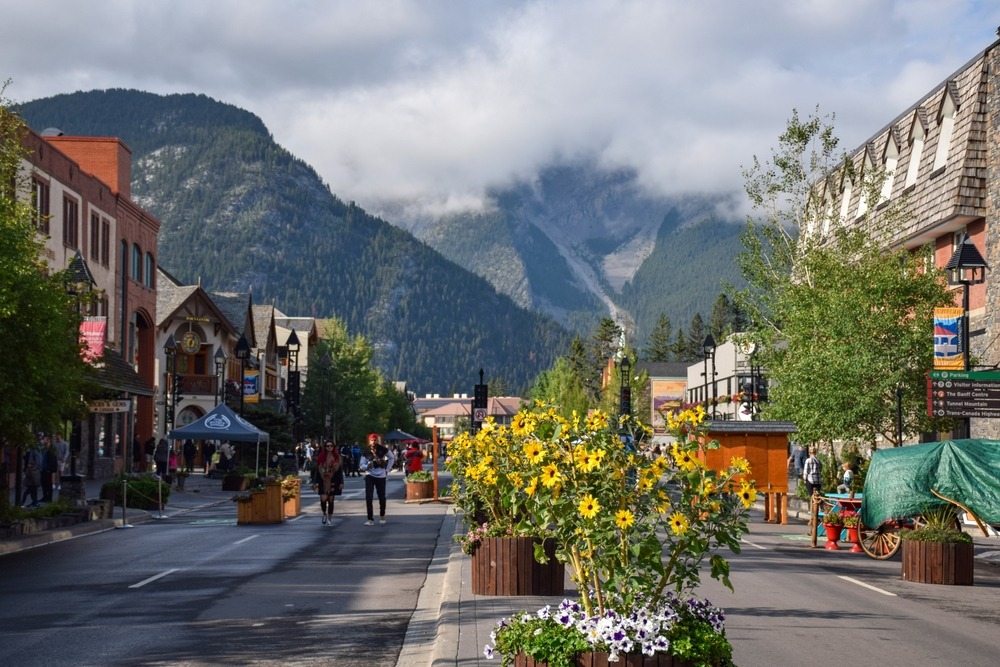
One factor visitors don’t always anticipate is altitude. Banff townsite sits around 1,380 metres (4,500 feet) above sea level, and many hiking trails climb well above that. Areas around Lake Louise and the Icefields Parkway start even higher.
For most travelers this simply means breathing a little harder and adjusting pace during the first day or two. Hydration, steady movement, and realistic expectations usually solve most of it.
When guiding visitors who have just arrived in the Rockies, I often choose a first hike that allows the body to adapt naturally before heading higher into alpine terrain.
For visitors arriving from sea level, even a short walk in the foothills west of Calgary can help the body begin adjusting before heading higher into Banff, Lake Louise, or the Icefields Parkway.
What Is the Best Time to Visit Banff for Hiking?
If you want the most practical summary:
Best for alpine access: July–August
Best for fewer crowds and steady pacing: September
Best for flexible lower elevation hiking: May–June
Best for quiet valley walks: October (when chosen carefully)
None of these are guarantees. They’re simply the patterns that repeat most often.
How to Prepare for Banff Hiking Conditions in Different Seasons
Regardless of month, Banff hiking goes better when you plan for how the trail will feel, not just what the forecast says. Most seasonal conditions are manageable with simple preparation — good footwear, steady pacing, and occasionally small tools like traction.
The goal isn’t perfect conditions. It’s choosing the right route for the day.
Spring (April–May)
Expect patchy snow, wet ground, and short icy sections in shaded forest. Waterproof footwear and light traction often make these conditions comfortable. The key is choosing routes where those patches do not sit on steep terrain.
Early Summer (June)
Snowmelt can mean muddy trails and high creek flow. Mud usually just means slower walking and messier boots. High water is different — it can change route options entirely.
Mid-Summer (July–August)
Conditions are generally stable, but crowd pressure becomes the bigger factor. Preparation becomes logistical: earlier starts, quieter trails, and realistic turnaround points.
September
Weather can feel perfect and then cool quickly with wind or shifting cloud. Layering matters, and early decision-making keeps the day relaxed.
October
Shorter daylight and early snow at elevation become the main variables. Traction can handle small icy sections, but route choice becomes the real tool.
Spring Hiking in Banff: Snow, Mud, and Early Season Trails
Spring arrives slowly in the Rockies.
In April and early May the valleys begin to thaw, but many hiking trails remain snow covered. Lower elevation paths around Banff townsite and the Bow Valley often begin opening first, while higher terrain around Lake Louise and the Icefields Parkway can remain winter-like for weeks longer.
What often surprises visitors is how uneven the transition can be. A trail may begin on dry ground and then turn into packed snow a kilometer later.
One early May morning on a guided walk above the Bow Valley, the trail was dry through the forest but held a firm ribbon of snow once we reached a shaded slope. Rather than push upward, we paused, adjusted pacing, and turned onto a lower bench trail that stayed in the sun. The day remained relaxed and enjoyable because the decision happened early.
These kinds of adjustments are part of normal mountain travel. In spring especially, seasonal flexibility matters more than itinerary plans.
May: When People Want Summer, But Get Transition
May is one of the most misunderstood months.
Travelers arrive to green valley bottoms and assume the trails will match. But shaded forest trails can hold snow long after town is dry, and higher hikes can remain fully winter-like.
May can still be a great time to hike—especially if you’re comfortable with a slower pace, variable footing, and choosing routes that match conditions rather than aspirations. It’s also a month where good judgment shows up in small ways: choosing sun-exposed trails, managing muddy sections, and being willing to turn around early without turning the moment into a failure.
Summer Hiking in Banff (July–August): Best Access but Busy Trails
July and August bring the most consistent hiking conditions in Banff.
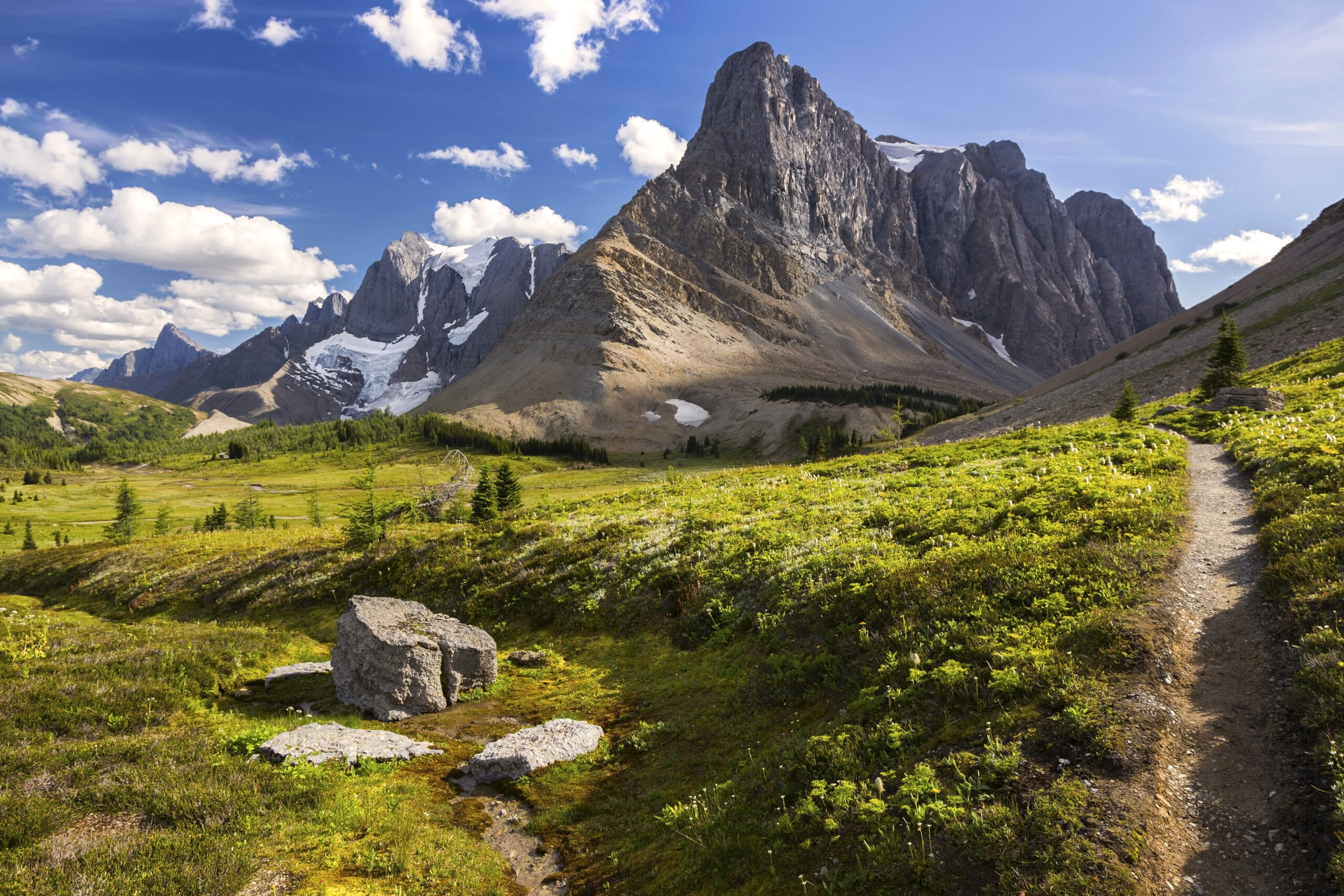
Most alpine trails become accessible, weather patterns are generally more stable, and long daylight hours make it easier to plan extended walks. For visitors hoping to explore higher terrain near Lake Louise or along the Icefields Parkway, this period usually offers the widest range of trail options.
At the same time, this is when visitor numbers peak.
Crowds influence pacing in subtle ways. Narrow sections of trail create stop-and-go movement. Viewpoints fill quickly. Parking areas reach capacity early in the morning.
For many hikers, this is where the experience changes. The challenge isn’t the trail — it’s the tempo created by everyone else on it.
Popular trail congestion often changes the experience more than weather does, as explored in Why Popular Hikes in Banff and Lake Louise Feel So Crowded.
If you’re visiting in mid-summer, the highest-value planning decision is rarely “which trail is best.” It’s often how to protect your pace.
Wildflowers, Lakes, and “Peak” Conditions
Competitors often treat summer as one uniform block. On the ground, it’s more specific.
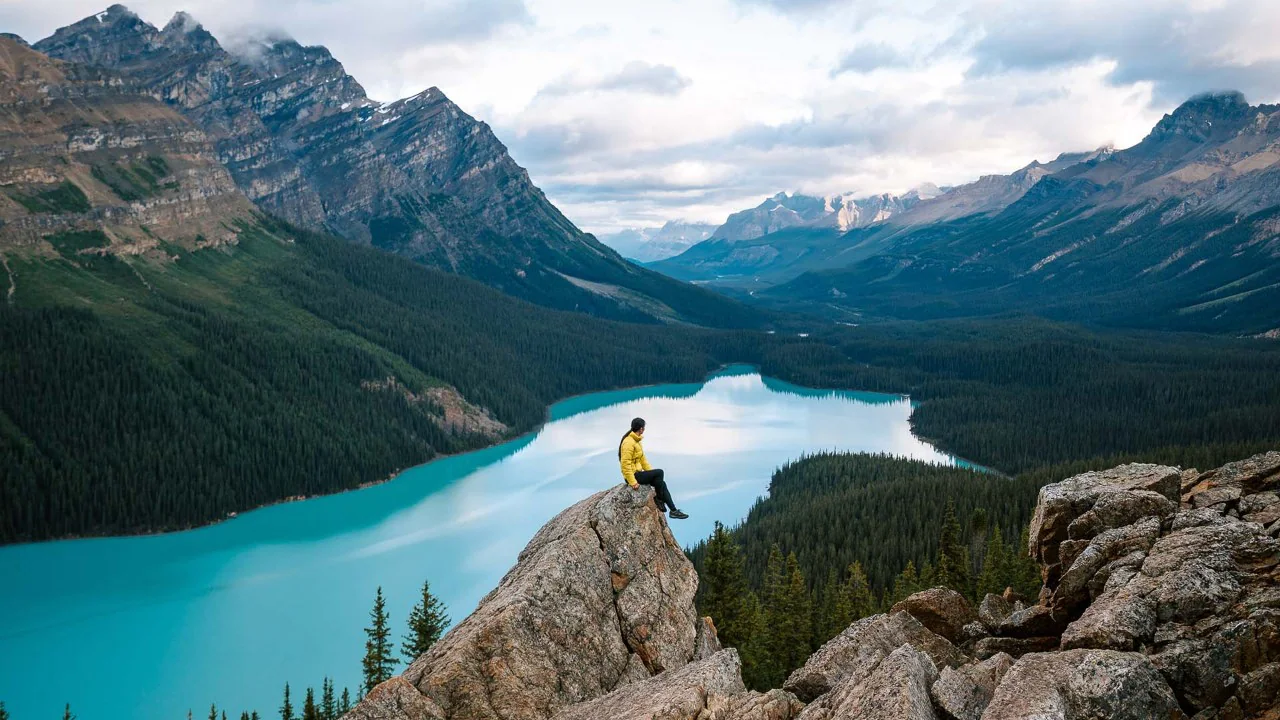
Wildflowers often peak in a mid-summer window, though timing varies with elevation and snowpack. The famous turquoise lakes deepen in color once glacial meltwater begins carrying fine silt downstream. Waterfalls can be strongest during early melt.
These patterns play out slightly differently across the region — from the lower valleys near Banff to the higher terrain around Lake Louise and the Icefields Parkway.
These are not fixed dates. They are seasonal tendencies, and they shift slightly every year.
September: A Quiet Transition Many Experienced Hikers Prefer
For many experienced hikers, early autumn is one of the most rewarding times to hike in Banff.
Temperatures remain comfortable, summer crowds begin to ease, and alpine larch trees turn golden across many mountain slopes. Trails are usually dry, and wildlife activity increases as animals prepare for winter.
Weather, however, becomes less predictable.
I remember one early September morning above Lake Louise when a clear sky shifted quickly as cool air moved down valley. The temperature dropped noticeably within forty minutes. We added layers, slowed the pace slightly, and chose a more protected line that kept the walking smooth and the views open.
Making that call early didn’t shrink the day—it clarified it. We kept our pace, stayed warm, and chose a line that delivered the views without burning margin.
These kinds of small decisions shape how a day unfolds in the mountains.
Larch Season: Timing, Crowds, and Choosing the Right Valley
If you’re traveling specifically for larches, you’re really traveling for a short transition window. Some years the color comes early. Other years it arrives later. Cold snaps, weather patterns, and elevation all influence timing. If larch hikes are your goal, it helps to keep some flexibility in your schedule so you can choose the right day rather than forcing the mountains to match a calendar date.
Larch season is also one of the busiest moments in the Canadian Rockies. The most famous valleys can see a surge of visitors during that short window, particularly where shuttle systems and bus access concentrate hikers onto a handful of trails. For some travelers the energy is exciting. For others it changes the feeling of the day.
What many visitors discover is that the golden color itself is not unique to one famous location. Larches grow across multiple valleys in the region, and some quieter routes offer the same luminous alpine landscape without the same trail density. Often the difference is simply whether a trailhead is connected to a major access system or not.
October: Shorter Days and Changing Conditions
By October the hiking season begins to narrow again.
Snow may return to higher terrain, daylight becomes shorter, and temperatures can swing widely between morning and afternoon. Some trails remain excellent for walking, especially at lower elevations.
For visitors comfortable with cooler weather, October can offer quiet trails and beautiful autumn landscapes.
The key is choosing routes that match the season rather than chasing summer objectives.
Why “Best Time” Depends on the Hiker
When people search for the best time to hike Banff, they are often thinking about weather or trail access.
But the quality of the experience usually comes down to pacing, expectations, and how a person responds to changing conditions.
For one traveler, a busy August trail may feel exciting and energetic. For another, a quieter September path will feel far more enjoyable.
Understanding these differences helps visitors choose the season that truly fits them.
Choosing the Right Season for Your Visit
The Banff hiking season unfolds gradually through the year.
Spring brings the first accessible trails. Early summer expands options. Mid-summer offers the widest access to alpine terrain. Autumn provides quieter landscapes and shifting mountain light.
None of these periods are universally “best.” Each simply offers a different kind of mountain experience.
For fit hikers visiting the Rockies who prefer a calm, private pace, season choice often shapes the entire day on the trail. If you’re exploring that kind of experience, you can learn more about Private Guided Hiking in the Canadian Rockies
If you want help choosing a season and trail that fits your pace and comfort, I’m happy to help you plan a private day.
Related Reading
→ Why Popular Hikes in Banff and Lake Louise Feel So Crowded
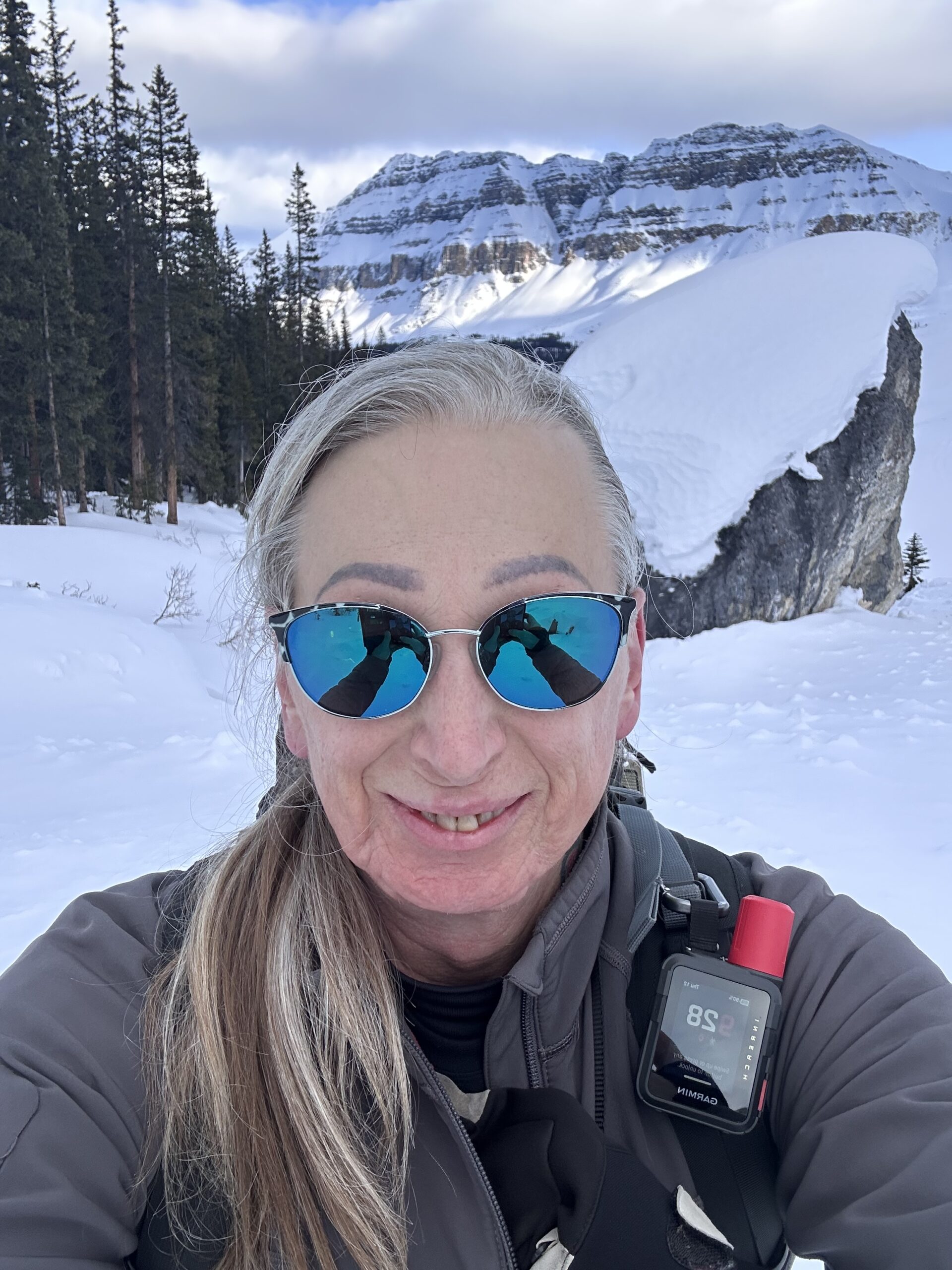
Certified private hiking guide and professional interpretive practitioner based in the Canadian Rockies. With over 25 years of four-season mountain experience, she offers thoughtfully paced hiking experiences that help active adults explore mountain landscapes with care, confidence, and understanding. Meet Niki