Every summer in Banff and Lake Louise, the same pattern unfolds.
Parking lots fill before mid-morning. Shuttle reservations disappear weeks in advance. Highway shoulders narrow as vehicles line up along the Icefields Parkway. Trailheads that once felt expansive begin to feel compressed.
It’s not subtle.
Many of the most iconic hiking destinations in the Canadian Rockies now operate at or beyond capacity for much of the season.
And while the views remain spectacular, the experience around them has changed.
Visibility Changes Everything
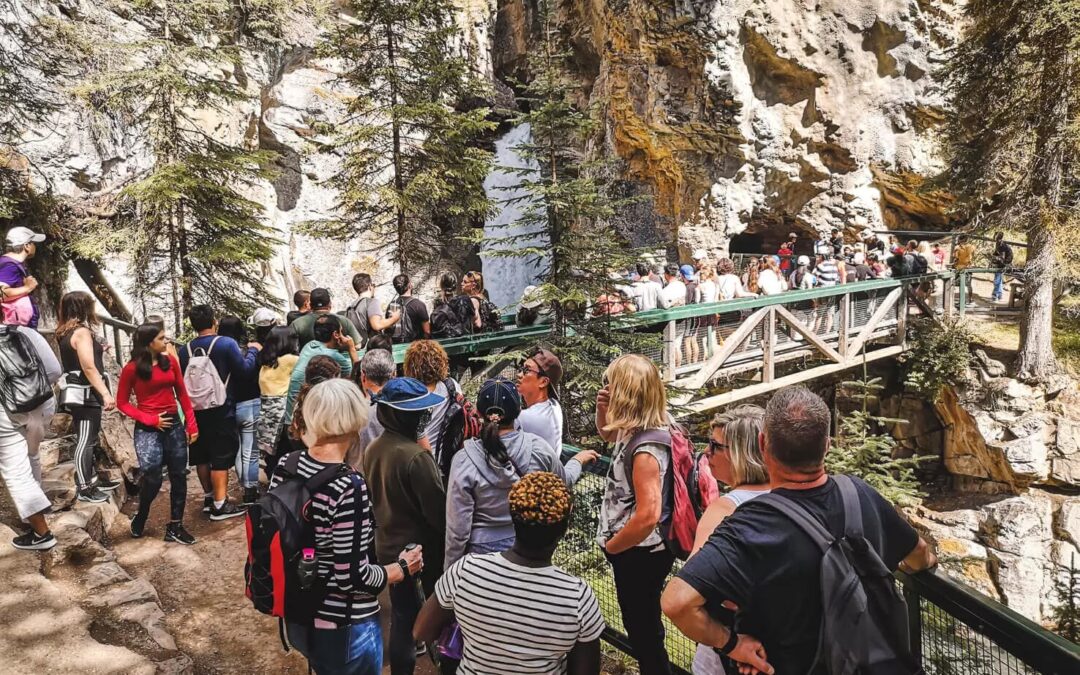
Places like Lake Louise, Moraine Lake, Johnston Canyon, and the Lake Agnes trail are globally recognizable. Their images circulate widely. They represent the Rockies in travel campaigns, social media feeds, and bucket-list itineraries.
Visibility drives demand.
Demand concentrates use.
And when iconic hiking destinations become overcrowded, the effects ripple far beyond inconvenience.
The issue isn’t that people want to experience beauty. That impulse is natural. The issue is scale, and how quickly tourism pressure in the Rockies has grown relative to the landscape’s ability to absorb it.
In busy parks like Banff, the effects of high visitation extend beyond crowding alone. I explore this further in Shared Responsibility in Crowded Parks Like Banff National Park.
What Overcrowding in National Parks Actually Changes
Overcrowding in national parks doesn’t only affect parking and photo lines.
It changes human behaviour.
When spaces are full, people move differently. They hurry. They squeeze past. They step slightly off trail to pass. They cluster tightly at viewpoints. They compress breaks because others are waiting.
None of this is malicious. It’s adaptive behavior in crowded environments.
But when popular hikes are too crowded, small decisions accumulate:
Trail widening increases.
Vegetation gets trampled.
Wildlife encounters become more frequent and less predictable.
Noise levels rise.
Tension quietly replaces curiosity. The land absorbs those impacts long after the visitors leave. And the scale is not small, you can see it reflected directly in Parks Canada policy, and in what overcrowding changes in the mountains.
The Shift from Experience to Throughput
There’s another change that’s less visible but just as important.
When iconic destinations become overwhelmed, the focus shifts from experience to throughput.
How many people can move through?
How quickly can parking turn over?
How efficiently can shuttle systems operate?
How do we prevent bottlenecks from becoming safety hazards?
These are operational necessities. Parks Canada is managing real safety concerns along corridors like the Icefields Parkway and around Moraine Lake access routes.
Access in the Rockies is not always as simple as it appears. You can explore this further in Parks Canada Reservations and the Illusion of Access.
But operational pressure subtly reshapes the emotional tone of a place.
When the day is structured around timing windows, traffic flow, and reservation slots, visitors often feel it, even if nothing is said directly. The landscape becomes something to “complete” rather than inhabit.
Tourism Pressure in the Rockies Is Regional
It’s easy to treat overcrowding as a single trailhead issue. It isn’t.
Tourism pressure in the Rockies extends beyond Lake Louise and Banff townsite. It affects the Bow Valley corridor, wildlife migration routes, seasonal staffing patterns, housing availability, and infrastructure capacity.
When one iconic location becomes restricted, pressure shifts elsewhere. A shuttle system at Moraine Lake redistributes visitors to other viewpoints. Timed entry at one lake concentrates demand at another.
The landscape is interconnected. So is visitor behavior.
Crowd pressure is seasonal as well. For a broader look at when visitor demand tends to peak, ease, or shift across Banff, Lake Louise, and the wider region, see When Is the Best Time to Visit the Canadian Rockies.
For many hikers, this leads to a broader question of where to go instead. This comparison may help:
→ Banff vs Kananaskis for Hiking
Why “Popular” Doesn’t Always Mean “Best”
There is a quiet assumption in travel culture that the most photographed place is the most meaningful one.
But when popular hikes are too crowded, the experience changes qualitatively.
Conversations shorten.
Breaks feel abbreviated.
Photo-taking becomes hurried.
The nervous system stays slightly elevated.
It becomes harder to notice subtle details, wind direction across water, bird movement in treeline, light shifting on distant slopes, when attention is divided between scenery and logistics.
For many visitors, especially those who value steadiness over spectacle, that compression is what feels most misaligned.
Scale Matters More Than We Admit
The Rockies are vast. But access points are not.
Highway pullouts.
Parking lots.
View platforms.
Shuttle stops.
Boardwalks.
When thousands of people funnel through narrow nodes, even a large landscape begins to feel small.
Scale determines behavior.
At high volume, enforcement replaces interpretation. Signage multiplies. Movement is regulated more tightly. Flexibility disappears because it has to.
At lower volume, something else becomes possible: slower pacing, dispersed use, longer stays, and decisions that account for both the land and the people moving through it.
This isn’t about exclusivity.
It’s about capacity.
The impact isn’t limited to parking lots and viewpoints. As tourism pressure in the Rockies expands, wildlife corridors and migration routes across the Bow Valley face increasing fragmentation. Ecological integrity, a central mandate of Parks Canada, depends not only on visitor behavior at iconic sites, but on how regional growth, road volume, and development shape the landscape between them.
What Happens Next?
There is no simple solution to overcrowding in national parks. Access, conservation, visitor experience, and regional economies are deeply intertwined.
But acknowledging that iconic hiking destinations are overcrowded in peak season is not pessimism. It’s realism.
From that realism, better questions emerge:
How do we distribute use more thoughtfully?
How do we design access models that preserve both safety and experience quality?
How do we encourage visitation patterns that respect ecological limits?
How do we shift from reactive management to anticipatory design?
These questions aren’t abstract. They are already shaping policy discussions in Banff and Lake Louise.
And alongside policy, there’s also a quieter, on-the-ground truth: there are still quieter ways to experience the Rockies not as an escape from responsibility, but as a different scale of relationship with place.
The Rockies will always draw people.
The real challenge is not whether people come.
It’s how scale, visibility, and structure shape what happens once they arrive.
For some visitors, this leads to a broader question about whether guided hiking offers a different experience: Do You Need a Hiking Guide in Banff
If you’re exploring thoughtful travel in the Rockies, you’re welcome to begin a conversation.
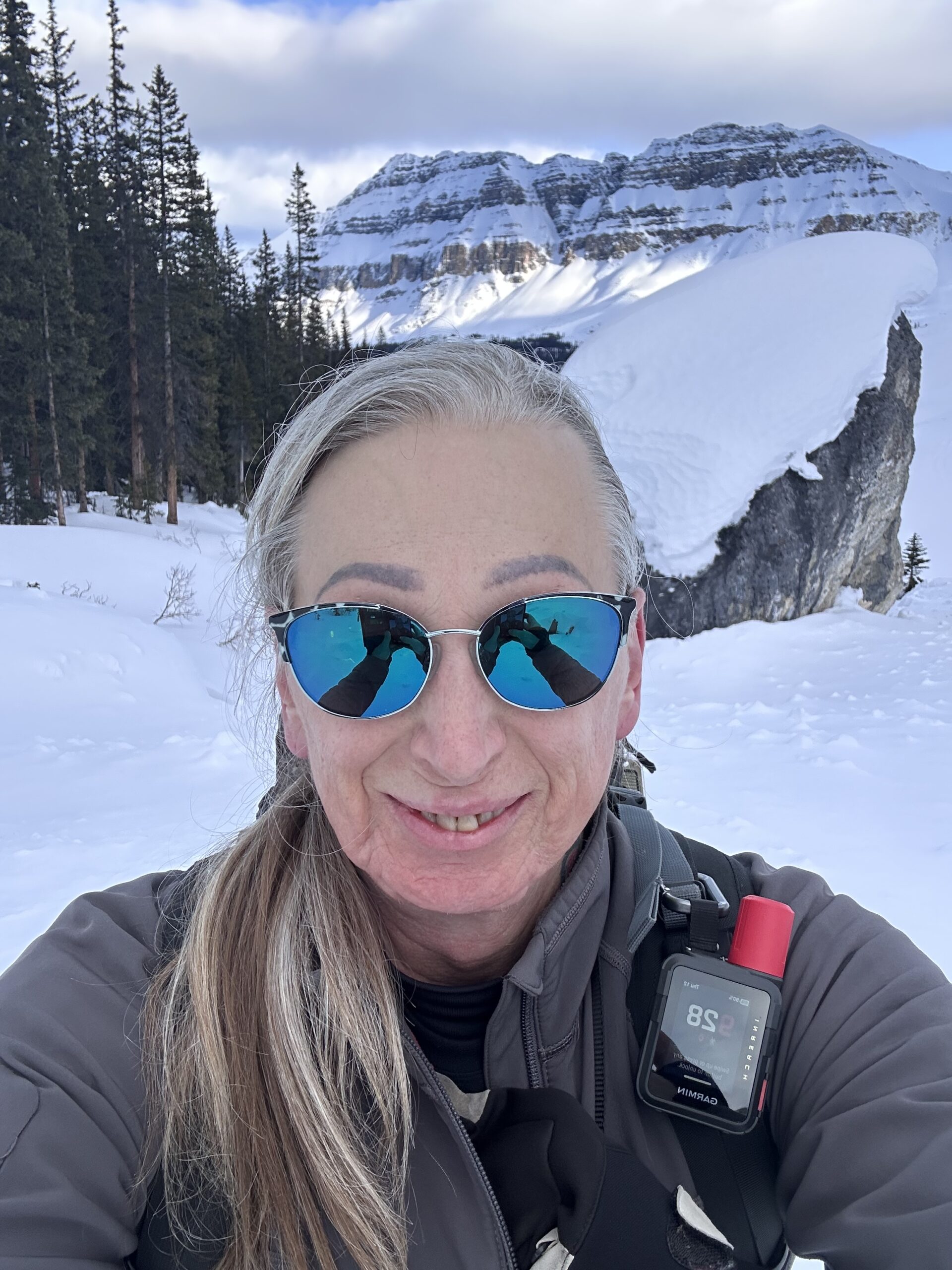
Certified private hiking guide and professional interpretive practitioner based in the Canadian Rockies. With over 25 years of four-season mountain experience, she offers thoughtfully paced hiking experiences that help active adults explore mountain landscapes with care, confidence, and understanding. Meet Niki