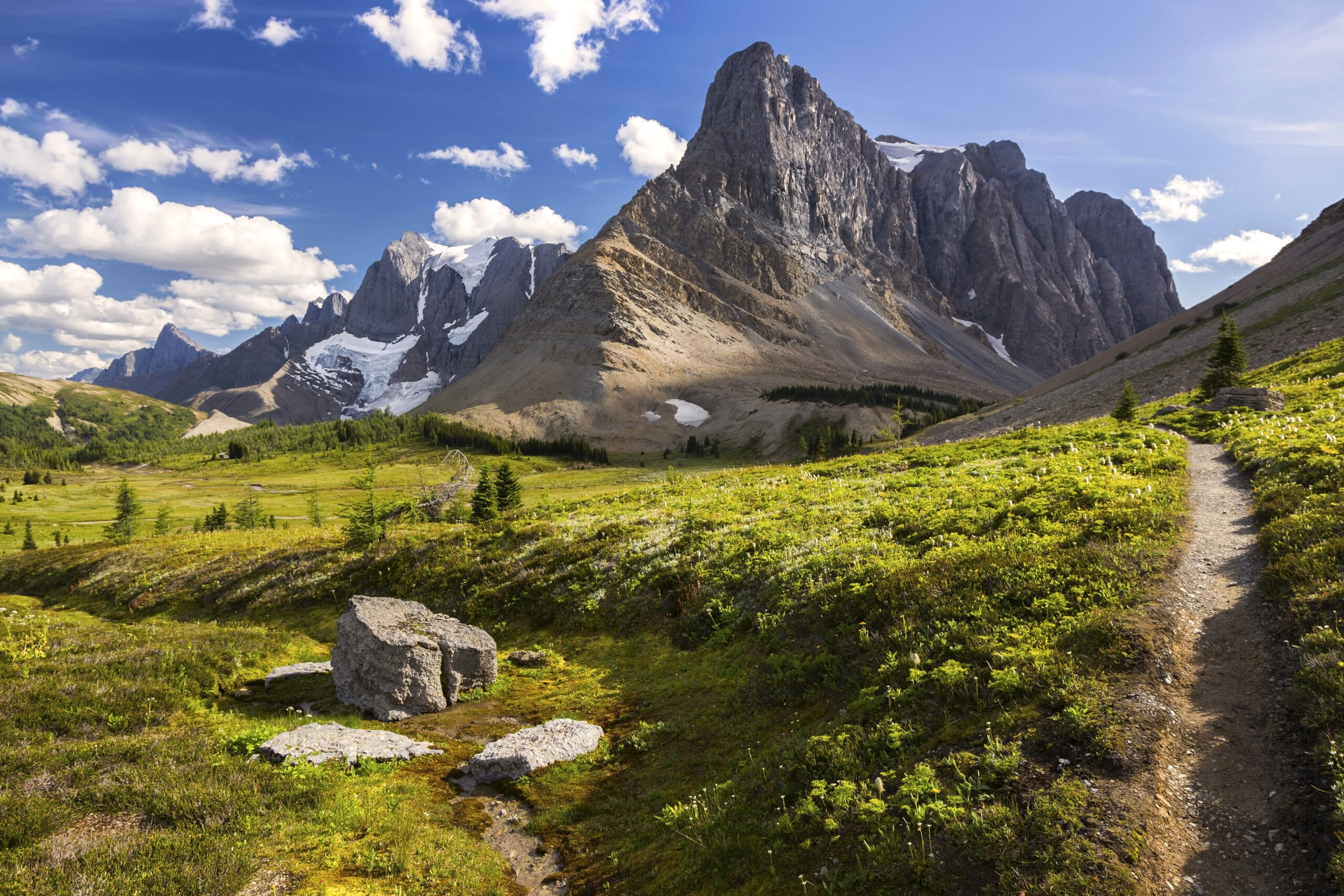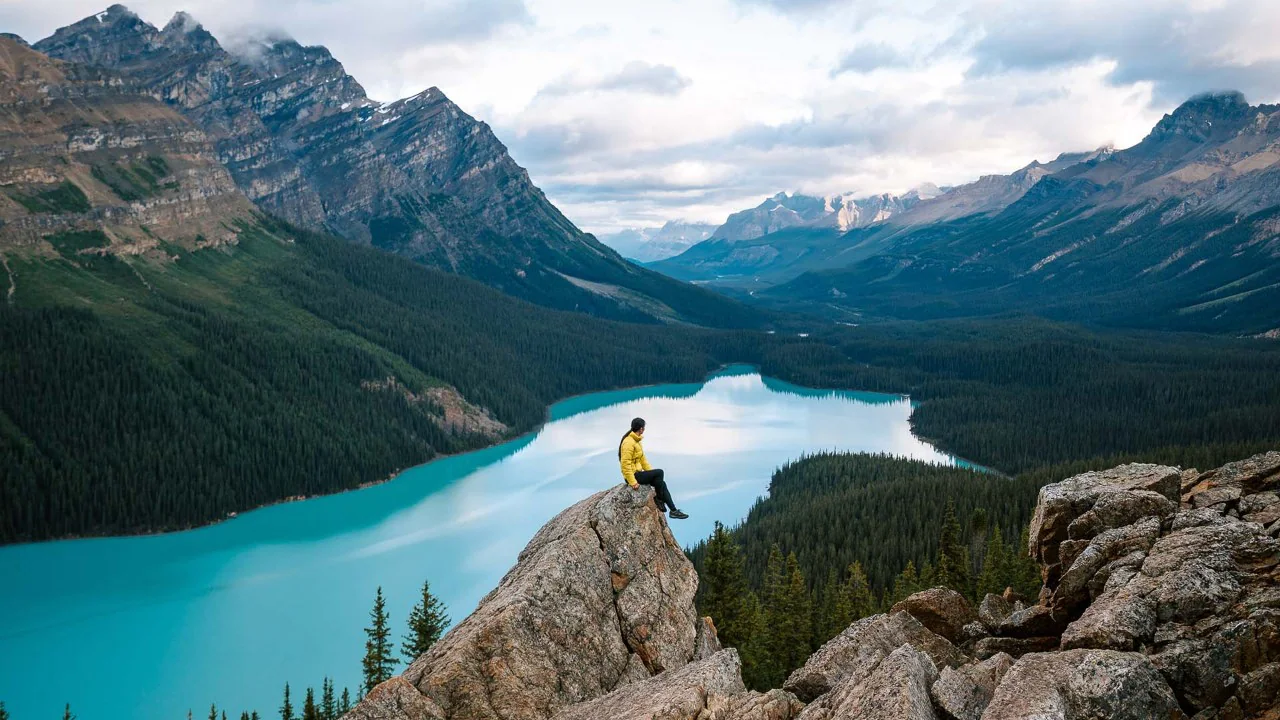
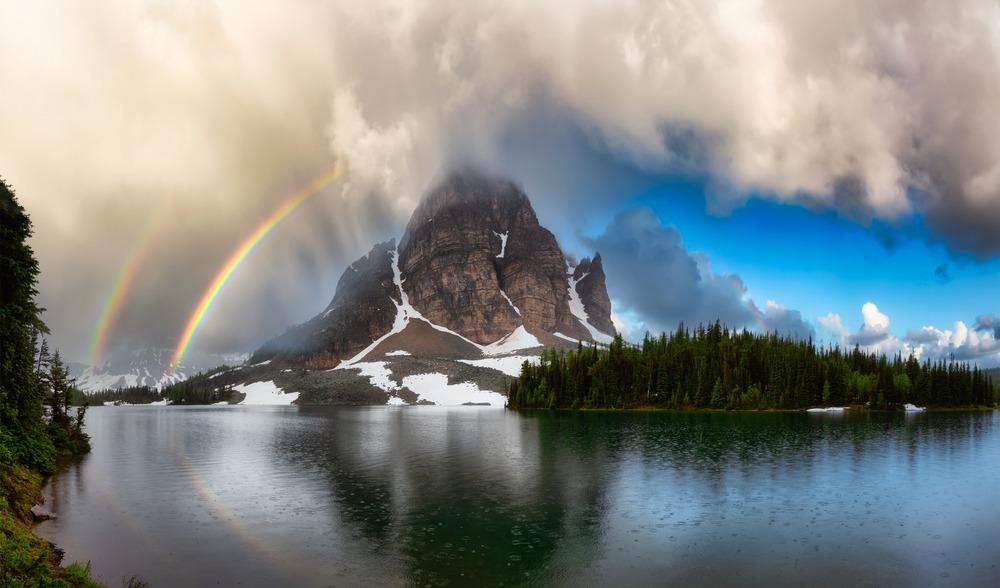
Is it warm enough to hike?
Will trails be snow-free?
Will the lakes be at peak colour?
Will the day feel relaxed or like a scramble around conditions?
In the Canadian Rockies, weather is not just a forecast. It’s a shaping force. It decides footing, pace, layering, timing, and even how crowded the main corridors feel.
It also changes fast. Parks Canada describes the most reliable characteristic of Banff weather as its variability, including major differences across short distances and big temperature swings from day to night.
So this guide is not a list of averages alone. It’s a month-by-month look at what weather usually means on the ground, with enough concrete reference to plan wisely.
Although this article is anchored in Banff, it also works for most visitors spending time in Lake Louise and along the Icefields Parkway. During the summer and shoulder seasons, the overall weather patterns are broadly similar across these areas, even though Lake Louise and higher terrain are often cooler and snow lingers longer. In winter, those differences become much more significant.
If you’re deciding when to come, not just what the numbers are, start with Best Time to Visit the Canadian Rockies and How to Plan a Trip to the Canadian Rockies
What is the Weather like in BanfF?
Parks Canada provides monthly averages for the Town of Banff and the Village of Lake Louise, including high and low temperatures, rainfall, snowfall, and daylight hours. This matters because Lake Louise is higher, colder, and snowier, and many Banff trips include both.
For visitors moving between Banff, Lake Louise, and the Icefields Parkway, the key planning mistake is assuming valley-town conditions reflect what higher terrain will feel like. They often do not.
Monthly averages at a glance
(Banff vs Lake Louise)
| Month | Banff avg high/low (°C) | Lake Louise avg high/low (°C) | Daylight (hrs) |
|---|---|---|---|
| Jan | -5.3 / -14.9 | -7.5 / -21.4 | 8.1 |
| Feb | 0.1 / -11.3 | -2.0 / -18.1 | 10.0 |
| Mar | 3.8 / -7.9 | 2.2 / -14.0 | 12.0 |
| Apr | 9.0 / -2.8 | 7.1 / -6.7 | 14.0 |
| May | 14.2 / 1.5 | 12.8 / -1.7 | 15.5 |
| Jun | 18.7 / 5.4 | 17.2 / 2.1 | 16.5 |
| Jul | 22.1 / 7.4 | 20.4 / 3.6 | 16.0 |
| Aug | 21.6 / 6.8 | 20.1 / 3.1 | 14.5 |
| Sep | 16.1 / 2.7 | 14.3 / -0.8 | 12.7 |
| Oct | 10.1 / -1.1 | 7.9 / -5.3 | 10.7 |
| Nov | 0.5 / -8.2 | -1.7 / -13.9 | 9.0 |
| Dec | -5.3 / -13.8 | -7.6 / -20.4 | 7.8 |
These are planning anchors, not promises, but they prevent the most common visitor mistake: assuming Banff town conditions reflect higher terrain.
Two weather rules that make Banff easier to plan
1) Elevation changes everything.
Parks Canada notes a simple lapse-rate rule: temperature drops about 1°C for every 200 m of elevation gain.
2) Daylight swings are large.
Daylight can be as little as about 8 hours in December, and late June days stretch long (Parks Canada gives sunrise around 5:30 am and sunset around 10:00 pm at the end of June).
January: Deep winter and the cold that settles in
January is winter in full. The town is cold, the air is often dry, and wind chill can make temperatures feel far colder than the number suggests. Parks Canada specifically warns about wind chill effects.
This is not hiking season in the usual sense. It’s winter walking, snowshoeing, and winter sightseeing with short daylight and serious cold snaps.
What most visitors underestimate is not the daytime high. It’s how quickly the cold returns once the sun drops.
February: Cold, bright, and often clearer
February stays firmly winter, but the light begins to come back. Days are longer than January, and many winter travelers find the month feels more energetic even though temperatures remain cold.
If you’re outside for hours, comfort is less about “how cold” and more about wind management, hands/feet, and keeping sweat under control.
March: Winter loosens slightly,
but it’s still winter
March is when visitors start hoping for spring. In reality, snow and winter travel remain the norm, especially anywhere above the valley floor.
The key difference is sun angle. South-facing slopes and exposed town paths can feel mild mid-day, while shaded forest and higher routes stay winter.
April: The first real transition month
April is where a lot of trips go sideways because expectations rise faster than trail conditions.
You may see bare ground in Banff townsite, but snow lingers across many trail systems. This is a transition month, not a shoulder-season “hiking month” in the way visitors mean it.
One of the most useful frames here is: choose terrain that stays enjoyable even if it’s mixed underfoot.
May: Spring shows up in the valley,
but not in the alpine
May can be beautiful and quiet. It can also be the month where people feel misled because the valley looks like spring and the trails behave like a mix of winter and summer.
Expect combinations of:
-
dry patches
-
soft mud
-
lingering snow in shaded areas
-
short icy sections in the morning
This is also when route selection matters more than enthusiasm. The same distance can feel wildly different depending on aspect and elevation.
June: The hiking season begins, unevenly
June is the month where access expands quickly, but not evenly.
Lower and mid-elevation trails often come into shape first. High passes can still hold snow late into June, and Parks Canada explicitly warns that mountain passes on hiking trails may not be clear until the end of June.
This is also melt season. Creeks run high, trails can be wet, and the “best day” is often the day you choose the right elevation band for current melt timing.
July: The most reliable hiking weather,
plus the most pressure
July often brings the most consistent hiking conditions: longer days, generally stable temperatures, and broad trail access.
This is also where weather is only half the story. The other half is visitor density and the structure it creates around trailheads, shuttles, and timing windows.
Even on perfect weather days, the experience can feel compressed if you are forced into peak hours.
Mountain weather is easier to work with once you know what guides are reading in real time: How Guides Read Mountain Weather in the Rockies.
August: Warm days, full access,
and the smoke variable
August is similar to July in terms of access, but it introduces two planning realities:
-
Afternoon storms and showers remain part of mountain summer patterns (even on clear mornings, a light shell often earns its place).
-
In some years, wildfire smoke becomes the limiting factor for views and comfort. The Town of Banff notes that smoke visible in Banff may come from fires far away or closer within Alberta/BC, and recommends checking air quality and wildfire info.
Smoke doesn’t mean “don’t come.” It means build a plan that can pivot: lower objectives, forested walks, shorter durations, and an expectation that big vistas may come and go.
September: Clearer air, cooler days,
and a short golden window
September is often one of the best months for steady hiking rhythm: cooler temperatures, fewer summer crowds, and clear visibility.
Mid- to late September often brings the larch transition that many travelers chase. The weather is usually still supportive, but nights cool quickly and mornings can feel wintery at elevation, especially around Lake Louise and along the Icefields Parkway.
If larches are the goal, flexibility is the difference between a calm day and a crowded one.
October: The return of winter on the
high ground
October is where the season tightens.
Lower valley walks can still be excellent, but higher terrain shifts quickly toward early winter. Expect colder mornings, shorter days, and intermittent snowfalls at elevation.
October is a month for people who are comfortable with “not knowing” until close to the day, and choosing routes that still feel good if the mountains decide to move first.
November: A real shoulder month,
but not a hiking one
November can feel quiet and stark. Snow returns, daylight is short, and temperatures drop. It’s a month for winter readiness, not optimism.
If someone’s trip is fixed in November, the best approach is to treat it as early winter travel, not late fall.
December: Winter settles in again
December is winter, with the shortest days of the year and consistent cold. Parks Canada notes daylight can be as low as around eight hours in December.
This is a month where the landscape can feel extraordinarily still, but planning needs to respect limited light, cold management, and traction for icy town and pathway conditions.
Why Banff and Lake Louise can feel like
different seasons
A Banff trip often spans multiple elevations and corridors. Parks Canada points out that Lake Louise is close to Banff but receives substantially more snow in winter months, and explains how the Continental Divide collects snowfall.
That’s why visitors sometimes experience:
-
dry pathways in Banff
-
winter-like mornings at Lake Louise
-
colder conditions and earlier snowfall along the Icefields Parkway
These are not contradictions. They’re the Rockies doing what the Rockies do.
A calm way to plan Banff weather
Instead of asking “what will the weather be,” plan around these questions:
-
What elevation band do we want to be in today?
-
What will this feel like at 9:00 a.m. versus 3:00 p.m.?
-
If conditions shift, what is the comfortable pivot?
-
How much daylight do we actually have?
Parks Canada recommends preparedness even when it’s warm at the trailhead, including carrying rain gear and an extra layer because weather can change dramatically through the day.
That approach doesn’t create dramatic stories. It creates calm days.
Quick FAQ
Does Banff get snow in summer?
Snowfall in July and August is uncommon in town averages, but higher terrain can still see sudden weather changes, and passes may hold snow well into early summer depending on the year.
Is Lake Louise colder than Banff?
On average, yes. The Parks Canada monthly averages show lower temperatures in Lake Louise across the year.
When are the longest and shortest days?
Late June has very long days (Parks Canada cites sunrise around 5:30 am and sunset around 10:00 pm), while December can have around eight hours of daylight.
When is smoke most likely?
It varies year to year, but wildfire smoke is most often a summer planning variable. For real-time planning, use AQHI and smoke forecast tools and local wildfire updates.
Closing
Reading Banff weather by month is useful, but the best trips are planned around how weather shapes the day: pace, comfort, and the ability to adjust without stress.
If you want the Canadian Rockies to feel spacious rather than pressured, build a plan that respects variability, elevation, and daylight. The scenery will take care of itself.
Certified private hiking guide and professional interpretive practitioner based in the Canadian Rockies. With over 25 years of four-season mountain experience, she offers thoughtfully paced hiking experiences that help active adults explore mountain landscapes with care, confidence, and understanding. Meet Niki