Visitors come to Banff expecting dramatic mountain landscapes. They find them immediately, turquoise lakes, towering peaks, glacier valleys, and alpine meadows.
What many don’t expect is how concentrated visitor traffic can become on a small number of famous trails.
Places like Lake Louise, Moraine Lake, and Johnston Canyon attract enormous numbers of people during peak season. The scenery is extraordinary, but the experience can feel very different when hundreds of hikers move through the same narrow corridor.
Popular areas like Lake Louise often experience heavy visitor traffic during peak season, something I explore in Why Popular Hikes in Banff and Lake Louise Feel So Crowded
The good news is that Banff National Park is vast. Beyond the most photographed viewpoints, many scenic hikes offer equally remarkable landscapes while allowing a quieter rhythm on the trail.
For travelers who prefer a calm, thoughtful mountain day, these routes often become the most memorable experiences of the trip.
Why crowds concentrate on certain trails
Crowding in Banff doesn’t happen randomly. It follows predictable patterns.
Trails tend to become heavily visited when several factors align:
-
easy road access
-
large parking areas or shuttle systems
-
short walking distances
-
iconic photography locations
When those elements come together, visitor traffic concentrates quickly.
A trail that appears moderate on paper can feel crowded simply because thousands of people arrive at the same time each day.
This is also why Parks Canada has been working on a visitor use management approach in the Lake Louise area, because access and use patterns have become part of the experience itself.
But many other landscapes remain surprisingly quiet simply because they sit slightly outside those patterns.
What guides look for when choosing quieter routes
One of the most important parts of guiding in the Rockies is understanding how to balance scenery with experience.
After many seasons in these mountains, a few patterns consistently produce calmer hiking days.
Trails often feel quieter when they:
-
sit outside the Lake Louise corridor
-
require a longer but gradual approach
-
spread hikers across open landscapes rather than funneling them to a single viewpoint
-
sit along big, linear geography like the Icefields Parkway, where trailheads are naturally dispersed
When those elements come together, hikers often discover that the experience feels dramatically different from the busiest trails in the park.
Instead of moving through a crowd, the day unfolds at a natural pace where the landscape becomes easier to absorb.
The “quiet hike” test
If you’re trying to predict whether a scenic hike will feel calm, a few questions help:
-
Is the trailhead connected to a high-volume access system?
-
Does the trail funnel everyone to one platform or viewpoint?
-
Is there a natural “drop-off point” where most people stop early?
-
Does the terrain widen into a valley or basin where people spread out?
-
Does the route require steady walking before the scenery peaks?
A surprising amount of “crowd avoidance” comes down to choosing landscapes that distribute people instead of concentrating them.
Why These Hikes Often Feel Quieter
The routes below share several characteristics that help disperse visitor traffic:
• longer but steady approaches
• landscapes that spread hikers across basins or valleys
• trailheads outside the busiest shuttle corridors
• destinations that reward continued walking rather than a single viewpoint
Because of these patterns, hikers often experience far more space on the trail even during peak summer.
Scenic hikes in Banff that often feel calmer
These routes still offer remarkable scenery but typically experience less concentrated visitor pressure than the park’s most famous trails.
Rockbound Lake
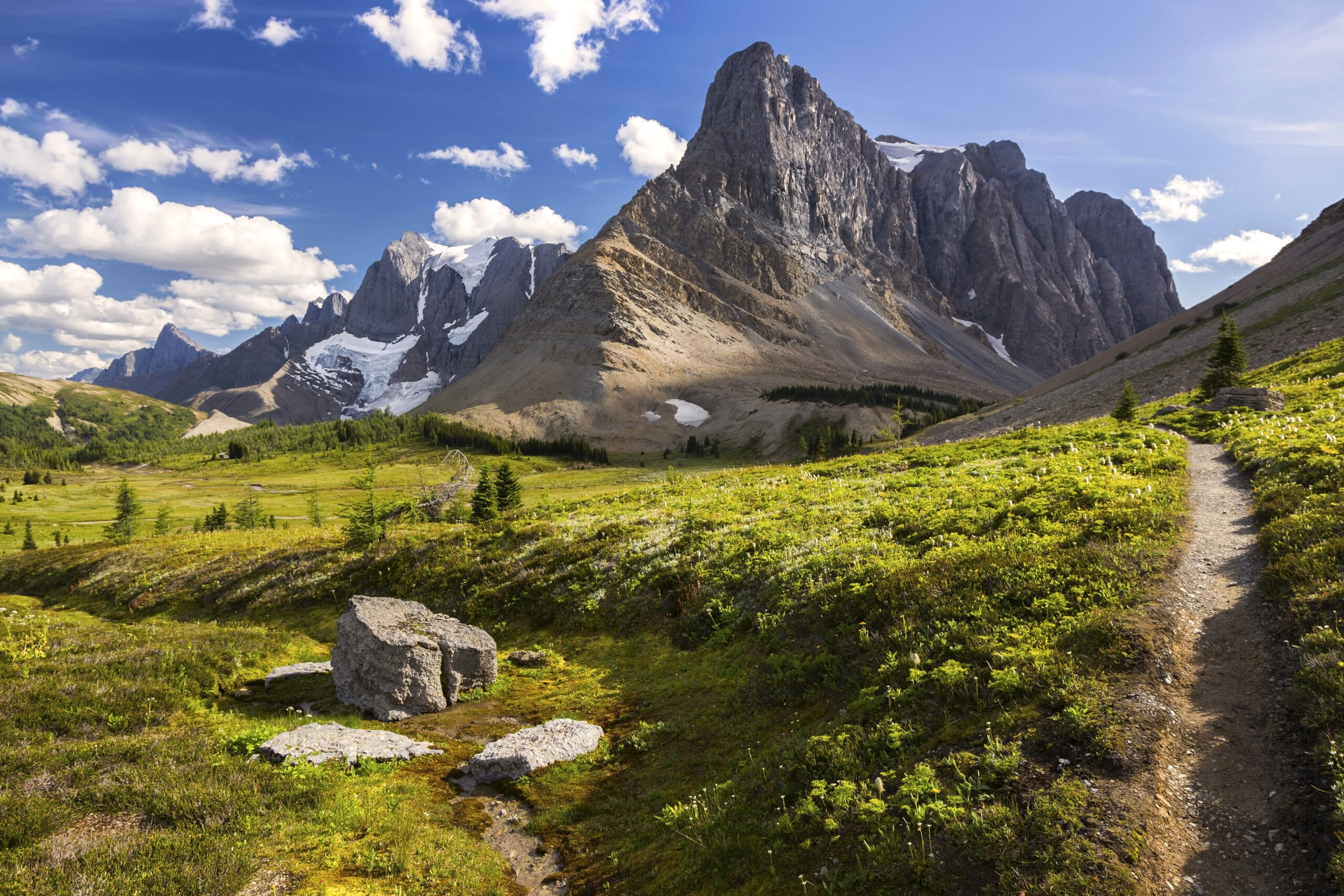
Rockbound Lake sits beneath the towering cliffs of Castle Mountain and remains one of the most underrated alpine lakes in Banff National Park.
The trail begins in forest near Castle Junction before climbing steadily into open terrain. Eventually the path reaches a quiet alpine basin where the lake rests beneath massive limestone walls.
Because the trail requires a longer approach than many famous hikes, it often feels far calmer even during the height of summer.
For hikers who enjoy expansive mountain landscapes without the busiest crowds, Rockbound Lake can feel like discovering a hidden corner of Banff.
Cascade Amphitheatre
Cascade Amphitheatre rises high above the town of Banff yet remains surprisingly overlooked by many visitors.
The trail climbs steadily through forest before opening into a broad alpine bowl beneath dramatic limestone cliffs.
Once the amphitheatre comes into view, the landscape feels expansive and quiet, with views stretching across the surrounding ridges.
Although the climb requires steady effort, the reward is one of the most spacious alpine landscapes in the Bow Valley.
Sundance Canyon to Healy Creek
Sundance Canyon is known for its short boardwalk section through narrow limestone walls.
But continuing past the canyon reveals a quieter valley landscape that many visitors never see.
The trail follows Healy Creek through forest and open meadows where the pace slows and the crowds thin dramatically.
It’s a good example of how simply walking a little farther can change the entire feel of a hike.
Cory Pass valley approach
Cory Pass is often described as a challenging loop hike, but the early valley approach beneath Mount Edith and Mount Louis offers spectacular views without requiring the full climb.
Wide alpine slopes and open landscapes appear quickly as the trail rises above the Bow Valley.
Because the full loop is demanding, many hikers avoid the area entirely, leaving the valley approach far quieter than its scenery would suggest.
Stanley Glacier
Located just across the continental divide in nearby Kootenay National Park, Stanley Glacier offers one of the most dramatic glacial landscapes in the region.
The trail climbs gradually toward a wide basin filled with rock glaciers and towering peaks.
Because it sits slightly outside Banff’s central corridor, Stanley Glacier often feels calmer while still delivering one of the most powerful alpine landscapes in the Rockies.
Timing still shapes the experience
Even quieter trails can feel busy when everyone arrives at the same moment.
Starting earlier in the morning often changes the entire rhythm of a hike. Parking areas feel calmer, wildlife activity is more noticeable, and the trail allows more space between groups.
Weather patterns in the Canadian Rockies also shift quickly with elevation and season, which is why understanding Banff Weather by Month can help visitors plan hikes more comfortably.
Trail conditions in the Rockies can also vary widely depending on the season, something I explore further in Best Time to Visit Banff for Hiking.
How a calm day is designed
A quieter hike is rarely about secrecy. More often it’s about structure.
This is the behind-the-scenes rhythm that tends to produce calm days:
-
choose a trail where hikers naturally spread out
-
start before the biggest arrival wave
-
move at a steady pace that preserves energy for the second half of the hike
-
keep a backup option if conditions or access shift
-
choose landscapes that feel spacious even when the park is busy
After guiding in the Rockies for many seasons, I’ve found that many visitors enjoy hikes far more when the day begins calmly and the route leaves enough time to simply notice the landscape.
These kinds of decisions about pacing, timing, and route choice are part of the approach I describe in How I Guide.
A Different Way to Experience Banff
Many visitors assume the most famous trails must also be the best ones.
But in Banff, the quality of a hiking day often depends less on the name of the trail and more on timing, pacing, and landscape structure.
A quieter valley, an alpine basin, or a trail that spreads hikers across open terrain can create a far more memorable experience than a crowded viewpoint.
The park contains far more beautiful places than the handful of locations that appear most often on social media.
FAQ about quiet hiking in Banff
Are there scenic hikes in Banff without crowds?
Yes. While certain locations receive heavy visitor traffic, many scenic trails in Banff remain relatively calm, particularly those outside the Lake Louise corridor or along the Icefields Parkway.
Are quieter hikes less scenic than famous
Banff trails?
Not at all. Many quieter routes offer scenery just as dramatic as the most famous viewpoints. They simply receive less promotion or sit outside the most concentrated access corridors.
When are Banff hiking trails least crowded?
Early morning is usually the quietest time to hike. Mid-week days are often calmer than weekends during peak season.
Are there quieter alternatives near Lake Louise?
Often, yes—but the key is choosing routes that don’t funnel everyone to a single platform, and starting early enough to avoid the main arrival wave. For the “why,” see Overcrowding at Lake Louise.
Do guides choose quieter trails on purpose?
Often they do. Choosing routes that balance scenery, timing, and visitor pressure can create a far more enjoyable mountain day, especially for travelers who want space, steadiness, and the feeling of being in the landscape rather than in a queue.
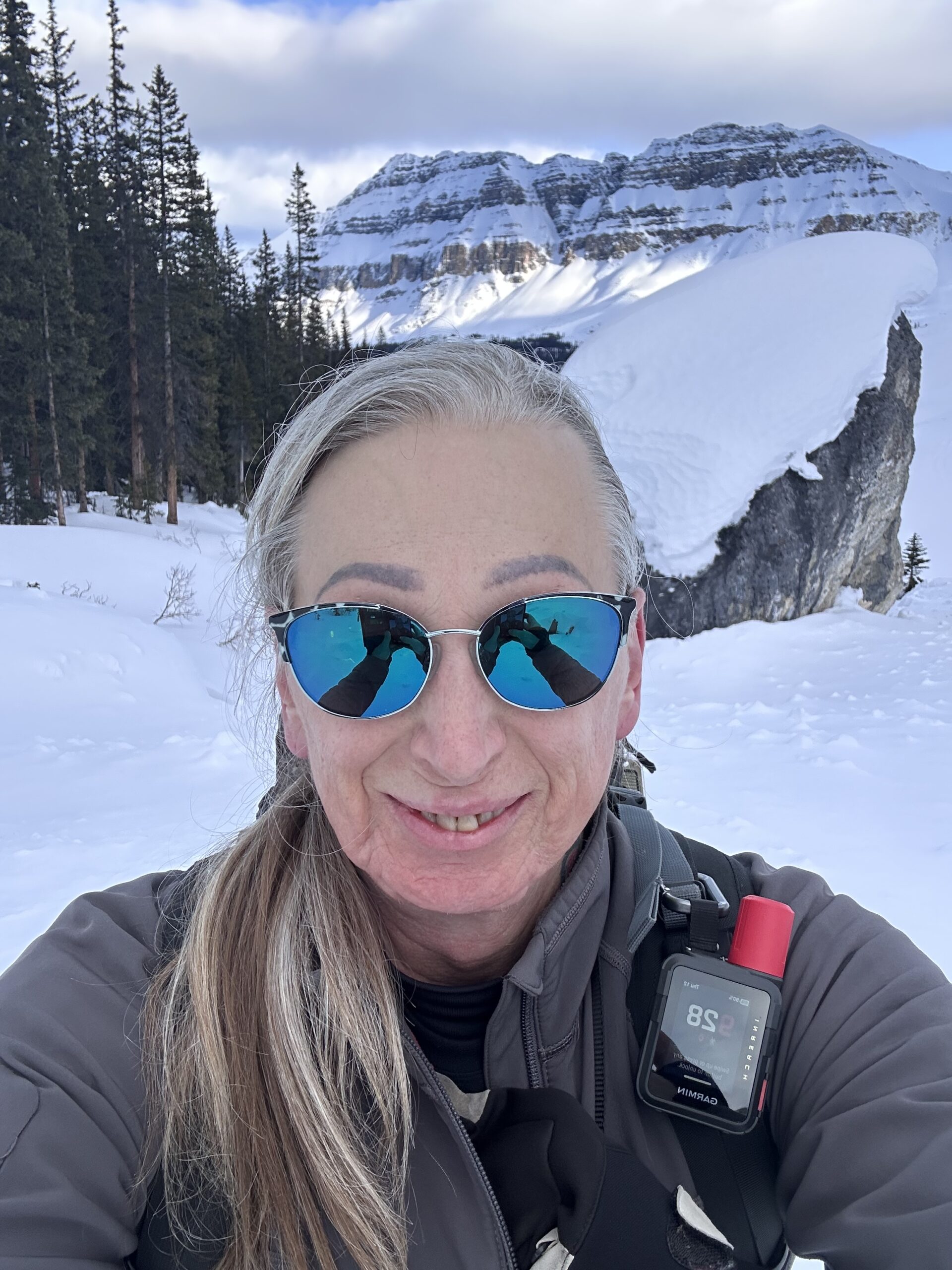
Certified private hiking guide and professional interpretive practitioner based in the Canadian Rockies. With over 25 years of four-season mountain experience, she offers thoughtfully paced hiking experiences that help active adults explore mountain landscapes with care, confidence, and understanding. Meet Niki