One of the most practical questions people ask before booking a private guided hike in Banff or Kananaskis is also one of the most important.
Do we need a car?
The short answer is usually yes.
My private guided hiking service is best suited to guests who already have transportation or who are able to meet at an agreed location. For the right guests, having a vehicle is not just a practical detail. It can create more freedom in choosing the right trailhead, adapting to the day, and reaching places that do not always fit a larger tour-bus structure.
It is not designed as a hotel-pickup service, shuttle product, bus tour, or full sightseeing package.
That may sound like a simple logistical detail, but in the Canadian Rockies, transportation is never just transportation.
Distance shapes the day.
Where you are staying, how far the trailhead is, how much time is spent driving, how early the day needs to begin, and how much energy is left for the actual hike all matter. This is true for private guided hiking, and it is also true for sightseeing tours and bus-based experiences.
A private guided hiking day works best when the hike itself is the centre of the experience. Transportation needs to support that, not become the main structure of the day.
If you are still comparing different types of experiences, Private Guided Hiking vs Banff Sightseeing Tours: Which Is Right for You? is a helpful companion article.
Why Transportation Matters Before You Book
In Banff, Lake Louise, Kananaskis, and the Canadian Rockies, places can look close on a map but feel very different once you account for mountain roads, parking pressure, seasonal traffic, construction, wildlife slowdowns, weather, and the simple reality of moving through a large landscape.
A trailhead may be thirty minutes away, or it may be nearly two hours away.
A scenic drive may feel wonderful at the beginning of the day and tiring at the end.
A famous destination may require more access planning than expected.
A hiking day that looks simple on paper can start to feel compressed if too much of the day is spent getting to and from the trail.
That is why the transportation question matters.
It is not only about whether someone can drive you.
It is about whether the day is being shaped around the experience you actually want.
For a private guided hike, the goal is not to cover as much ground by vehicle as possible. The goal is to choose a hike that fits your location, time, ability, pace, comfort, and the conditions of the day.
For more on what is included in the service itself, What’s Included in a Private Guided Hiking Day in Banff or Kananaskis? explains the practical boundaries clearly.
Is Transportation Included in a Private Guided Hike?
Transportation is not included in my private guided hiking service.
Guests are generally expected to have their own vehicle or be able to meet at an agreed location. The exact meeting point depends on where you are staying, the region we are considering, the selected hike, the season, current access, and what makes sense for the day. Clear directions, trailhead information, timing details, and map support are provided beforehand so the start of the day feels straightforward.
This keeps the service focused on the hiking experience itself.
The value of the day is in route choice, pacing, interpretation, field judgment, weather awareness, and the ability to adjust the hike around one or two guests. It is not built around driving, shuttling, sightseeing stops, restaurant timing, or a broader tour itinerary.
For some visitors, this will not be the right fit.
If you need hotel pickup, shuttle transportation, luggage movement, or a full day of sightseeing by vehicle, another kind of tour may serve you better.
That is important to say clearly.
Private guided hiking is best when guests can handle the basic transportation piece and want professional support for the mountain day itself.
Why I Do Not Build the Day Around Pickup and Transportation
A hotel-pickup model changes the nature of the day.
It can be very useful for sightseeing tours, especially when the goal is to move between several famous places without asking guests to drive. But private guided hiking has a different purpose.
The hike is the centre.
If the day becomes built around pickup logistics, vehicle movement, multiple stops, and travel timing, the hiking experience can become only one piece of a broader package. That may be ideal for some travellers, but it is not the service I offer.
My work is focused on choosing the right hiking day and guiding it well.
That means thinking about the route, the people, the pace, the weather, the terrain, the descent, the timing, the interpretation, and the margin needed for the day to feel steady.
Transportation matters because it supports all of that.
But it is not the product.
For the right guest, this clarity is helpful. It means the day is not trying to be everything. It is trying to be one thing, done well.
The Freedom a Car Can Give You
Having your own vehicle can make a private guided hiking day more flexible.
That does not mean the day becomes complicated or unsupported. It means the transportation piece can serve the hike, rather than the hike having to fit around a vehicle schedule, group pickup route, or larger tour structure.
In the Canadian Rockies, this matters.
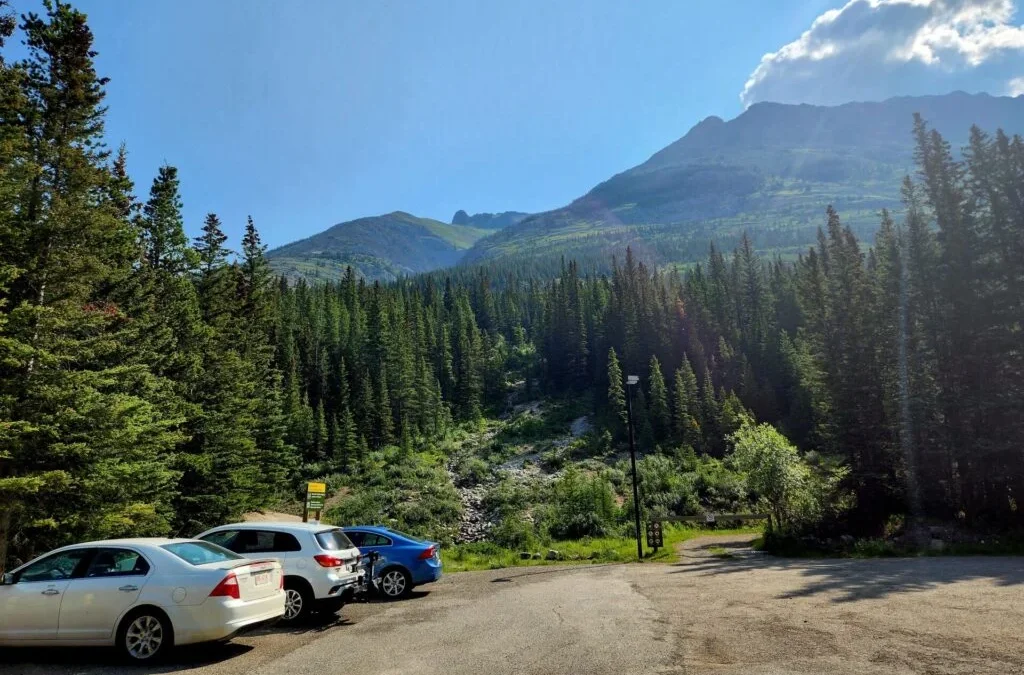
Many trailheads, quieter roads, smaller parking areas, and less obvious hiking options are not always well suited to larger tour buses. Some places are shaped by road width, parking limits, seasonal access, vehicle-size restrictions, or the practical reality that a bus-based tour needs to move a group efficiently between recognized stops.
A private vehicle can give the day more room to adapt.
It may allow for a trailhead that makes more sense for your pace, a quieter start, a less obvious route, or a change in plan if weather, crowding, or energy suggests a better option. It can also reduce the pressure to follow a fixed sightseeing circuit simply because that is where a tour vehicle is scheduled to go.
It can also make it easier to avoid the predictable rhythm of tour-bus stops, where many visitors often arrive at the same places within the same short windows of time.
This is one of the quiet advantages of a private guided hiking day.
You are not locked into the rhythm of a bus tour.
You are not limited to the places that work best for larger vehicles or broader sightseeing itineraries.
Instead, the day can be shaped around the hike itself: where it begins, how it feels, what conditions are doing, and what kind of mountain experience actually fits.
For the right guests, having a car is not just a logistical requirement.
It is part of the freedom that makes the private hiking day work.
How Distance Shapes a Private Guided Hiking Day
Distance is one of the most underestimated parts of planning a hiking day in the Canadian Rockies.
There is the distance of the hike itself, but there is also the distance to the trailhead, the distance back afterward, and the emotional distance between what looked manageable online and what the full day actually feels like.
A hike may be a good fit physically, but less appropriate if it requires too much driving from where you are staying.
A trail may be famous, but not worth the added road time if the day becomes rushed.
A quieter option closer to your base may create a better experience than a more iconic hike farther away.
This is one of the reasons private guiding is not simply about choosing the “best” hike.
It is about choosing the right hike in the context of the whole day.
If you are staying in Banff, some trail options may make more sense than others. If you are staying in Canmore, Kananaskis may sometimes be a better fit than driving deeper into Banff National Park. If you are staying near Lake Louise, a hiking day there may make more sense than adding a long drive elsewhere. If you are hoping for the Icefields Parkway, the beauty of that region has to be weighed against the time and energy it takes to get there and back.
Distance is not just geography.
It is part of the experience.
Driving Distance Is Still Effort
Many visitors think carefully about hiking distance but underestimate driving distance.
That is understandable. A road distance can feel passive compared with a trail distance. But in mountain travel, driving still takes attention, time, and energy.
A long drive before a hike can affect how fresh you feel at the trailhead.
A long drive after a hike can affect how tired the day feels by the time you return.
A day with too much vehicle time can feel less spacious, even if the hike itself is beautiful.
This matters for private guided hiking, and it matters just as much for bus tours and sightseeing tours.
A sightseeing tour may allow you to relax while someone else drives, which can be a real benefit. But the day is still shaped by distance. More time in a vehicle usually means less time walking, lingering, noticing, or settling into one place.
That does not make sightseeing tours wrong.
It simply means they solve a different problem.
They help visitors cover distance more conveniently.
A private guided hike is usually trying to do something else: reduce the number of moving parts so the hiking day itself can receive more attention.
Bus Tours Solve Transportation, But They Do Not Remove Distance
Bus tours and sightseeing tours can be excellent when transportation is the main challenge.
If you do not want to drive, do not have a rental car, or want to see several famous places without managing parking and navigation, a tour vehicle can make the day much easier.
But a bus tour does not remove distance.
It reorganizes it.
The day may still include long stretches of driving, multiple stops, fixed timing, pickup schedules, and short windows of time at each destination. The route has to work for a group and for the overall itinerary, not only for the pace and interests of one or two people.
That can be exactly right if your goal is scenic variety and convenience.
It may be less satisfying if your goal is a hiking-focused day with enough time to move, settle, pause, and experience a trail more deeply.
This is one of the key differences between a sightseeing tour and private guided hiking.
A sightseeing tour often uses transportation to connect several places.
A private guided hike uses transportation to reach the right trail, then lets the hiking day become the main experience.
For more on that distinction, Private Guided Hiking vs Banff Sightseeing Tours: Which Is Right for You? explains the difference more fully.
Sightseeing Stops Often Come With a Short Time Frame
One thing visitors sometimes underestimate about sightseeing and bus tours is how short the time at each stop can feel.
A tour may solve the transportation problem beautifully. You do not have to drive, find parking, or decide where to go next. But because the day usually includes several destinations, each place often has to fit inside a schedule.
Sometimes that may mean twenty minutes at a viewpoint. Sometimes it may be forty minutes at a lake or scenic stop. That can be enough time to take photos, walk a short distance, look around, and feel that you have seen the place.
For many visitors, that is exactly what they want.
But it is different from having time to settle into a landscape.
A short stop gives you a glimpse. A hiking-focused day gives the place time to unfold.
This is not a criticism of sightseeing tours. It is simply the nature of an itinerary built around multiple places. The more stops a day includes, the less time each place can usually receive.
Private guided hiking works from a different rhythm.
Instead of moving from stop to stop, the day is shaped around one trail, one pace, and one experience. There is more room to pause when something is worth noticing, adjust the pace when the terrain changes, sit longer when the view invites it, or let the day breathe without feeling that the next stop is waiting.
For some travellers, a short scenic stop is enough.
For others, especially those who want a more meaningful mountain experience, the short time frame can feel unsatisfying. They do not only want to see the lake, valley, or viewpoint. They want to feel that they had time inside the place.
That is where a private guided hiking day can feel very different.
Bus Tours Often Concentrate People in the Same Places
Another thing to understand about sightseeing and bus tours is that they often move through the same well-known stops.
That makes sense. Visitors want to see the famous lakes, viewpoints, waterfalls, and scenic pullouts they have heard about before arriving. Tour companies also need places that can handle larger vehicles, group movement, clear timing, and predictable access.
But the result is that many tours arrive at the same places.
And when several buses, vans, rental cars, and independent travellers converge on the same viewpoints, congestion can build quickly.
A place may be beautiful, but the experience can start to feel crowded, hurried, or more managed than expected. You may have only a short window of time, and much of that time may be shared with other groups doing the same thing at the same stop.
That does not make sightseeing tours wrong.
It is simply the nature of moving many visitors through the most recognizable places in a limited amount of time.
A private guided hiking day with your own vehicle can create a different kind of freedom.
It may allow the day to begin at a quieter trailhead, shift timing to avoid peak pressure where possible, choose a less obvious route, or make a small adjustment when a place feels too busy. It can also allow for additional sights that fit naturally with the hiking day, rather than stops chosen because they work for a larger tour circuit.
This does not mean every place will be empty.
Banff and the Canadian Rockies are popular for good reason.
But private guided hiking can give the day more room to breathe.
The experience is not locked into the same stop sequence as everyone else. The route can be chosen for fit, timing, weather, access, and the actual feel of the day.
For many guests, that freedom is part of the value.
They are not only getting away from a bus.
They are getting away from the rhythm of a bus tour.
Meeting Points: How a Private Guided Hike Usually Begins
Because transportation is not included, a private guided hike usually begins at an agreed meeting point.
That meeting point depends on the hike, the region, the season, current access, parking considerations, and where you are staying.
The goal is to keep the start of the day clear and practical.
In some cases, it may make sense to meet near the trailhead. In other cases, it may make sense to meet at a location that allows the day to begin calmly and continue from there.
The details are handled through conversation before the hike.
You do not need to know the exact meeting point before reaching out. In fact, it is often better not to lock in the hike too early. Once your dates, location, hiking background, transportation situation, and hopes for the day are clear, the route and meeting point can be matched more intelligently.
For the general booking process, How It Works is the best page to review.
You Are Not Left to Figure It Out Alone
Although transportation is not included, guests are not left to figure out the access piece alone.
Before the guided day, I provide clear information so the meeting point and trailhead plan make sense. Depending on the hike and region, that may include directions, timing suggestions, trailhead details, parking considerations, and map information to help you understand where we are meeting and how the day will begin.
The goal is for the start of the day to feel calm, not confusing.
You do not need to arrive already knowing every road, trailhead, or access detail. That is part of the pre-hike planning conversation. Once we know where you are staying, whether you have a vehicle, and what kind of hiking day fits your trip, I can help clarify the practical details so the logistics support the experience rather than distract from it.
This is one of the ways private guided hiking can remain both independent and supported.
You use your own transportation, but you are not left without guidance.
The route, meeting point, timing, and trailhead plan are all considered together so the day can begin smoothly.
What If You Are Visiting Banff Without a Car?
If you are visiting Banff without a car, a private guided hiking day may still be possible in some situations, but it depends on where you are staying, what transportation options are available, and which hike is realistic.
This is where expectations matter.
Some areas are much easier to access without a vehicle than others. Some trailheads require more independent mobility. Some regions, especially parts of Kananaskis, are much more difficult without your own transportation.
If you do not have a vehicle, the best first step is to be clear about that early.
From there, we can determine whether a hiking-focused private day is realistic or whether another kind of experience would make more sense.
There may be times when a sightseeing tour, shuttle-supported outing, or another operator with transportation included is the better fit.
That is not a failure of the day.
It is simply honest matching.
A private guided hike works best when the access supports the experience rather than making the whole day feel complicated before it begins.
Banff and Kananaskis Are Different for Transportation
Banff and Kananaskis are both beautiful hiking regions, but they are not the same from a transportation perspective.
Banff has more visitor infrastructure, more public-facing tourism services, and more familiar destination names. Some areas may be easier to understand as a first-time visitor, but Banff also comes with traffic, parking pressure, seasonal access constraints, and heavy demand around iconic places.
Kananaskis often feels quieter and less internationally known, but it can be more vehicle-dependent. Trailheads are spread across a large area, public transportation is limited, and access can require more local knowledge.
That means the “right” region may depend partly on where you are staying and what transportation you have.
If you are based in Canmore, some Kananaskis hikes may be more practical than driving deep into Banff. If you are based in Banff, certain Banff-area trails may make more sense than adding a longer drive. If you are staying near Lake Louise, the best day may be shaped around that area rather than forcing a different region into the plan.
This is why route choice and transportation should not be separated.
They belong in the same conversation.
If you are comparing the regions, Banff vs Kananaskis for Hiking is a useful supporting article.
Why the Closest Hike Is Not Always the Best Hike
Distance matters, but it does not mean the closest hike is always the right one.
Sometimes a slightly longer drive leads to a better fit: quieter trails, better weather, more suitable terrain, or a route that better matches your pace and comfort.
Other times, the more distant option is not worth the cost in time and energy.
This is where professional judgment matters.
The right hike is not chosen by distance alone. It is chosen by looking at the whole day.
How far is the drive?
How long is the hike?
How much elevation is involved?
What will the descent feel like?
What is the weather doing?
How much traffic or crowd pressure is likely?
How much energy do you want to spend before and after the trail?
What kind of experience do you actually want?
A closer hike can sometimes feel more spacious because the day is not stretched thin.
A farther hike can sometimes be worth it because the route, conditions, and experience justify the travel.
The key is not simply minimizing distance.
The key is making distance serve the day.
Why the Famous Hike May Not Be the Right Hike
Famous places can exert a lot of pressure on a trip.
If you have seen photos of a lake, viewpoint, or trail many times before arriving, it can feel as if the trip will be incomplete without it.
But famous does not always mean right.
A well-known hike may involve more driving, more access planning, more crowd pressure, more parking stress, or more time in transit than expected. It may still be beautiful, but the full experience may not match what you imagined.
That is especially true if the goal is a calm, well-paced hiking day.
Sometimes the better choice is not the most famous trail.
Sometimes it is the one that fits your location, energy, weather, and timing more honestly.
This is where private guided hiking can be helpful. The point is not to chase the most recognizable name. The point is to choose the hike that gives the day the best chance of feeling good from beginning to end.
If you are working through that kind of decision, Best Hikes in Banff for Active Adults and Why Easy Hikes in Banff Can Feel Misleading are helpful related reads.
How Transportation Affects Pacing
Transportation affects pacing before the hike even starts.
A long drive may mean an earlier start. A later start may mean more heat, more people, or less margin. A compressed schedule may create subtle pressure on the trail. Even if no one says it out loud, the day may start to feel like it has to keep moving.
That changes the hiking experience.
A private guided day works best when there is enough time for the pace to settle naturally. There should be room to pause, notice, adjust, and make good decisions without feeling that the drive has already consumed too much of the day.
This is one of the reasons I pay close attention to the full shape of the day, not only the trail distance.
A hike is not just the kilometres on foot.
It is the drive, the start time, the trailhead, the climb, the descent, the return, and how all of those pieces affect the people moving through them.
If pacing is one of your concerns, How to Pace a Hike in the Canadian Rockies and Travel Pace After 50 in the Canadian Rockies both support this article well.
How Transportation Affects the Return
The return is often where the day tells the truth.
A hike may feel well chosen on the way out, but the return can feel very different if the day has been overbuilt.
This is true on the trail, and it is also true after the trail.
A long drive back after a demanding hike can change the way the whole day is remembered. What felt exciting in the morning may feel like too much by late afternoon. Guests may still have dinner plans, travel fatigue, jet lag, or another day of activity ahead.
That does not mean longer drives should always be avoided.
But they should be considered honestly.
For active adults over 50, this often matters more than expected. Many people are still strong and capable, but they are more thoughtful about recovery, knees, hips, energy, sleep, and how they want the day to feel afterward.
A good hiking day should not only feel good at the viewpoint.
It should still feel good on the way back.
That includes the drive.
Who This Service Is Best For
This private guided hiking service is best suited to guests who want the hike itself to be the centre of the day and who have, or can arrange, their own transportation.
It is often a good fit for active adults over 50, couples, and solo travellers who want a private, thoughtful, hiking-focused experience rather than a packaged sightseeing tour.
It may be a good fit if you are staying in Banff, Canmore, Lake Louise, or nearby areas and want help choosing a hike that makes sense for your location, pace, interests, and available time.
It may also be a good fit if you already have a rental vehicle and want professional support for the mountain day itself rather than a guide who is also acting as a driver.
The key is that transportation should be manageable enough that the hiking day remains the focus.
For more on whether this style of guiding fits you, Are Guided Hikes Right for Active Adults Over 50? and Is a Private Hiking Guide Worth It If You Can Hike on Your Own? both connect well.
Who May Be Better Served by a Sightseeing or Bus Tour
A sightseeing or bus tour may be a better fit if transportation is your main need.
If you do not have a vehicle, do not want to drive, want hotel pickup, prefer multiple scenic stops, want short walks, or are trying to see several iconic places in one day, a sightseeing tour may serve you better.
That is especially true if the hiking itself is not the centre of the experience.
There is nothing wrong with that.
For many first-time visitors, a tour with transportation can make Banff feel easier to navigate. It can reduce stress, simplify logistics, and allow you to see several well-known places without managing the route yourself.
The important thing is to choose honestly.
If what you want is convenience, a bus or sightseeing tour may be the better fit.
If what you want is one well-chosen hiking day with a guide focused on route choice, pace, interpretation, and mountain judgment, private guided hiking may be the better fit.
How to Decide Whether You Need a Car
A simple way to decide is to ask what you want the day to revolve around.
If the day needs to revolve around transportation, hotel pickup, multiple destinations, and easy access, then a sightseeing tour may make more sense.
If the day revolves around the hike itself, and you have transportation or can meet at an agreed location, then private guided hiking may be a good fit.
You can also ask:
How far are we willing to drive before and after hiking?
Do we want to spend the day moving between places, or settling into one trail?
Are we comfortable meeting at a trailhead or agreed location?
Is transportation our biggest problem, or is choosing and experiencing the right hike our bigger concern?
Do we want convenience, or do we want a more personal hiking-focused day?
These questions usually make the answer clearer.
What Happens Next
You do not need to know the exact hike or meeting point before reaching out.
A better place to begin is with a few practical details: your dates, where you are staying, whether you will have a vehicle, your hiking background, and the kind of day you are hoping to have.
From there, it becomes much easier to decide whether a private guided hiking day makes sense and which region is most appropriate.
If a private guided hike is a good fit, you will receive the information needed to understand the meeting point, trailhead access, timing, and route plan before the day begins.
You can learn more about Private Guided Hiking in Banff, Private Guided Hiking in Kananaskis, or Custom Guided Hiking
You can also review How It Works and Expectations to understand the process more clearly.
If you are unsure whether the transportation piece works for your trip, you are welcome to begin a conversation.
Final Thoughts
So, do you need a car for a private guided hike in Banff or Kananaskis?
Usually, yes.
This private guided hiking service is best suited to guests who already have transportation or can meet at an agreed location. It is not a shuttle, bus tour, hotel-pickup service, or packaged sightseeing day.
But the bigger question is not only whether you need a car.
It is how transportation, distance, and time shape the kind of day you want.
Bus tours and sightseeing tours can be a good fit when convenience, transportation, and multiple scenic stops are the priority. They may help you see several famous places briefly.
Private guided hiking is a better fit when the hike itself is the priority. Supported by your own transportation, it can give you more freedom to choose quieter trailheads, adapt to the day, and experience one place more deeply.
One solves the problem of getting around.
The other supports the experience of being on the trail.
In a place as large and layered as the Canadian Rockies, that difference matters.
Certified private hiking guide and professional interpretive practitioner based in the Canadian Rockies. With over 25 years of four-season mountain experience, she offers thoughtfully paced hiking experiences that help active adults explore mountain landscapes with care, confidence, and understanding. Meet Niki