Visitors searching for the best hikes in Banff often expect a list of the hardest or most demanding trails. But for many travelers—especially active adults exploring the Canadian Rockies, the most memorable hikes are not defined by difficulty.
They are defined by experience.
A great hike allows enough time to settle into a steady rhythm, notice the landscape, and move through the mountains without feeling rushed. The Canadian Rockies reward that kind of pacing. Lakes, alpine basins, glacier viewpoints, and broad valley trails all offer extraordinary scenery without requiring extreme effort.
Many of the best hikes in Banff are located along the Bow Valley corridor, the Lake Louise region, and the spectacular Icefields Parkway between Banff and Jasper. Each area offers a different character of landscape, from glacier valleys to high alpine meadows.
This guide highlights some of the best hikes in Banff for active adults, routes that combine spectacular landscapes with a pace that allows the day to unfold naturally.
Trail conditions in the Rockies can vary widely depending on the season, something I explore in more detail in
→ Best Time to Visit Banff for Hiking.
Many visitors begin with Banff, but as they look more closely at crowding, pacing, and the kind of day they want to have, Kananaskis often becomes part of the comparison.
→ Banff vs Kananaskis for Hiking
Best Hikes in Banff for Active Adults
(Quick Overview)
For travelers looking for scenic hiking routes in Banff that combine beautiful landscapes with a comfortable pace, several trails stand out for their balance of accessibility and alpine scenery.
Some of the best hikes in Banff for active adults include:
-
Lake Agnes Tea House
-
Johnston Canyon to the Ink Pots
-
Helen Lake
-
Parker Ridge
-
Plain of Six Glaciers
-
Bow Glacier Falls
-
Sunshine Meadows
-
Peyto Lake Panorama Walk
-
Bow Lake Shoreline Walk
These hikes range from short lakeshore walks to alpine basins with expansive views, allowing visitors to experience the Canadian Rockies at a steady and enjoyable pace.
Not all “easy” hikes feel the way they appear on paper. You can read more in Why Easy Hikes in Banff Can Feel Misleading
What Makes a Hike “Best” in the Canadian Rockies
In mountain landscapes like Banff National Park, the quality of a hike often has less to do with distance and more to do with how the day unfolds.
Several factors shape the experience:
-
altitude and pacing
-
seasonal trail conditions
-
crowd pressure in popular corridors
-
weather patterns that shift quickly with elevation
A hike that feels perfect in early September may feel completely different in mid-July when visitor numbers peak.
This is why timing and route selection matter. Many travelers discover that the most rewarding days are not necessarily the most ambitious ones, but the hikes where the pace allows space to appreciate the landscape fully.
Lakeshore and Valley Hikes With a Calm Pace
Lake Agnes Tea House
The trail to Lake Agnes above Lake Louise is one of the most recognizable hikes in Banff National Park. The path climbs steadily through forest before reaching the small alpine lake and historic tea house perched along its shoreline.
Although the trail is popular, starting early in the morning often transforms the experience. The forest climb feels quiet, and the first views of Lake Louise far below begin to reveal the scale of the valley.
For many visitors, the combination of a steady climb, a historic mountain tea house, and expansive alpine scenery makes this one of the most memorable moderate hikes in the Rockies.
Johnston Canyon to the Ink Pots
Johnston Canyon is famous for its waterfalls, and the lower canyon walk is often busy. But continuing beyond the Upper Falls changes the experience dramatically.
The trail opens into a wide valley that leads toward the Ink Pots, a group of mineral springs emerging in bright turquoise pools beside a broad alpine meadow.
Many hikers turn around at the falls, so continuing farther often brings a quieter pace and a greater sense of space.
Bow Glacier Falls
Located along the Icefields Parkway, the hike to Bow Glacier Falls is one of the most scenic moderate walks in the region.
The trail follows the edge of Bow Lake before entering a wide valley beneath the dramatic face of Bow Glacier. As the valley opens, the waterfall becomes visible far ahead, cascading down the cliffs below the glacier.
The terrain remains relatively gentle, making it an excellent option for hikers who want dramatic scenery without a demanding climb.
Alpine Hikes With Big Views
Helen Lake
The trail to Helen Lake climbs gradually through open slopes above the Icefields Parkway before entering a broad alpine basin surrounded by high peaks.
In mid-summer, wildflowers often fill the meadows, while late summer and early autumn bring wide views across the surrounding ridgelines.
The hike gains elevation steadily but rarely feels abrupt, making it one of the most satisfying alpine hikes for travelers who prefer a steady pace.
Parker Ridge
Few hikes in the Canadian Rockies deliver such dramatic glacier views with relatively modest effort.
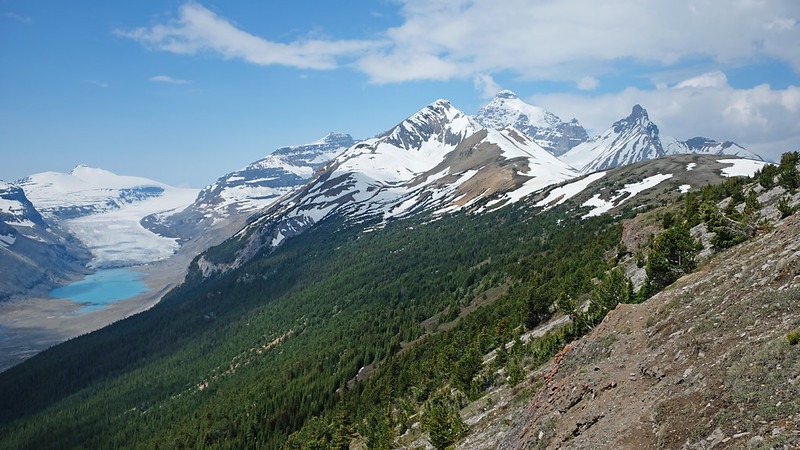
The trail climbs a series of switchbacks before reaching the ridge itself, where the Saskatchewan Glacier spreads out below in an immense river of ice.
Because the distance is short, hikers can take time to sit on the ridge and watch the shifting light across the glacier valley.
Plain of Six Glaciers
Beginning at Lake Louise, the Plain of Six Glaciers trail follows the shoreline before gradually entering a high glacial valley.
Along the way, views open toward towering peaks and hanging glaciers above the valley walls. The historic Plain of Six Glaciers tea house sits near the end of the trail, offering a place to pause before the return journey.
The steady terrain and constant mountain views make this one of the classic day hikes in Banff.
Shorter Walks With Extraordinary Scenery
Peyto Lake Panorama Walk
Peyto Lake is one of the most photographed lakes in the Canadian Rockies, known for its striking turquoise color and wolf-head shape when viewed from above.
The short walk from the parking area leads to a dramatic viewpoint overlooking the lake far below. Visiting early in the morning or later in the evening often provides a calmer experience, when the viewpoint platforms are quieter and the valley feels more expansive.
Bow Lake Shoreline Walk
Not every memorable mountain experience requires a long hike.
Bow Lake, located along the Icefields Parkway, offers a beautiful lakeshore walk beneath towering peaks and glaciers. The setting feels expansive, with the massive face of Bow Glacier rising above the valley.
For travelers adjusting to altitude or easing into hiking during the first days of a trip, this shoreline walk provides extraordinary scenery with very little effort.
Alpine Meadows and Expansive Landscapes
Sunshine Meadows
High above the town of Banff, Sunshine Meadows opens into a broad network of alpine trails and wildflower meadows.
During the summer months the meadows fill with color, while the surrounding ridges provide wide views across the continental divide.
The terrain allows for flexible distances, making it easy to design a day that balances exploration with a comfortable pace.
Saddleback Pass
Climbing above Lake Louise, Saddleback Pass offers a rewarding combination of elevation gain and sweeping views.
The ascent is steady but manageable, and the pass itself provides a dramatic panorama of surrounding peaks and valleys.
Many hikers combine this route with other trails in the Lake Louise area to create a longer alpine day.
Altitude and Pacing in the Canadian Rockies
Altitude can surprise visitors arriving from lower elevations. Even moderate hikes may feel slightly more demanding during the first days of a trip.
One helpful strategy is beginning with shorter walks or valley trails before attempting higher alpine routes.
For visitors arriving from sea level, even a short walk in the foothills west of Calgary can help the body begin adjusting before heading higher into Banff, Lake Louise, or the Icefields Parkway.
With a day or two of adjustment, many hikers find their rhythm returning naturally.
Weather patterns in the Canadian Rockies change quickly with elevation and season, which is why understanding Banff Weather by Month can help visitors plan hikes more comfortably.
Choosing the Right Hike for Your Pace
The best hikes in Banff are not always the longest or the highest. Often they are the ones that allow the landscape to be experienced fully rather than hurried through.
Seasonal timing, weather conditions, and visitor pressure can all influence how a hike feels on a given day.
Popular areas like Lake Louise often experience heavy visitor traffic during peak season, something I explore in
→ Overcrowding at Banff and Lake Louise.
Choosing the right trail often comes down to understanding those patterns and allowing enough time for the mountains to shape the experience.
For travelers who prefer a thoughtful pace, the Canadian Rockies offer an extraordinary range of routes where scenery, movement, and awareness come together in ways that make a mountain day genuinely memorable.
After guiding in the Rockies for many seasons, I’ve found that many visitors enjoy hikes far more when the day begins calmly and the route leaves enough time to simply notice the landscape.
These kinds of decisions about pacing, timing, and route choice are part of the approach I describe in How I Guide.
Pacing matters when planning a trip to the Rockies and you can read more in this article. How to Plan a Trip to the Canadian Rockies
Frequently Asked Questions About Hiking in Banff
What is the best hike in Banff for scenic views?
Some of the most scenic hikes in Banff include Parker Ridge, Helen Lake, and Plain of Six Glaciers. These trails combine alpine landscapes, glacier views, and manageable elevation gain, making them excellent options for visitors who want spectacular scenery without extremely demanding terrain.
Are there easy hikes in Banff with great views?
Yes. Several shorter hikes in Banff offer remarkable views with relatively little effort. Bow Lake, Peyto Lake viewpoint, and Johnston Canyon provide beautiful scenery while remaining accessible to many hikers.
When is the best time to hike in Banff?
Most snow-free hiking trails open between late June and early October. Weather patterns, snowpack, and elevation all influence trail access, which is why seasonal timing plays an important role in planning hikes in Banff.
How long do you need to acclimatize for
hiking in Banff?
Many visitors feel altitude effects most during their first day or two, especially if arriving from sea level. Starting with a shorter walk or a moderate valley hike can help you find your rhythm before heading higher into alpine terrain.
Do I need hiking poles for Banff hikes?
They’re not required, but many active adults find poles helpful for comfort and confidence, especially on steeper descents, uneven rocky sections, or when trails are wet. They can reduce strain on knees and help maintain a steadier pace.
What should I pack for a day hike in Banff?
Even on popular trails, mountain conditions can change quickly. Most day hikers are better off carrying layers, rain protection, water, and a small amount of food beyond what they think they’ll need—especially if they plan to linger at viewpoints or move at a relaxed pace.
Certified private hiking guide and professional interpretive practitioner based in the Canadian Rockies. With over 25 years of four-season mountain experience, she offers thoughtfully paced hiking experiences that help active adults explore mountain landscapes with care, confidence, and understanding. Meet Niki