On a clear June morning above Bow Summit, I shortened our ridge time by twenty minutes before anyone knew why.
Nothing dramatic had happened. The sky was mostly blue. The trail was dry. The wind had only shifted slightly.
But the air had changed texture. The breeze was no longer passing through the valley floor. It was moving steadily across the ridge. Cloud edges were flattening rather than rising. It wasn’t a storm. It was direction.
That is often what hiking guides notice in the Rockies before most guests would have any reason to. Not because guests are unaware. Because their attention is where it should be: on the landscape.
It is also part of How Good Guiding Holds Risk Quietly, long before guests need to think about it themselves.
Mine is divided.
Most visitors experience the Rockies through what is visible: scenery, trail, destination.
Guides are also watching what is changing: wind direction, pacing, terrain transitions, and the small signals that shape how a day will unfold.
Most Days Are Won or Lost in the First Thirty Minutes
Here is something I’ve learned over decades of guiding.
Most mountain days are shaped in the first half hour.
Not because of danger.
Because of pacing.
If the first incline is pushed just slightly too quickly, the body compensates later. If hydration waits until thirst appears, energy dips earlier than expected. If a group locks into a tempo that feels strong but unsustainable, the margin quietly narrows.
I used to let that go longer when I was younger.
I assumed capable adults would self-correct. Often they did. Sometimes they didn’t. The correction would come later, and it would cost the tone of the day.
Now I adjust sooner.
That adjustment rarely looks like instruction. It looks like subtle slowing. A seated break before anyone asks. A layer change before hands cool. A question asked at the right moment.
Terrain Transitions Speak Early
Guests often read a trail as distance and elevation.
Guides read transitions.
A narrowing section where passing will disrupt rhythm.
A long sun-exposed slope that will dehydrate more than expected.
A shaded descent where freeze–thaw cycles have left sections slick even in June.
None of these are headline risks. They are cumulative variables.
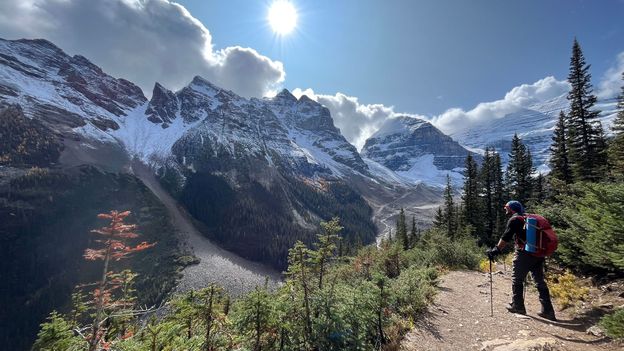
On a mid-summer hike near Lake Louise, I noticed one guest shortening stride slightly after the first sustained climb. Breathing was fine. Conversation had quieted just enough to signal effort, but not strain.
We slowed marginally on the next section and extended our first seated break by ten minutes in a sheltered patch of trees.
That small decision preserved energy for the return through a busier corridor later in the day. When we encountered heavier foot traffic and warmer temperatures, there was no compression. Just steady movement.
Most guests remember that day as “easy.”
It wasn’t easy.
It was adjusted early.
This is where perception and reality often diverge in mountain terrain. I explore this further in Hiking Risk in the Canadian Rockies: Perception vs Reality.
Weather Rarely Announces Itself Loudly
In the Rockies, weather usually shifts before it turns.
Wind direction changes slightly.
Cloud layers begin stacking rather than drifting.
Light flattens across a slope.
Guests often notice weather when it becomes visible. Guides watch for when it becomes directional.
That difference changes decisions.
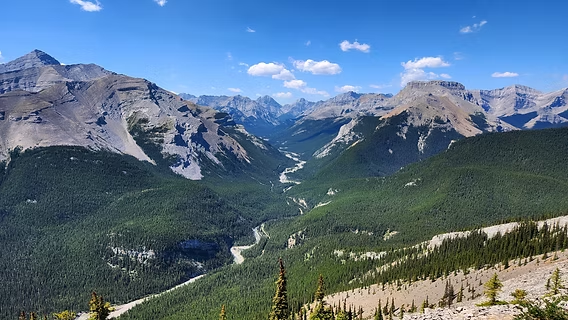
On the Bow Summit morning, we shortened our exposed ridge time and kept a lower return option available. By mid-afternoon, cloud build thickened and the wind increased. We were already descending through sheltered terrain.
No one felt rerouted. No one felt urgency. The day remained coherent.
It also shapes how risk is interpreted. Most strain in mountain hiking is cumulative, not catastrophic. Early attention reduces later compression.
Group Energy Is Not Obvious, But It Is Real
Even with one or two guests, energy patterns differ.
One person runs warm. Another cools quickly in wind.
One regains breath rapidly on descents. Another holds tension in knees.
One prefers quiet. Another regains rhythm through conversation.
These are not weaknesses. They are variables.
Earlier in my career, I watched terrain more than people. Experience has shifted that balance. Now I watch both equally.
When energy is preserved early, interpretation deepens. Guests begin noticing rock layers, wind shifts, seasonal change, wildlife movement. The landscape becomes more than backdrop.
That shift does not happen by accident.
What Most People Don’t Realize
Active adults 50+ who come to the Rockies are often strong and well prepared. They understand effort. They’ve walked in mountains before.
What they haven’t usually experienced is how many small decisions shape a day before they feel them.
Adjusting start time by forty minutes to avoid corridor congestion.
Choosing a slightly less direct line to preserve rhythm.
Prompting hydration before thirst.
Protecting turnaround logic before clouds thicken.
For active adults 50+, this often matters more than distance or difficulty. The rhythm of the day becomes the experience.
This is also why many quieter areas, including parts of Kananaskis Country, often feel more spacious and easier to move through, even when the terrain is just as complex.
Good guiding often looks uneventful. That is not a lack of complexity. It is the result of attention applied early and consistently.
What hiking guides notice in the Rockies are not dramatic hazards. They are quiet patterns that influence how a day feels three hours later.
When those patterns are read well, the mountains feel steady.
And when they are missed, the same trail can feel inexplicably harder than it should.
Often the difference is not the terrain.
It is what was seen before it needed to be seen.
When attention is freed from managing strain, people start noticing the mountains more clearly.
This is also part of what makes a day feel calm rather than compressed. If you want to understand that structure more fully, Margin Is What Makes a Day Feel Calm goes deeper.
WHY EARLY ADJUSTMENT MATTERS IN MOUNTAIN TRAVEL
In mountain terrain, fatigue rarely arrives suddenly. It accumulates quietly through small imbalances.
A pace that feels comfortable for the first hour can slowly compress energy reserves. A water bottle left untouched during the early climb becomes noticeable later when the sun reaches an exposed slope. A descent that begins slightly rushed can tighten muscles that will be needed again on the return.
None of these moments feel dramatic in isolation. Together they shape the experience of the day.
Guides learn to read these small patterns early. A brief pause before a steep section. A slower rhythm on the first sustained incline. A longer break while the group still feels strong.
Those adjustments are rarely visible to guests as “decisions.” They simply feel like a day that unfolds smoothly.
Often the difference between a calm mountain day and a strained one is not fitness or distance. It is attention applied early, before small variables begin to compound. These observations also shape how a day is planned in the mountains. For a broader view, see How to Plan a Trip to the Canadian Rockies
WHY THIS CHANGES THE EXPERIENCE OF A DAY
For most hikers, these patterns remain invisible.
But they shape the experience in very practical ways.
A day that feels steady instead of rushed.
Energy that lasts through the return, not just the climb.
Time to notice the landscape instead of managing fatigue.
The difference is rarely dramatic.
It is cumulative.
When these patterns are read early, the mountains feel more open, not more demanding.
And when those early decisions are built into the structure of the day from the beginning, the entire experience changes. That is part of what I’m describing in What Conservative Guiding Looks Like in the Mountains.
Frequently Asked Questions About How Hiking Guides Read the Mountains
What do hiking guides notice that most hikers miss?
Experienced guides often notice small changes in terrain, weather, and group pacing that influence how a day unfolds. Wind direction, cloud structure, hydration patterns, and subtle shifts in energy all provide early signals about how conditions may develop later in the hike.
Why does pacing matter so much in mountain hiking?
Mountain terrain amplifies small pacing mistakes. Starting slightly too quickly or delaying hydration can reduce energy later in the day. Guides often adjust pace early so the group maintains steady movement throughout the entire hike.
How do guides recognize changing weather in the Rockies?
Weather in the Canadian Rockies often shifts gradually. Guides watch for subtle signs such as changes in wind direction, cloud layers stacking instead of drifting, or light flattening across slopes. These signals often appear well before a storm becomes obvious.
Why do guided hikes sometimes include early breaks?
Early breaks help regulate energy before fatigue appears. By adjusting pace and rest early in the hike, guides help maintain a steady rhythm so guests can enjoy the landscape without feeling rushed or depleted later.
Is guiding mostly about safety decisions?
Safety is part of guiding, but much of the work involves maintaining rhythm, reading terrain, and adjusting small variables that influence how a day feels. When those patterns are read well, the experience often feels calm and effortless.
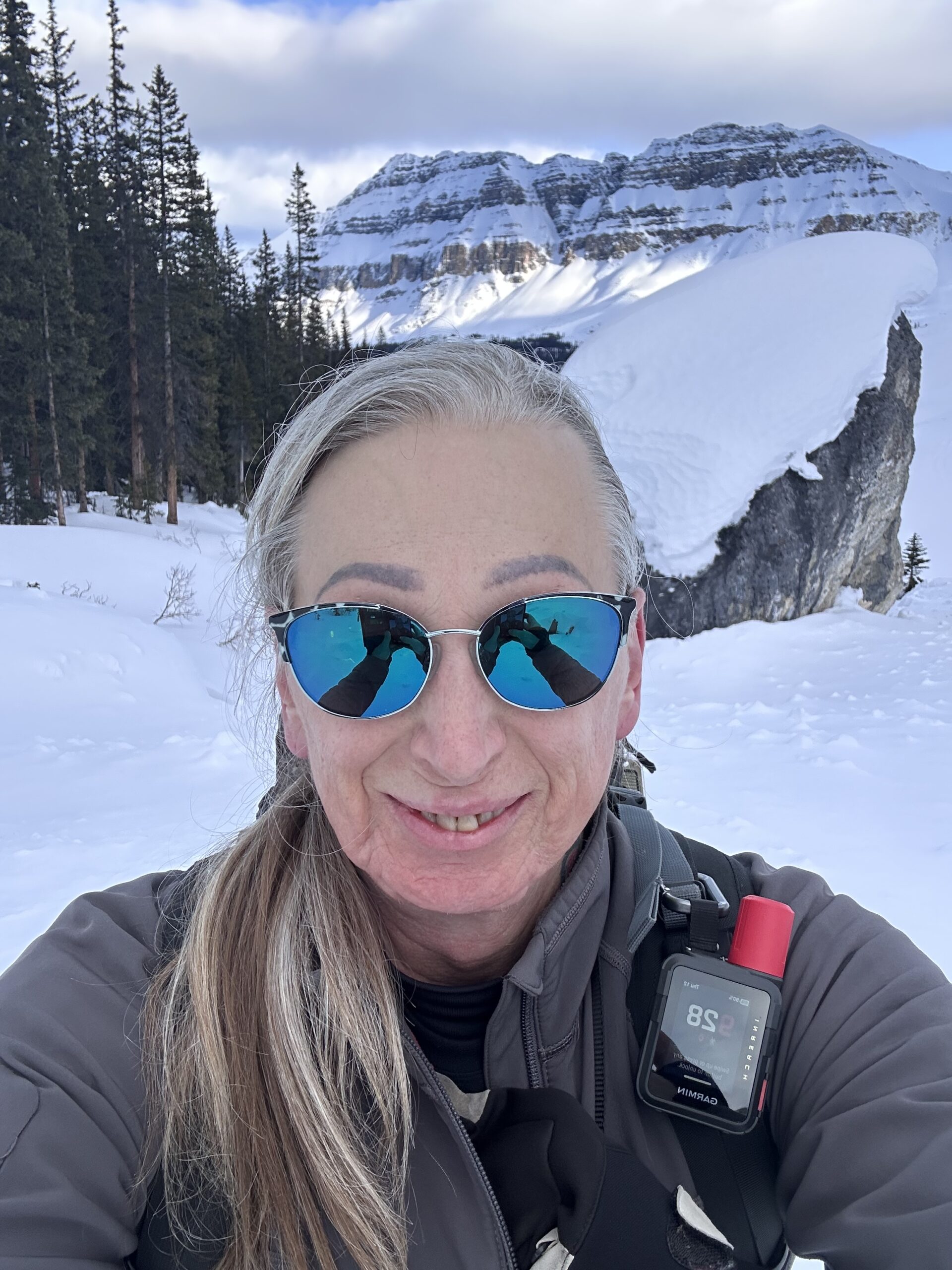
Certified private hiking guide and professional interpretive practitioner based in the Canadian Rockies. With over 25 years of four-season mountain experience, she offers thoughtfully paced hiking experiences that help active adults explore mountain landscapes with care, confidence, and understanding. Meet Niki