Some guided days feel calm from the first step. Nothing dramatic happens, nothing urgent needs solving, and yet the entire day feels steady. The pace settles early. Breathing regulates. Conversation feels unforced. Even small adjustments, layers, water, brief pauses, fit naturally into the flow instead of feeling like interruptions.
That kind of calm rarely happens by accident. In places like Banff, Lake Louise, and along the Icefields Parkway, where conditions and traffic patterns shift quickly, that structure matters more than most people realize.
Most people assume it comes from visible competence: a guide who is strong, confident, experienced, and decisive. And sometimes it does. But calm isn’t created by capability alone. Calm is usually created by something quieter: margin.
Calm Is a Feeling.
Margin Is the Structure Behind It.
In the first article, we talked about How Good Guiding Holds Risk Quietly, so guests don’t have to manage it themselves. Margin is one of the main ways that happens. It’s not a separate concept from safety. It’s the structure that prevents the day from tightening.
Margin in mountain guiding is the space between what is required and what is possible. It’s what keeps the day from depending on perfect timing, perfect weather, perfect energy levels, or perfect conditions. When margin exists, decisions don’t feel heavy. Adjustments don’t feel disruptive. The plan doesn’t become brittle.
Margin is decision space.
And decision space is what keeps a calm day calm.
What Margin Looks Like in a Real Day
Margin doesn’t usually look impressive. It looks ordinary, and that’s part of the point.
It can look like starting more slowly than you technically need to, especially in the first twenty minutes when altitude and joints are still negotiating the day. It can look like choosing a pace that preserves energy instead of spending it early, so the group has room later if conditions change. It can look like taking a sit-down break before fatigue accumulates, rather than waiting until someone is clearly struggling and the break feels overdue.
Margin also shows up in the small, practical pieces that don’t always get named on standard tours: layering strategy, hydration rhythm, and how bathroom logistics will work when there isn’t an outhouse. When those realities are addressed early, they stop taking up mental space on the trail. Guests don’t have to quietly self-manage discomfort or hesitate to ask for what they need.
Guests rarely call this margin. They usually describe it more simply: the day felt unhurried, steady, and easier to settle into.
None of these decisions appear dramatic on their own. Together, they shape the emotional tone of the day.
Why Margin Disappears on Many Tours
Many guided tours aren’t structured to hold margin, not because guides are careless, but because the systems around them reward efficiency.
Group size compresses flexibility. Transportation schedules fix start and end times. Reservation windows dictate arrival. High-demand destinations compress movement and increase pressure. When a day is built around keeping up with an itinerary, margin becomes difficult to protect. There’s less room for a slower warm-up, less room for weather, less room for a longer break, less room for human needs.
A day can still be well-managed under that structure. It can even feel impressive.
But it may not feel spacious.
For many capable adults, especially those who value steadiness over speed, that lack of spaciousness is exactly what makes guided days feel subtly tiring. If that pattern feels familiar, When a Guided Day Feels Harder Than It Should explores how that friction often shows up on the trail.
Margin Prevents Urgency
Urgency tends to appear when options have narrowed. Time has tightened. Weather is moving in faster than expected. Energy has been spent too early. The group is behind the “schedule.” The guide begins to manage the day more actively, and guests can feel the pressure even when nothing is said out loud.
Margin prevents this not by eliminating uncertainty, but by making uncertainty workable. This is one of the quite outcomes of conservative guiding.
With margin, small changes don’t become problems. A layer stop doesn’t feel like delay. A longer sit-down break doesn’t feel like an inconvenience. Turning around doesn’t feel like loss. The plan remains coherent because it was built to absorb variability rather than resist it.
This is why margin is not “extra.” It’s the foundation of calm.
Calm Is Not Personality
Calm isn’t a style choice. It isn’t a vibe. It isn’t optimism or confidence.
Calm is structure.
When margin is intentionally built into a day, decisions feel unhurried. Adjustments don’t feel like compromises. The plan doesn’t depend on perfect execution. The group isn’t asked, explicitly or subtly, to perform at its edge.
There is simply enough room for reality to unfold.
And that room changes everything: the way people breathe, the way they move, the way they rest, and the way they experience place.
The Quiet Irony of Professional Guiding
The more experienced the guiding, the less visible the work often appears.
A calm day can look effortless from the outside. But beneath that steadiness is deliberate design, routes selected with alternatives in mind, pacing chosen for resilience rather than speed, and timing choices that absorb delay rather than punish it. Good guiding often looks simple precisely because the complexity has already been handled.
Margin doesn’t announce itself. It doesn’t make headlines. It doesn’t photograph well.
It simply sits underneath the experience, keeping the day spacious.
If you have ever ended a mountain day feeling steady rather than depleted, not because it was easy, but because it never became urgent, it likely was not luck. For many people, this is also part of why some guided tours stop feeling right, even when nothing clearly “went wrong.”
It was margin.
And when it’s present, you feel it, even if you never think to name it.
If you want to see how that same kind of early attention shows up in real time on the trail, What Hiking Guides Notice in the Canadian Rockies pairs naturally with this.
And if you want to understand the broader judgment behind it, What Conservative Guiding Looks Like explores that structure more directly.
If you’re looking for a private hiking day in the Canadian Rockies that feels steady rather than urgent, you can learn more about Private Guided Hiking in the Canadian Rockies
If this feels like the right fit, the next step is simple to Begin a Conversation.
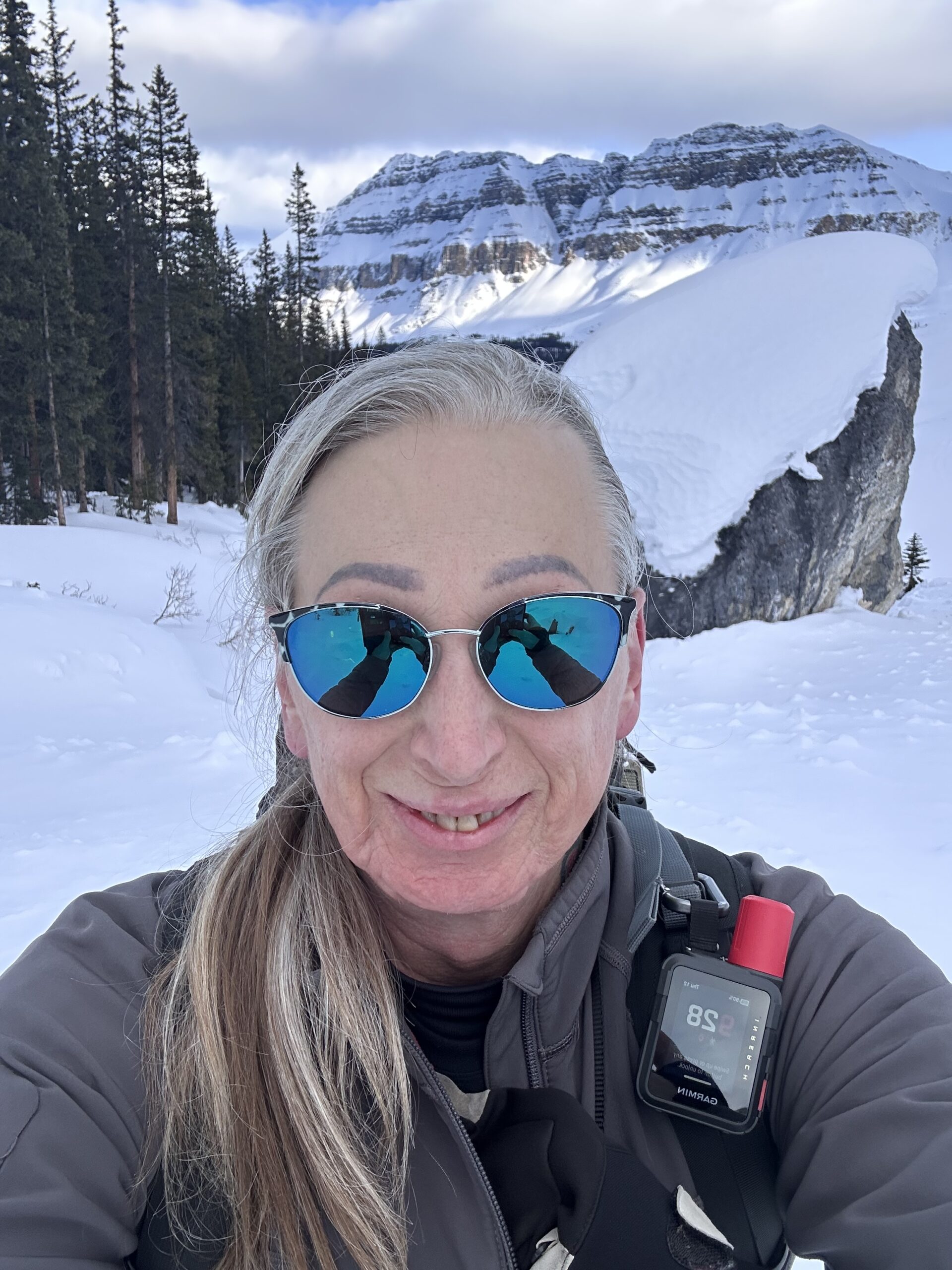
Certified private hiking guide and professional interpretive practitioner based in the Canadian Rockies. With over 25 years of four-season mountain experience, she offers thoughtfully paced hiking experiences that help active adults explore mountain landscapes with care, confidence, and understanding. Meet Niki