And why the difference matters more than most people expect
“Private” is one of the most commonly used terms in guided hiking, and also one of the least clearly defined.
For many travellers planning a trip to Banff or the Canadian Rockies, the word suggests something fairly simple: a day that feels more personal, less crowded, and more tailored to them. In practice, though, “private” can mean several different things, and those differences often shape how the day actually feels on the trail.
HOW “PRIVATE” IS COMMONLY USED
In the hiking and tour industry, “private” is often used in broad, overlapping ways. Sometimes it means that you are booking a guide just for your own party rather than joining others. Sometimes it means you are selecting from a fixed set of routes, but doing so privately. In other cases, it may mean you have some flexibility in timing, but not necessarily in how the day itself unfolds.
All of these are valid forms of private guiding. But they are not the same experience.
ACCESS VS STRUCTURE
Much of the difference comes down to something that is rarely explained clearly: the difference between access and structure.
In many cases, private guiding refers mainly to access. You have your own guide, you are not part of a larger group, and the day is reserved for you. But the structure of the experience may still remain largely unchanged. The route may already be predetermined, the pace may be fairly fixed, timing expectations may already be in place, and flexibility once the hike begins may be limited.
For many travelers, that works perfectly well. But it is only one version of what “private” can mean.
PRIVATE ALSO BEGINS BEFORE THE DAY
Another part of private guiding that is often overlooked is what happens before the hike even begins.
In many cases, communication is limited to confirming a date, meeting point, and general plan. The day itself may still be well run, but much of its structure has already been set. A more personalized approach begins earlier.
It starts with a conversation about how you like to move through the day, what kind of pace feels comfortable, how much elevation or distance is appropriate, and what you are actually hoping to experience. From there, the day is not simply selected from a fixed list. It is designed.
Routes are chosen based on current conditions, not just popularity. Timing is shaped around how the day is likely to unfold. Backup options are considered before the hike begins. This kind of preparation is not always visible on the trail, but it often determines whether the day feels smooth, well-paced, and coherent from the start.
In many ways, the quality of a guided day is shaped before the first step on the trail.
WHEN PRIVATE ALSO MEANS STRUCTURE
A different approach to private guiding does not just reserve the day for you. It shapes the day around you.
That means the route reflects current conditions rather than a preset plan. It means pacing is adjusted continuously rather than set in advance. It means timing can evolve as the day unfolds, and decisions are made in real time based on what is actually happening on the trail.
In this version of private guiding, the experience is not simply reserved. It is actively adjusted around the day as it unfolds
WHY MOST PEOPLE DON’T NOTICE THE DIFFERENCE AT FIRST
On paper, these different forms of private guiding can look quite similar. You have a guide, you have a beautiful route, and you have a day in the mountains.
The difference often becomes noticeable later, and usually in small ways. It may show up in how steady the pace feels after several hours, whether breaks happen at the right time, how smoothly the day adjusts to changing conditions, or whether the overall experience feels continuous rather than interrupted.
These are not always the things people think about in advance. But they often shape how the day is remembered afterward.
WHAT CHANGES ON THE TRAIL
When a day is structured around the guest, several parts of the experience tend to feel different.
Pacing becomes more consistent because the day follows how you actually move rather than asking you to adapt to a preset rhythm. Timing becomes less rigid, which means the day can start earlier, later, or shift as needed without disrupting the overall experience. Decisions also become quieter, happening in the background without constantly interrupting the flow of the day.
As a result, the experience often feels more continuous. There are fewer stops caused by logistics, fewer adjustments driven by external constraints, and less sense of being managed through a plan that was designed before the day really began.
WHERE GROUP SIZE FITS INTO THIS
Structure and group size are closely connected, because even small increases in group size begin to change how the day has to function.
Many private offerings still operate with small groups, and once a group expands, even slightly, the structure of the day begins to shift. Pacing becomes shared, decisions become more collective, and adjustments tend to take longer.
This is not a limitation of guiding. It is simply a natural outcome of working with groups.
It is also one of the reasons I guide only one or two guests at a time.
WHAT A MORE PERSONAL DAY FEELS LIKE
A fully private, small-scale day often feels different in ways that are subtle rather than dramatic.
The day tends to feel steadier rather than stop-and-go, more responsive than fixed, quieter when it needs to be, and well-timed without feeling overly managed. Those qualities can be difficult to describe in advance, but they are often what people remember most clearly afterward.
→ What a Private Guided Hiking Day Feels Like
WHEN THIS KIND OF PRIVATE MATTERS MOST
Not every traveler is looking for this level of flexibility, and not everyone needs it.
But it tends to matter more when you have limited time and want the day to work well, when you are unsure how the terrain will feel over several hours, when pacing and energy matter more than distance, or when you want the day to adapt to conditions rather than follow a fixed plan. It also matters for people who prefer a quieter, less structured experience overall.
For many active adults, these factors become more important than simply reaching a destination.
HOW TO DECIDE WHAT “PRIVATE” MEANS FOR YOU
If you are considering a guided hike, it can help to ask a simple question:
Is this day designed for me, or am I fitting into an existing structure?
Both approaches can lead to good experiences. The difference is in how much the day adapts to you, and how much you are expected to adapt to the day.
IF YOU’RE LOOKING FOR THIS KIND OF EXPERIENCE
If this approach to private guiding resonates, the next step is simply to explore what a day like this could look like for you.
Each hike is designed around the season, current conditions, and how you prefer to move through the mountains. There is no fixed itinerary. The goal is a day that feels steady, well-paced, and aligned from start to finish.
→ Private Guided Hiking in Banff and the Canadian Rockies
A GUIDE’S PERSPECTIVE
After many seasons in the Canadian Rockies, one pattern becomes clear.
The most memorable days are rarely defined by where you went. They are defined by how the day unfolded: whether it felt steady, whether it felt well-timed, and whether it allowed you to settle into the landscape rather than simply move through it.
“Private” can support that, but only when it extends beyond access and into how the day is actually shaped.
If you’d like to talk through your dates, hiking background, and the kind of day you’re hoping to have, the next step is simply to Begin a Conversation
RELATED ARTICLES
→ Why I Guide Only 1–2 Guests
→ What a Private Guided Hiking Day Feels Like
→ Private vs Group Guided Hikes: Which Is Right After 50?
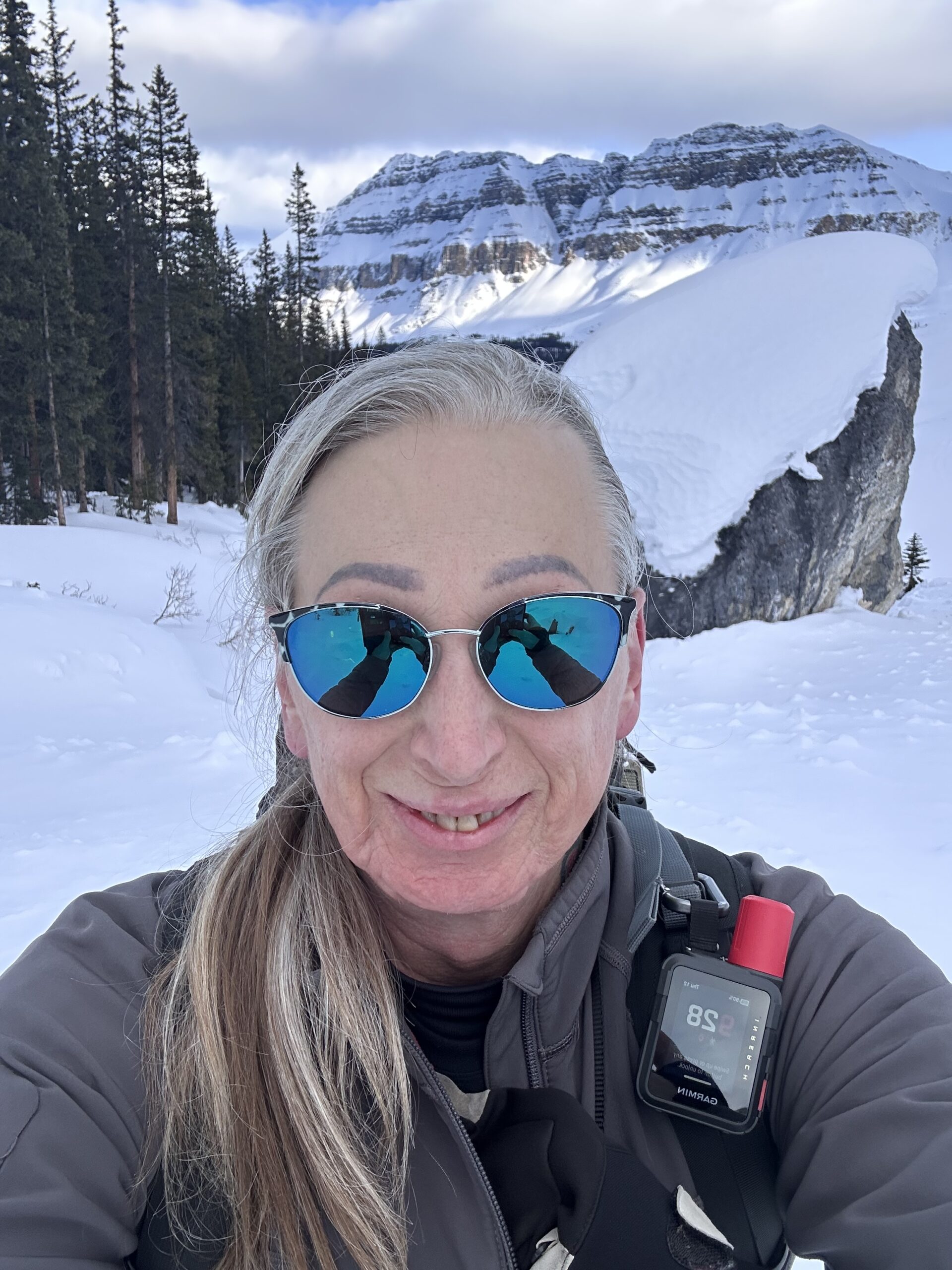
Certified private hiking guide and professional interpretive practitioner based in the Canadian Rockies. With over 25 years of four-season mountain experience, she offers thoughtfully paced hiking experiences that help active adults explore mountain landscapes with care, confidence, and understanding. Meet Niki