A different approach to private Guided hiking in the Canadian Rockies
Many hiking companies describe their experiences as “private.” In practice, that can mean several different things.
Sometimes it refers to a small group. Sometimes it means a fixed itinerary booked privately. Sometimes it simply means you are not joining a larger public tour.
My approach is different.
I guide only one or two guests at a time. This is not a scaling decision. It is a decision about how a day in the mountains should feel.
THIS IS NOT ABOUT EXCLUSIVITY
At first glance, limiting a hiking day to one or two guests can sound like a premium feature.
That is not the intention.
It exists because once you move beyond two people, the nature of the day begins to change. Not dramatically, but in ways that become more noticeable as the hours pass and more difficult to adjust once the day is underway.
WHAT CHANGES WHEN A GROUP GETS LARGER
With three or more people, even in a well-matched group, certain patterns begin to emerge.
Pacing becomes a compromise. One person naturally moves a little faster, another prefers a steadier rhythm, and over time those differences begin to shape how the day unfolds. You see it in small ways: brief pauses at trail junctions, slight accelerations to catch up, or breaks that are just a little longer or shorter than what someone actually needs.
As group size increases, those differences in energy, preference, and expectation become more noticeable. One person may want to keep moving, another may prefer more frequent stops, and someone else may be settling into a different rhythm entirely. None of this is a problem. It is simply how groups function.
But over the course of a full day, these small differences begin to influence decisions. Timing reflects the group rather than the terrain, and the experience gradually shifts from something responsive to something negotiated.
WITH ONE OR TWO GUESTS, THE DAY STAYS COHERENT
With one or two guests, those compromises largely disappear.
Pacing can be set early and adjusted naturally. Breaks happen before fatigue builds rather than after. Small changes in energy, weather, or terrain can be responded to immediately, without needing to balance multiple competing needs.
The day does not need to be negotiated. It can be shaped.
This often becomes the difference between a day that feels slightly reactive and one that feels steady from beginning to end.
→ What a Private Guided Hiking Day Feels Like
WHAT GUESTS DON’T ALWAYS SAY OUT LOUD
Most people arrive prepared, capable, and looking forward to the day. But there are often small things they do not say directly.
They may feel slightly tired earlier than expected. They may need a break but hesitate to ask. They may be unsure whether something should feel as difficult as it does.
In a group setting, many people simply adjust. They keep moving, match the pace around them, and say everything is fine.
Over time, those small adjustments can change how the day feels.
With one or two guests, those moments are easier to notice and address early, before they become something that shapes the rest of the day.
The goal is not to remove challenge. It is to make sure the day stays aligned with the person having it.
A DIFFERENT KIND OF ATTENTION
With one or two guests, attention works differently.
Instead of dividing focus across a group, I’m able to pay close attention to how you are moving, how your energy is changing, how the terrain is affecting the day, and how conditions are evolving. This allows for small adjustments that are often invisible, but important.
Sometimes it is a slightly earlier break. Sometimes it is a subtle shift in pace or a small change in route.
There are also practical details that become easier to manage at this scale, things that are rarely discussed in advance but matter on the trail. When to pause for water or food, how often to stop, how comfortable someone feels asking for a break, or even how natural it feels to take care of basic needs throughout the day.
In larger groups, these moments often go unspoken. With one or two guests, they can be handled quietly and naturally.
HOW GROUP SIZE AFFECTS THE QUALITY OF GUIDING
Guiding is often described as leading a route. In practice, much of the work happens in smaller, quieter ways.
It involves paying attention to how the day is unfolding in real time: how energy is changing, how the terrain is affecting movement, how pacing is holding over several hours, and how conditions are evolving.
With one or two guests, that level of attention can remain continuous. Adjustments can be made early, often before they are even noticed.
As group size increases, that attention becomes more divided. Decisions take longer, adjustments happen later, and the day becomes more structured and less responsive.
This is not a reflection of the guide’s ability. It is simply the nature of working with groups.
Limiting each day to one or two guests allows the guiding itself to stay more precise, more responsive, and more closely aligned with how the day is actually unfolding.
THIS APPROACH WORKS ESPECIALLY WELL FOR COUPLES
Many private hikes are booked by couples, and they do not always move at exactly the same pace.
In larger groups, this can create subtle pressure. One person may feel they are holding things back, while the other feels they should keep moving. Both adjust in ways that do not feel entirely natural.
With one or two guests, this becomes much easier to manage. The day can reflect both people without forcing either into a fixed rhythm.
→ Private Hiking in Banff for Couples Who Move at Different Paces
WHY I DO NOT OFFER LARGER GROUPS
I am occasionally asked whether I guide small groups beyond two people.
The answer is no.
Not because it is difficult, but because it changes the nature of the experience in ways that do not align with how I guide. Larger groups require more structure, more coordination, and more compromise. All of that is manageable, but it shifts the focus away from the individual experience of the day.
Beyond two people, the day begins to reflect the needs of the group rather than the rhythm of the individual.
THIS IS A DIFFERENT KIND OF PRIVATE
In the hiking industry, “private” often refers to access.
In this case, it refers to structure.
A day designed for one or two guests allows for pacing that reflects how you actually move, decisions that can be made in real time, and flexibility that does not disrupt the flow of the day. The result is often a quieter, more personal experience that feels coherent from beginning to end.
If you are unsure how “private” is typically used, this may help clarify the difference:
→ What Private Really Means in Guided Hiking
A GUIDE’S PERSPECTIVE
After many seasons in the Canadian Rockies, one pattern becomes clear.
The most memorable days are not defined by how much ground was covered. They are defined by how the day felt: steady, well-timed, and unforced.
Limiting each day to one or two guests is one of the simplest ways to support that.
PRIVATE GUIDED HIKING IN BANFF AND THE CANADIAN ROCKIES
If you are looking for a private guided hiking experience built around your pace, your preferences, and the conditions of the day, you can learn more about Private Guided Hiking in Banff and the Canadian Rockies
If you would like to talk through your plans, your experience, and the kind of day you are hoping to have, the next step is simply to Begin a Conversation
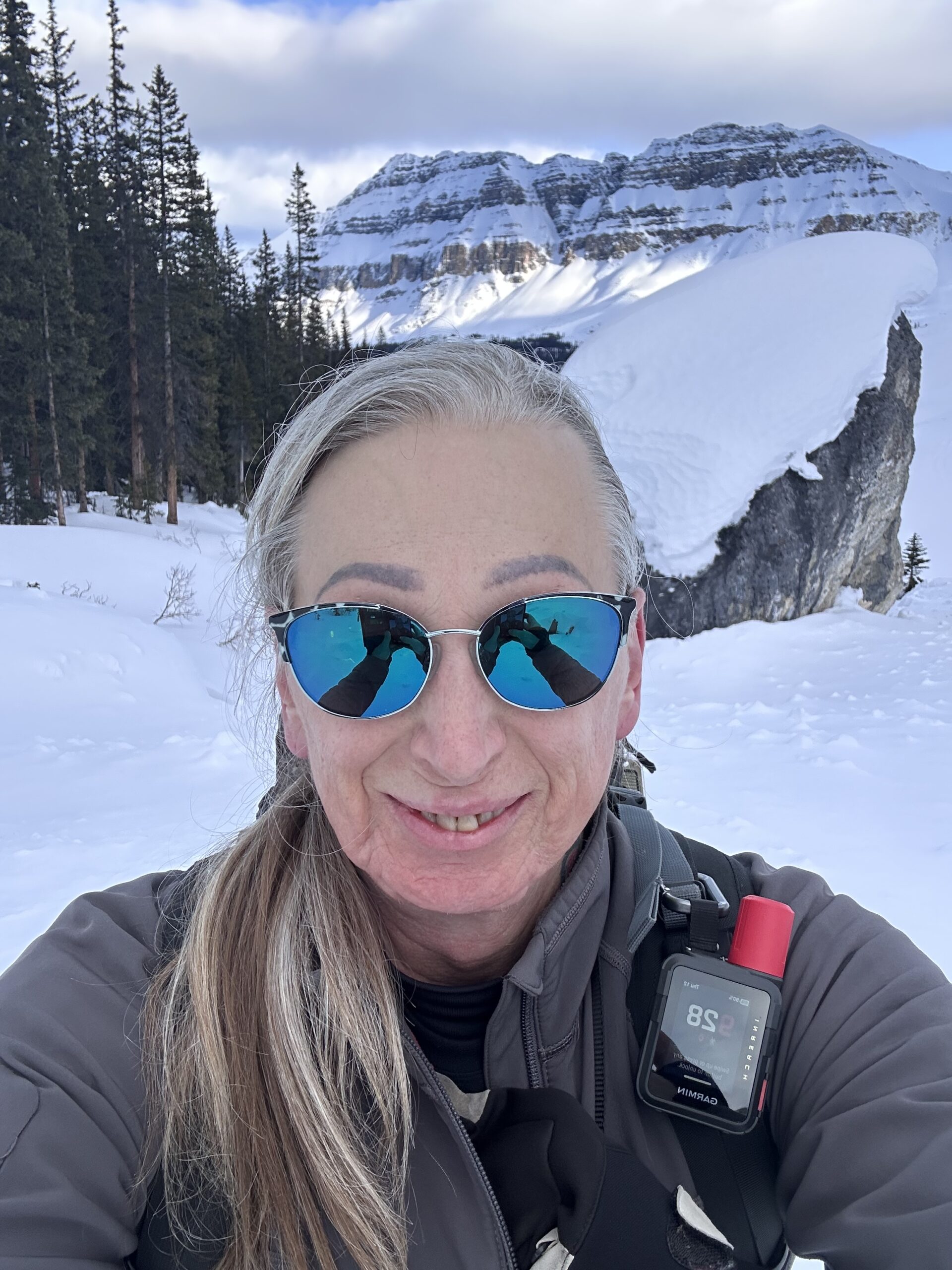
Certified private hiking guide and professional interpretive practitioner based in the Canadian Rockies. With over 25 years of four-season mountain experience, she offers thoughtfully paced hiking experiences that help active adults explore mountain landscapes with care, confidence, and understanding. Meet Niki