Updated periodically as Parks Canada policies and public engagement evolve.
Every summer, the same pressure gathers in the same places.
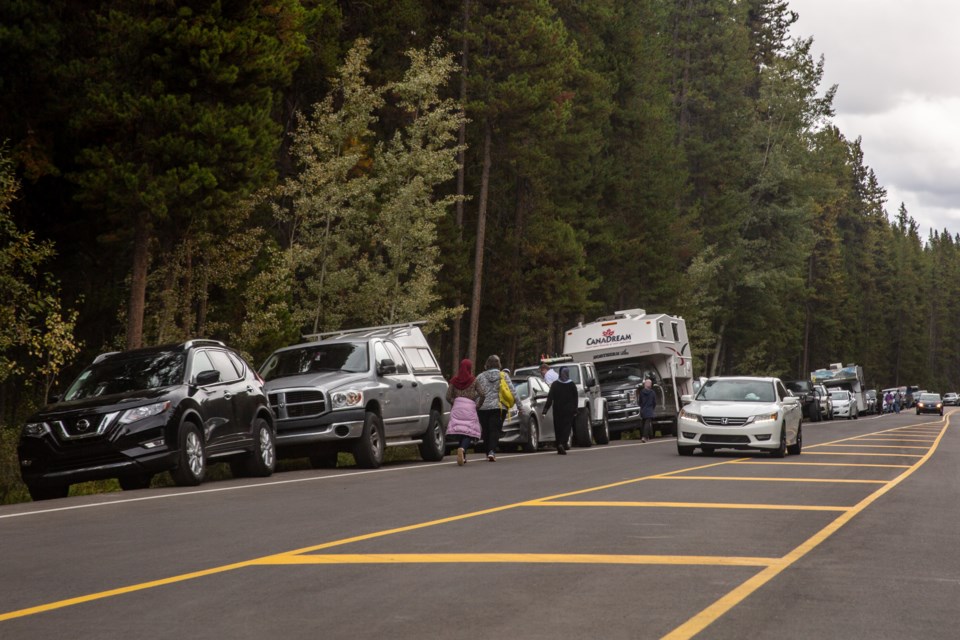
Lake Louise. Moraine Lake. The Icefields Parkway corridor. Highway shoulders filling with parked cars. Trailheads overflowing early. People arriving with excitement, and leaving with a sense that something is slipping out of control.
When Parks Canada starts asking the public what should be done, it’s a sign the strain isn’t just inconvenient anymore. It’s affecting safety, experience quality, ecological integrity, and the long-term health of the park corridors that hold these landscapes together.
And while the numbers matter, what I notice most isn’t just how many people are here.
It’s what overcrowding changes in human behavior, and what that behavior changes in the land. Its why for many people guided tours dont feel right anymore.
When Places are full, people become Hurried
Crowding compresses time.
People move faster. They stop less. They make tighter decisions. They push past “good enough” into “just one more” — one more viewpoint, one more photo, one more bend in the trail. Rules that normally feel obvious start to feel optional when the environment is chaotic and anonymous.
Most people don’t arrive intending to do harm. But in congested conditions, small choices add up quickly: stepping off trail to pass, moving closer to wildlife, feeding animals because it feels like a moment of connection, leaving food accessible at viewpoints, chasing the iconic shot because everyone else is doing the same.
Crowding changes the tone of a place. And the tone of a place changes what people think is acceptable.Visitor pressure shifts significantly throughout the year.
For a broader look at how seasonal timing influences crowd patterns across the Rockies, see When Is the Best Time to Visit the Canadian Rockies.
Free access isn’t free
This is a hard truth, but it matters.
When access is made easier financially, through discounts, passes, or incentives, visitation often increases faster than infrastructure can adapt. The cost doesn’t disappear. It shifts.
It shows up as:
-
parking strain and shoulder congestion
-
more enforcement pressure
-
more human-wildlife interaction
-
more trail widening and vegetation damage
-
more tension between visitors and locals
The question isn’t whether people should be welcome. It’s how the real costs of access are carried, and whether those costs are paid in dollars, time, habitat, or safety margin.
The biggest stressor is often how people arrive
A lot of the current strain in Banff and Lake Louise isn’t created by people simply being present, it’s created by private vehicle volume arriving at the same places at the same times.
Corridors collapse when movement becomes unmanaged. Cars concentrate impact in narrow bands: highway shoulders, pullouts, trailheads, lakefronts. Once those thresholds are crossed, small solutions stop working.
This is one reason why shuttle systems, timed entry, and access limits keep coming back into the conversation. They aren’t perfect. But they acknowledge something basic: when the approach route collapses, everything downstream becomes harder to protect.
Development pressures amplify everything
Crowding isn’t only a park problem. It’s a regional one.
Overdevelopment in places like Canmore and the Bow Valley adds pressure to wildlife corridors and migration routes, the quiet connective tissue that keeps ecosystems functioning beyond the obvious tourism nodes. When those corridors narrow, the landscape becomes less resilient.
People often think of ecological integrity as something that happens “out there.” But corridor health is shaped by roads, housing, noise, habituation, and cumulative human presence across the whole region.
The pressure created by large visitor numbers also raises broader questions about how responsibility for protecting these landscapes is shared. See Shared Responsibility in Crowded Parks Like Banff National Park.
Interpretation is part of the stewardship system
This is where I feel my responsibility most clearly.
As an interpretive guide, it’s not my job to lecture. It’s to help people understand what they’re actually inside, a living system, not a backdrop. Interpretation works best when it’s timely, rooted in what we’re seeing, and offered in a way that increases awareness without creating shame.
But interpretation also has limits. It can’t do much when:
-
people feel rushed
-
attention is fractured
-
the day is built around icons and urgency
-
the environment is too crowded for quiet noticing
The more congested an experience becomes, the more stewardship shifts away from relationship and toward enforcement. And enforcement has a different effect on people than understanding does.
Scale changes what is possible
Here’s another truth that matters: scale changes behavior, both for visitors and for the systems trying to manage them.
High-volume tourism tends to prioritize flow and efficiency. That’s not a moral failing, it’s an operational necessity. But it does limit what can be held: pacing, attention, quiet, interpretive depth, and real-time adjustment.
Small, low-volume days allow for something different:
-
slower movement
-
fewer reactive decisions
-
more awareness of wildlife and conditions
-
better timing and route choice
-
interpretation that can be responsive, not scripted
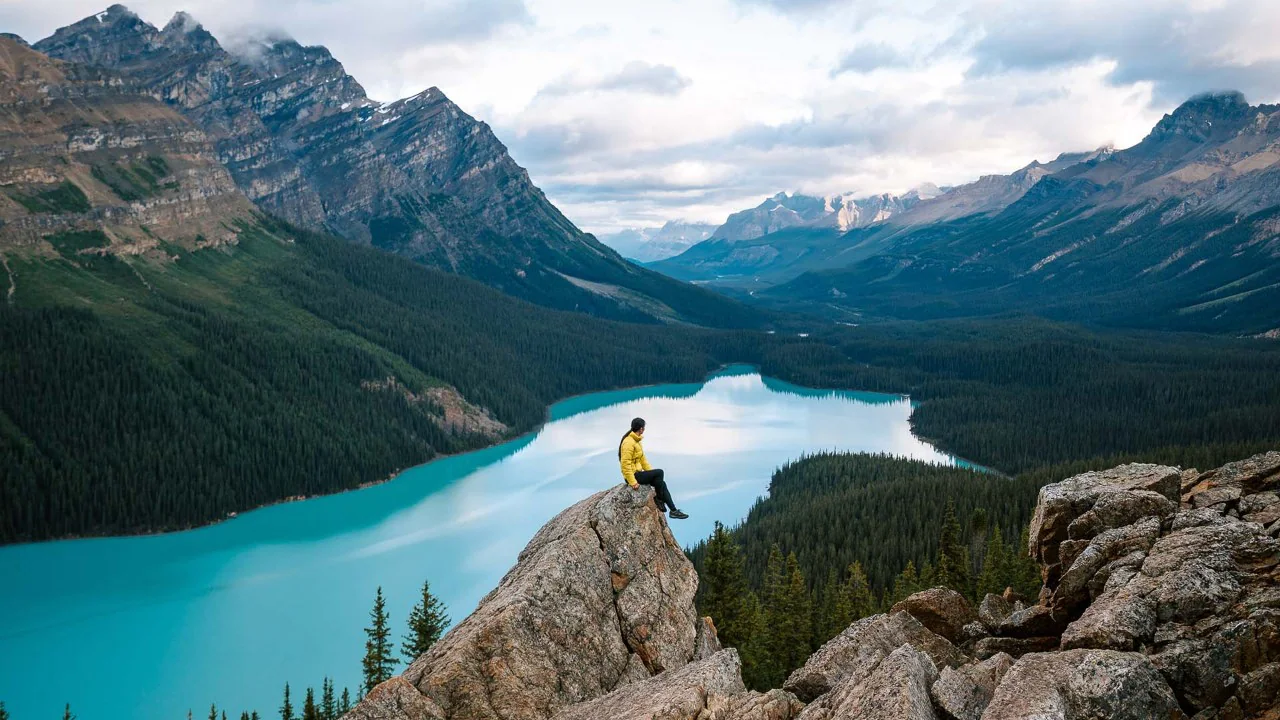
This doesn’t “solve” overcrowding. But it reveals a principle: when people are held at a human scale, they often behave with more care like guiding a quieter way to experience Peyto Lake
Some visitors begin looking beyond Banff entirely. This comparison offers a helpful perspective:
→ Banff vs Kananaskis for Hiking
What comes next
Parks Canada is navigating difficult trade-offs: access, conservation, visitor experience, safety, and regional pressures that extend beyond park boundaries. There isn’t a single fix.
But if we want to reduce stress on mountain corridors, we have to talk honestly, and calmly, about what’s driving the strain, what our choices cost, and what different models make possible.
In the next post, I’ll explore those trade-offs directly, not as judgments or blame, but as practical realities: how access models shape behavior, how vehicle volume concentrates impact, and why “scale” may be one of the most important stewardship variables we rarely name.
For some visitors, this leads to a more practical question about whether a guided day changes the experience:
→ Do You Need a Hiking Guide for Lake Louise
If you’re exploring thoughtful travel in the Rockies, you’re welcome to Begin A Conversation.
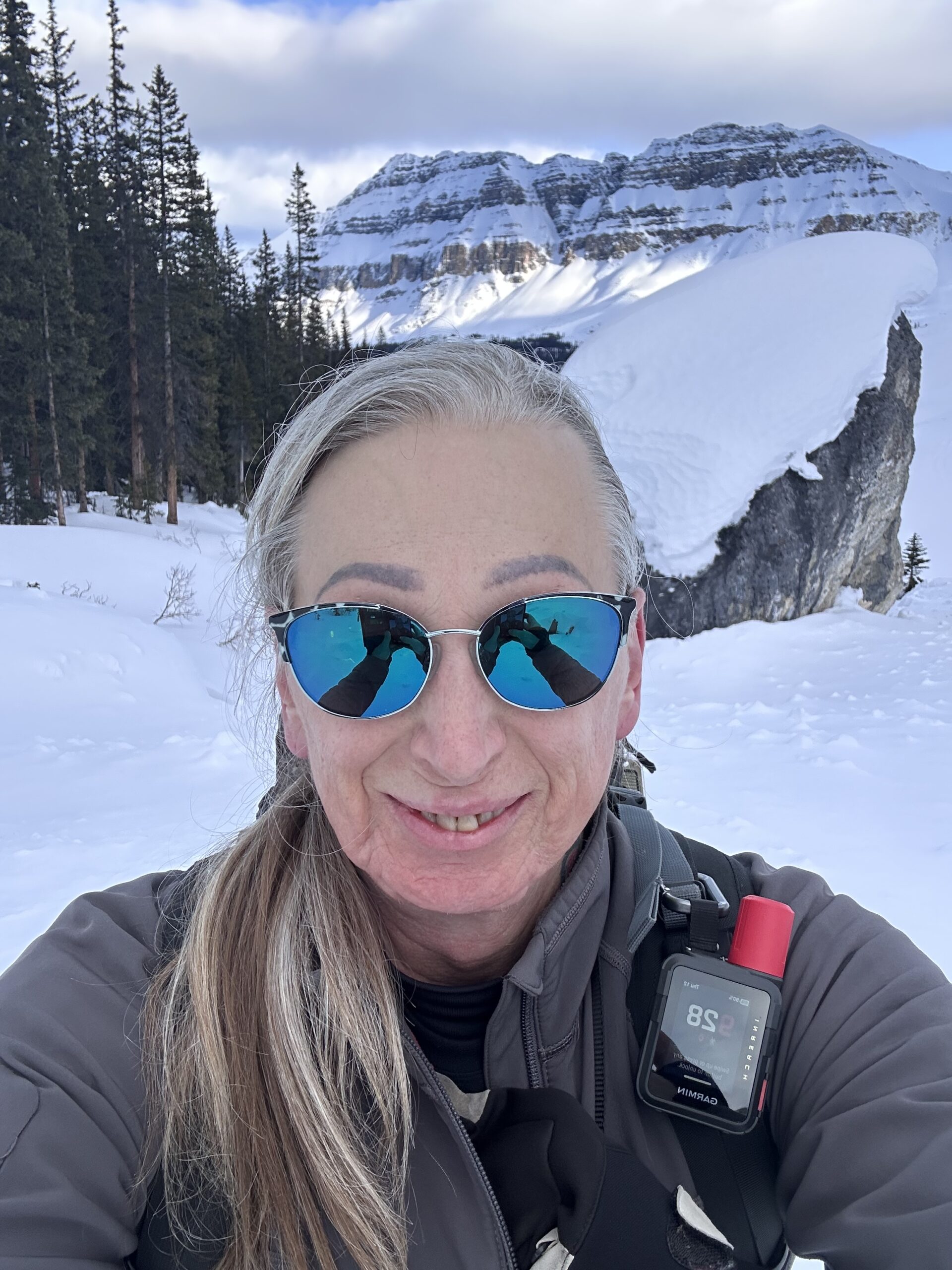
Certified private hiking guide and professional interpretive practitioner based in the Canadian Rockies. With over 25 years of four-season mountain experience, she offers thoughtfully paced hiking experiences that help active adults explore mountain landscapes with care, confidence, and understanding. Meet Niki