In the Canadian Rockies, the word conservative is sometimes misunderstood.
It can sound restrictive. Limited. Overly cautious.
But in places like Banff, Lake Louise, Kananaskis, and along the Icefields Parkway, conservative mountain guiding is not about shrinking the experience. It is about structuring it so the day never tightens unnecessarily.
Most guests don’t use the word “conservative” when they describe the kind of guide they’re looking for. They say they want someone experienced. Calm. Solid. Someone who doesn’t take chances. Someone who knows when to turn around.
What they are describing is a conservative hiking guide, whether they realize it or not.
Conservative Does Not Mean Fearful
A cautious mountain guide is not guided by fear. Fear reacts. Conservative judgment anticipates, which is what we explore in How Good Guiding Holds Risk Quietly
In mountain terrain, especially in the Rockies where weather, altitude, and trail conditions shift quickly, the most important decisions are rarely dramatic. They happen early and quietly.
Route selection happens before boots hit the trail.
Pace is set before lungs are taxed.
Turnaround times are chosen before the sky changes tone.
Conservative mountain guiding is less about reacting to risk and more about reducing the chance that pressure builds at all.
When a day feels steady from the beginning, that steadiness has usually been designed.
A Safety-First Guiding Approach Is Structural
Many people assume safety is about skill alone. Strong legs. Technical competence. Years in the field.
Those matter.
But a safety-first guiding approach is structural before it is physical.
It looks like:
-
Choosing objectives that match the group and the conditions, not the calendar.
-
Leaving generous time margins rather than scheduling tightly between viewpoints.
-
Preserving energy early instead of spending it to reach something “impressive.”
-
Accepting that turning around is sometimes the most responsible outcome.
That structure matters along the Icefields Parkway, where distances stretch and weather systems move quickly. It matters in Lake Louise, where terrain can feel deceptively accessible from the parking lot. And it matters in Banff’s shoulder seasons, where icy patches linger in shaded forest long after the valley feels like spring.
A conservative hiking guide is not trying to extract the maximum from the day. They are trying to preserve optionality.
On many group tours, the day has to move at the pace of the strongest or most ambitious participant. Private guiding allows the rhythm to match the people actually having the day instead, which often changes the entire emotional tone of the experience.
And optionality is what keeps urgency from entering the experience.
If that distinction feels important, Private vs Group Guided Hikes: Which Is Right After 50? looks at it more directly.
Conservative Guiding Protects Margin
Margin is rarely visible to guests, but margin is what makes a day feel calm is one of the clearist ways to describe what conservative guiding protects.
When margin exists:
-
Breaks happen before fatigue accumulates.
-
Layer changes feel routine rather than disruptive.
-
A longer conversation doesn’t create schedule anxiety.
-
A wildlife delay becomes part of the experience rather than an obstacle.
Without margin, even small variables start to compress the day.
In high-traffic areas near Moraine Lake or the Lake Agnes trail, where movement can be slower than expected, conservative mountain guiding accounts for that compression before it happens. It does not assume perfect flow. It plans for reality. For many adults over 50, this is where the question of Private or Group Guided Hikes begins to surface.
This is not about moving slowly. Many guests who choose a cautious mountain guide are fit and capable. They simply no longer want a day that depends on pushing through.
Conservative does not mean diluted. It means deliberate.
What a Cautious Mountain Guide Actually Does
On the surface, conservative guiding may look simple.
A steady start.
Measured pacing.
Unhurried transitions.
But underneath that simplicity are layered assessments:
-
Reading snow conditions lingering above Lake Louise in early season.
-
Watching cloud build over the Bow Valley before it becomes obvious.
-
Adjusting for how altitude feels different from Banff townsite to higher ridgelines.
-
Noticing subtle fatigue patterns in a guest before they voice them.
In practice, that might mean choosing the valley rather than the ridge before weather becomes a problem, slowing the first section before anyone needs it, or preserving enough time in the day that a longer seated break never feels like a compromise.
A cautious mountain guide does not need drama to prove competence. The absence of drama is often the point.
In crowded environments, a safety-first guiding approach may mean selecting quieter routes not to avoid people entirely, but to preserve rhythm. In changing weather, it may mean choosing the valley rather than the ridge, even if the ridge photographs better.
These are not reactive decisions. They are anticipatory ones.
Conservative Mountain Guiding Builds Trust
Trust in the mountains rarely comes from boldness.
It comes from coherence.
When guests sense that the day is not being stretched thin, that there is time, that options remain open, that nothing depends on perfect execution, their nervous system settles. They breathe differently. They notice more.
In places as dynamic as Banff and the Lake Louise region, that steadiness is not accidental. It is the result of conservative mountain guiding that values restraint over spectacle.
Restraint is not the opposite of adventure. It is what makes adventure sustainable.
In the Canadian Rockies, where conditions can shift within minutes and terrain rarely advertises its complexity, a conservative hiking guide is not limiting the experience. They are holding it carefully enough that it remains expansive.
That is what conservative guiding looks like in the mountains.
Not restrictive.
Not timid.
But structured, anticipatory, and quietly reliable.
And for many capable adults who value steadiness over performance, that is exactly what makes a mountain day feel right
If you want to see how that kind of early attention shows up on the trail, What Hiking Guides Notice in the Canadian Rockies pairs well with this.
And if you’re exploring a private day shaped by this kind of judgment, you can learn more about Private Guided Hiking in the Canadian Rockies
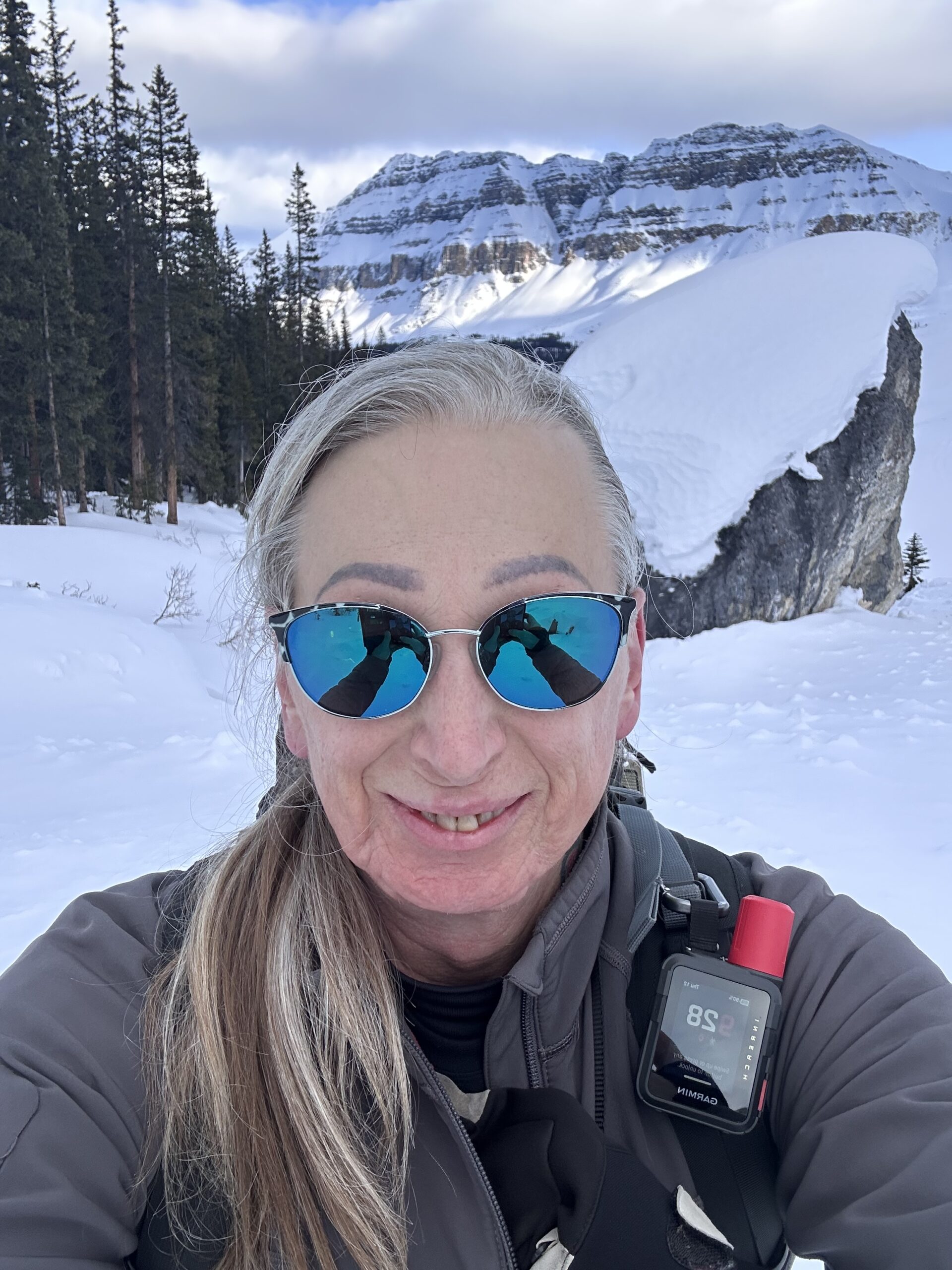
Certified private hiking guide and professional interpretive practitioner based in the Canadian Rockies. With over 25 years of four-season mountain experience, she offers thoughtfully paced hiking experiences that help active adults explore mountain landscapes with care, confidence, and understanding. Meet Niki