Banff, Lake Louise, Jasper & Kananaskis
Planning a trip to the Canadian Rockies becomes much easier when you choose the season first, use a few well-placed bases, and allow more time than the map suggests. Most travelers experience the region more fully when they balance iconic destinations like Banff and Lake Louise with quieter landscapes such as Kananaskis or Jasper.
At first, the trip can seem deceptively simple to plan.
Most travelers begin with the same names: Banff, Lake Louise, Jasper. Moraine Lake and the Icefields Parkway usually follow soon after. The photos are extraordinary, the distances on the map look manageable, and the itinerary begins to take shape quickly.
Then the practical questions begin.
How many days do you actually need?
Is Jasper worth including?
Will Lake Louise feel impossibly crowded?
Should you stay in Banff or Canmore?
Is Kananaskis worth visiting if you are already going to Banff?
These questions matter more than many visitors expect. The Canadian Rockies are not just a collection of scenic viewpoints. They are a vast mountain landscape where distance, season, access, and pace shape the experience as much as the scenery itself.
For many travelers, another question appears around this point as well: Am I fit enough to hike in Banff?
Most itinerary guides focus on squeezing as many highlights as possible into a fixed number of days. That often creates a rushed trip where travelers spend more time driving, parking, and navigating crowds than actually experiencing the landscape.
Planning well means thinking a little differently.
Instead of starting with a checklist of places, it helps to begin with the rhythm of the mountains: the season, the geography, and the kind of days you want to have here.
Quick Guide to This Article
→ Quick Planning Overview
→ Start With the Season
→ Geography of the Rockies
→ Distances in the Rockies
→ Lower Elevation First Day
→ Use Bases Instead of Moving
→ Why Travellers Choose Canmore as a Base
→ Why Travellers Overlook Kananaskis Country
→ Icefields Parkway
→ Shoulder Seasons
→ How Many Days
→ Example Trip
→ Tour Bus Itineraries
→ Transportation
→ Planning Hiking Days
→ Jasper After The 2024 Wildfire
→ The Most Common Planning Mistake
→ Guide Perspective
Quick Planning Overview
For most travelers, a successful Canadian Rockies trip follows a few simple principles.
• Fly into Calgary, the closest major airport to Banff and the eastern Rockies.
• Choose the season first, because conditions shape everything that follows.
• Use two or three bases rather than changing accommodation every night.
• Treat the Icefields Parkway as a scenic travel corridor, not just a transfer between towns.
• Leave margin in your schedule, especially in popular areas like Lake Louise.
• Consider including Kananaskis Country, which often provides a quieter alternative to the most famous national park locations.
With those principles in mind, the rest of the planning process becomes much clearer.
Start With the Season, Not the Itinerary
One of the most important planning decisions in the Canadian Rockies is choosing the season before choosing too much of the itinerary.
The Rockies do not offer the same kind of trip at every time of year. Season affects trail access, road conditions, crowd levels, weather patterns, recovery demands, and even the overall feel of a day in the mountains.
For some travelers, the priority is broad hiking access and snow-free alpine terrain. For others, it is cooler temperatures, larch season, shoulder-season calm, or a trip that feels quieter and less compressed.
That is why the best time to visit depends less on a single “right” month and more on the kind of experience you want to have.
If timing is one of your main planning questions, these articles go into that in more detail:
When Is the Best Time to Visit the Canadian Rockies
Banff Weather by Month
Understanding the Geography of the Rockies
Before building an itinerary, it helps to understand how the region fits together.
Most visitors explore the Rockies through four primary areas.
| Area | Best For | Typical Feel |
|---|---|---|
| Banff | iconic landscapes, wide range of activities | busy, accessible |
| Lake Louise | turquoise lakes, alpine terrain | spectacular but concentrated |
| Jasper | expansive wilderness landscapes | quieter, more spacious |
| Kananaskis | diverse hiking terrain, fewer crowds | dispersed and often calmer |
Although these places appear close on a map, mountain travel takes time. Scenic corridors, wildlife sightings, and frequent stops often slow travel in ways visitors do not anticipate.
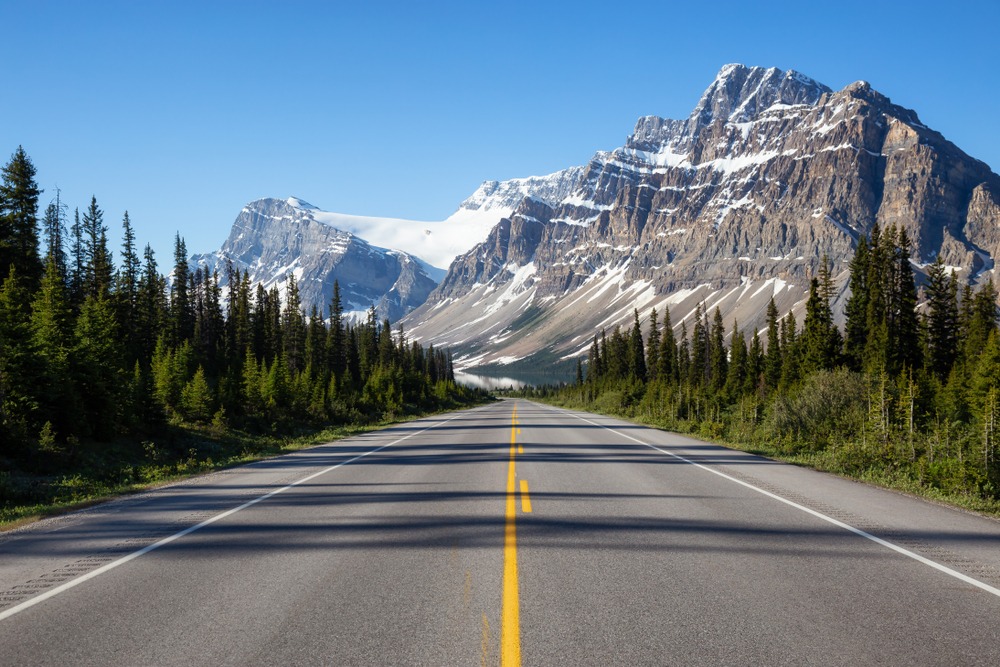
One famous example is the Icefields Parkway, a roughly 230-kilometre route connecting Banff and Jasper that is widely considered one of the most scenic drives in the world.
While the drive itself can be completed in a few hours, most travelers spend an entire day exploring viewpoints, glaciers, waterfalls, and hiking trails along the way.
Distances in the Canadian Rockies Are Larger Than Many Visitors Expect
One of the most common surprises for first-time visitors to the Canadian Rockies is how large the landscape actually is.
On a map, places like Banff, Lake Louise, Jasper, and Kananaskis Country can appear relatively close together. In practice, the terrain between them includes mountain passes, winding valleys, and long stretches of scenic highway.
Travel times add up quickly.
Driving from Banff to Lake Louise takes roughly 45 minutes. Continuing north along the Icefields Parkway to Jasper requires about four hours without stops. Most travelers naturally stop many times along the way to enjoy viewpoints, glaciers, and waterfalls.
Similarly, Kananaskis Country sits south of Banff but covers a vast area of provincial parks and mountain valleys. Traveling between different trailheads within the region can easily take an hour or more.
Because of these distances, thoughtful trip planning becomes important. Rather than trying to see everything in a single day, most visitors enjoy the mountains far more when they choose a home base for several nights and explore the surrounding valleys at a relaxed pace.
This approach allows hiking days to unfold naturally rather than feeling rushed by long drives between destinations.
If you are unfamiliar with the geography of the region, it can help to explore the landscapes individually. For example, Kananaskis Country’s provincial parks offer a vast network of valleys and ridgelines south of Banff that many travelers overlook entirely.
Understanding the scale of the Rockies makes it easier to plan days that feel steady and rewarding rather than compressed by travel time.
Why Your First Day Should Be Lower Elevation
Many travelers arrive in the Canadian Rockies from places at or near sea level. What often surprises people is how quickly elevation begins to influence energy and pacing.
Banff townsite sits around 1,380 metres (4,500 feet) above sea level. Lake Louise begins even higher, and many alpine hiking routes climb well above 2,300 metres.
For visitors arriving after a long travel day, that sudden change in altitude can make the first hike feel more demanding than expected.
The body usually adapts quickly, but giving it a little time makes a noticeable difference. Hydration, steady movement, and a slightly gentler first day often allow the body to settle naturally into the mountain environment.
This is one reason the foothills along the eastern edge of the Rockies can be such a good place to begin exploring.
Areas near Bragg Creek and the Front Ranges offer forested trails and ridgelines at lower elevation, where the landscape already feels mountainous but the physical adjustment is easier.
Starting in these foothill environments creates a gradual transition into the Rockies. Many travelers find that a relaxed first hike in places like the Bragg Creek trail networks or the eastern valleys of Kananaskis Country helps establish a comfortable rhythm before moving toward higher alpine terrain later in the trip.
You can explore how this foothills landscape connects to the wider mountain region in:
Foothills Forests and the Gateway to Kananaskis Country
Use Bases Instead of Constantly Moving
One of the easiest ways to improve a Rockies trip is surprisingly simple.
Stay in fewer places.
Changing accommodations every night may look efficient on paper, but it often creates unnecessary stress. Packing, checking out, navigating new towns, and finding parking repeatedly can compress the rhythm of the trip.
A more comfortable approach usually involves two or three bases.
Example Base Structure
Banff or Canmore
A good starting point for exploring the Bow Valley and Lake Louise.
Jasper
Ideal for exploring the northern Rockies and surrounding valleys.
Kananaskis (optional)
Offers quieter hiking terrain south of Banff.
Why Many Travelers Choose Canmore as a Base
For travelers who plan to spend several days hiking, Canmore is often one of the most practical bases in the entire region.
Located just outside Banff National Park, Canmore offers:
• direct access to Bow Valley hiking trails
• fast access south into Kananaskis Country via Spray Lakes Road
• a short drive to Banff townsite when desired
• generally lower accommodation costs
• fewer congestion issues than Banff during peak season
For hikers in particular, staying in Canmore often makes daily logistics easier. Many excellent trails across the Bow Valley and Kananaskis region can be reached within 20–45 minutes.
By comparison, staying inside Banff for several days of Kananaskis hiking can require repeated backtracking through busier park corridors.
Banff can still be a wonderful stop later in a trip. But for visitors who want to spend real time on the trails rather than in traffic or parking lines, Canmore frequently works better as an initial base.
Why Many Travelers Overlook Kananaskis Country
Despite its extraordinary landscapes, Kananaskis Country often receives far less attention than Banff or Lake Louise.
Part of the reason is visibility.
National parks receive global recognition and marketing, while provincial parks often remain less widely known outside Canada.
But the terrain in Kananaskis is just as dramatic in many areas. Broad valleys, alpine basins, wildflower slopes, and long ridgelines stretch across a vast landscape south of Banff.
Many travelers also find it helpful to understand how Banff compares to nearby regions like Kananaskis before deciding where to spend their hiking days:
→ Banff vs Kananaskis for Hiking and Sightseeing
For hikers, the biggest difference is often visitor density.
Because trailheads are spread across a larger area, people tend to disperse across the landscape rather than concentrating in a few famous locations.
This creates a very different rhythm on the trail.
Many travelers who spend time exploring Kananaskis discover that it becomes one of the most memorable parts of their Rockies trip.
You can explore this landscape more fully in:
Hiking Kananaskis Country: Alberta’s Provincial Parks
The Icefields Parkway: More Than a Drive
Nearly every Canadian Rockies itinerary includes the Icefields Parkway.
The route stretches between Lake Louise and Jasper through glacier-carved valleys, alpine lakes, and towering peaks.
While some itineraries treat it as a simple drive between towns, the corridor itself is a major destination.
Waterfalls, viewpoints, wildlife sightings, and hiking routes appear regularly along the highway.
Many visitors discover that the best way to experience the Parkway is slowly.
Instead of treating it as a transfer day, many travelers structure the Parkway as its own experience.
That might include:
• short valley hikes
• glacier viewpoints
• waterfall stops
• time along alpine lakes
A day along the Parkway might include only one or two primary hikes combined with several scenic stops.
The landscape unfolds gradually here. Massive glaciers hang above broad valleys, wildlife occasionally appears along river corridors, and the road traces some of the most dramatic terrain in the Rockies.
Visitors who allow time for the Parkway often discover it becomes one of the highlights of their trip.
If Lake Louise or the Ice Fields Parkway are part of your itinerary, you may also want to consider whether a guided day changes how the experience unfolds:
→ Do You Need a Hiking Guide for Lake Louise
Why Shoulder Seasons Often Create Better Trips
Most visitors plan their trips between mid-June and the end of August, when alpine hiking access is at its widest and summer weather tends to be stable.
The landscapes during this period are extraordinary. Turquoise lakes glow under long daylight hours, alpine meadows fill with wildflowers, and high mountain passes become accessible across Banff, Lake Louise, and the Icefields Parkway.
But this same window is also when visitor numbers peak.
Parking areas fill early, shuttle systems manage access to iconic locations, and many well-known hiking trails see steady traffic throughout the day.
For travelers who prefer a calmer pace, the shoulder seasons often create more spacious mountain days.
Late May and June bring early season hiking as snow retreats from valley trails and wildlife becomes active along green slopes.
September introduces cooler air, clear visibility, and the golden color of alpine larch forests across many valleys.
Understanding how crowd patterns shift through the year can make a meaningful difference when planning a trip.
For a deeper look at seasonal timing, see:
When Is the Best Time to Visit the Canadian Rockies
How Many Days Do You Need?
Another common planning question is simply how much time the region deserves.
The answer depends on how deeply you want to explore.
3–4 Days
Focus on Banff and Lake Louise.
You will see iconic landscapes but the trip will move quickly.
5–7 Days
This is the most common travel window.
A balanced trip might include:
• Banff as a base
• Lake Louise day trips
• one scenic drive along the Icefields Parkway
• optional time in Jasper or Kananaskis
8–10 Days
With more time, the experience changes dramatically.
You can explore:
• Banff and Lake Louise
• Jasper
• the Icefields Parkway
• Kananaskis Country
Longer trips allow for deeper days rather than constant movement.
An Example of a Thoughtful Rockies Trip
Many itineraries on the internet are built around bus tours or quick photo stops.
A hiking-focused trip often looks different.
Instead of moving quickly between viewpoints, the days are structured around one primary landscape experience at a time.
Example 7-Day Trip
Day 1 – Arrival and foothills hike
Arrive in Calgary and travel toward the foothills west of the city. A short hike near Bragg Creek allows the body to adjust gradually to elevation.
Days 2–4 – Base in Canmore
Explore the Bow Valley and Kananaskis Country.
Possible hiking areas include:
• Spray Lakes corridor
• Kananaskis valleys and alpine basins
• Bow Valley ridgelines and forest trails
Day 5 – Lake Louise
Visit Lake Louise for a carefully timed hiking day.
Day 6 – Icefields Parkway exploration
Drive north along the Parkway, stopping for short hikes and viewpoints.
Day 7 – Optional Jasper extension
Continue to Jasper for additional hiking and wildlife viewing or return south toward Calgary.
Why Tour Bus Itineraries Often Feel Rushed
Many travelers first encounter the Canadian Rockies through packaged bus itineraries.
These tours usually follow a tight schedule. Groups move quickly between viewpoints, stopping briefly at famous locations before continuing to the next destination.
A typical bus itinerary might include:
• a short stop at Lake Louise
• a brief walk at Peyto Lake
• a quick lunch along the Icefields Parkway
• arrival in Jasper later the same day
While these stops showcase spectacular scenery, the pace rarely allows much time to explore the landscape itself.
Many travelers discover that the most memorable moments in the Rockies happen when the schedule loosens.
A quiet alpine lake reached on foot.
A long ridge walk above a valley.
A wildlife sighting that slows the entire day.
These experiences rarely fit inside a rigid tour schedule.
For visitors who prefer a more relaxed pace, renting a vehicle and exploring the region independently often creates far more flexibility.
Transportation and Access
Most travelers begin their trip by flying into Calgary International Airport, roughly 1.5 hours from Banff.
From there, visitors typically rent a car to explore the region.
While some public transportation options exist, having a vehicle offers far more flexibility, particularly for exploring Jasper, the Icefields Parkway, or the dispersed landscapes of Kananaskis.
Access systems around Lake Louise and Moraine Lake have also evolved significantly in recent years, with shuttle systems and limited parking shaping how visitors reach these iconic lakes.
Planning Hiking Days
For many travelers, hiking becomes the highlight of a Rockies trip.
But one detail surprises visitors repeatedly: elevation changes conditions dramatically.
A valley trail may feel like summer while a nearby alpine pass still holds snow. Weather can shift quickly across short distances, and trail difficulty often depends more on terrain than mileage.
When planning hikes, it helps to think about:
• elevation gain
• exposure to weather
• trail conditions
• seasonal snowline
• crowd pressure on popular routes
If hiking is central to your trip, these guides may help:
When Is the Best Time to Visit Banff for Hiking
How Hiking Guides Read Mountain Weather in the Rockies
Jasper After the 2024 Wildfire
Visitors planning longer trips should be aware that Jasper experienced a major wildfire in 2024 that affected parts of the park and the townsite.
Jasper remains open to visitors, and rebuilding is underway across the community.
Travelers may notice visible burn areas in some valleys while ecological recovery continues. Accommodation availability may also be more limited for several seasons while rebuilding progresses.
Fire is a natural ecological process in the Rockies, and already new vegetation and early forest regeneration are appearing in many affected areas.
For visitors with flexible expectations, Jasper still offers remarkable wilderness scenery, abundant wildlife, and a quieter atmosphere than Banff.
The Most Common Planning Mistake
The biggest mistake visitors make is trying to do too much.
The Rockies reward slower travel.
A single well-timed hike, a quiet alpine lake, or a long scenic drive often creates more memorable experiences than rushing through a long list of destinations.
Mountain environments also change quickly. Weather shifts, wildlife sightings, and trail conditions can reshape a day in ways that rigid itineraries rarely anticipate.
Leaving space in the schedule allows the trip to adapt naturally.
A Guide’s Perspective
After many seasons guiding in the Canadian Rockies, one pattern becomes clear.
The best trips rarely feel rushed.
They include room for weather changes, time to explore unexpected viewpoints, and enough space in the schedule for the landscape to reveal itself gradually.
The mountains do not reward speed.
They reward attention.
Planning with that mindset often transforms the experience.
Planning a Thoughtful Rockies Trip
The Canadian Rockies reward thoughtful travel.
Choosing the right season, allowing enough time, and balancing iconic locations with quieter landscapes often shapes the experience far more than the specific itinerary.
If you would like help planning hiking days that match conditions, terrain, and pace, you can also learn more about Private Guided Hiking in the Canadian Rockies, where each day is designed around the landscape rather than a rigid schedule.
Certified private hiking guide and professional interpretive practitioner based in the Canadian Rockies. With over 25 years of four-season mountain experience, she offers thoughtfully paced hiking experiences that help active adults explore mountain landscapes with care, confidence, and understanding. Meet Niki