What a Well-Paced Hiking Day in the Canadian Rockies Actually Feels Like
Most people do not think about pacing until a hiking day begins to feel harder than it should.
That is usually when it becomes noticeable. Breathing never quite settles. The first climb feels a little too sharp. Breaks come slightly too late. The return feels heavier than expected. Nothing is dramatically wrong, but the day never quite opens.
A well-paced day feels different.
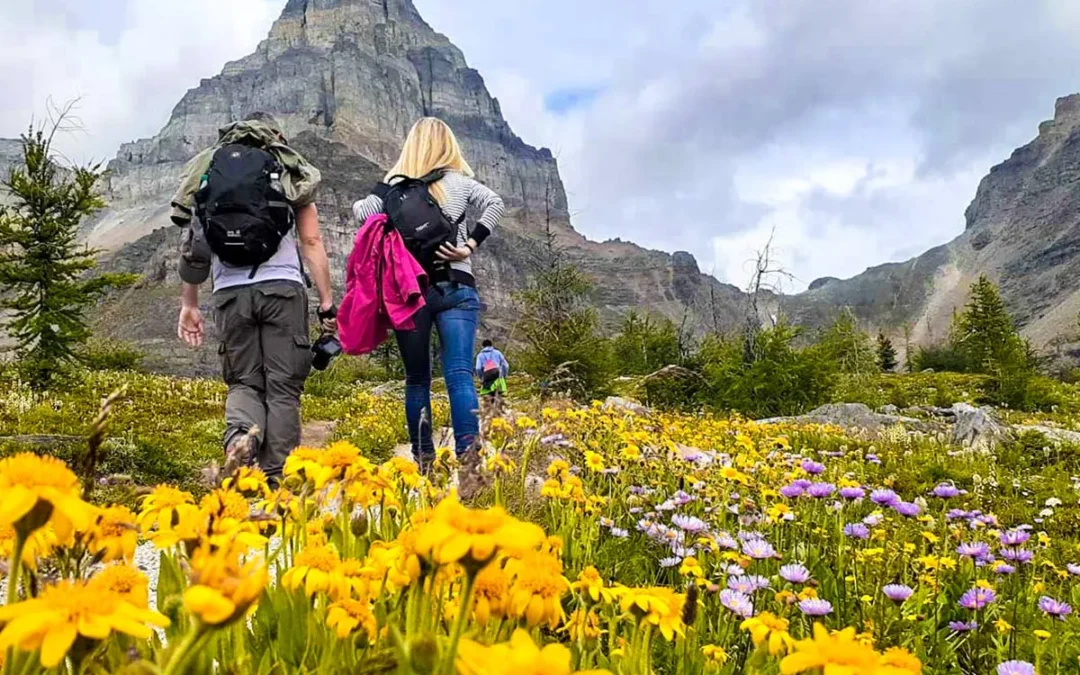
It rarely announces itself. There is no single moment when everything suddenly feels perfect. More often, it unfolds quietly. The pace feels steady without strain. Breaks happen before they are needed. Conversation rises and falls naturally. The landscape has space to be noticed. Most people would simply describe it afterward as a really good day.
But that feeling is not accidental.
It is usually built much earlier than people realize, and maintained in smaller ways than most guests ever see.
Why Pacing Matters More Than Most People Expect on a Mountain Hike
Many people planning a day in Banff, Lake Louise, or along the Icefields Parkway focus first on the obvious things. Distance. Elevation gain. Trail rating. Time on foot.
Those things matter. But they do not fully explain how a hiking day will feel once you are inside it.
Pacing shapes far more than effort. It influences breathing, rhythm, energy, decision-making, and whether the day feels spacious or compressed. Two hikes with similar distance and elevation can land very differently depending on how the day begins, how transitions are handled, and whether the pace suits the people walking it.
That is one reason a moderate trail can sometimes feel much harder than expected, while another day in similar terrain can feel calm and remarkably manageable.
This is also where many hikers discover that what they thought was a fitness issue was really something else. If that question is familiar, Am I Fit Enough to Hike in Banff? is a useful companion to this piece.
The First Thirty Minutes Usually Decide More Than People Realize
Most mountain days are shaped in the first half hour.
Not because that is always the hardest part of the trail, but because that is where rhythm is established. The body is still adjusting. Breathing is still settling. The effort of the day has not yet found its proper shape.
If the pace is just slightly too quick early on, the body often compensates later. Breathing stays a little strained. Energy is spent a little too freely. Breaks become more necessary rather than more natural. Small imbalances start quietly and then follow the day uphill.
When the start is handled well, the effect is just as real, but much less dramatic. The first incline is taken with a little restraint. Steps are deliberate rather than eager. Breathing has room to settle early. There is no sense of trying to catch up to the trail.
That often sounds like a small thing. It is not.
In many cases, the quality of the final hour begins here.
What a Sustainable Hiking Rhythm Actually Feels Like
A well-paced day does not usually feel slow. It feels sustainable.
That is an important distinction.
After the opening stretch, something tends to loosen. Movement becomes more natural. The body stops negotiating with the trail and begins to work with it. The spacing between people feels less forced. Conversation happens when it wants to, rather than disappearing under effort. Stops feel chosen, not urgent.
This is often the point where pacing becomes almost invisible.
No one is thinking much about speed. No one is constantly checking time. The day begins to feel unstructured, even though it is being shaped all the time.
That is one of the paradoxes of a well-guided day. The more thoughtfully the rhythm is held, the less noticeable the structure often feels to the guest.
Why Some Hiking Days Begin to Tighten by Midday
Midday is often where the true shape of a mountain day begins to reveal itself.
By then, the effects of earlier choices start to show. Sun exposure may be stronger. Terrain may have opened up. Wind may be more noticeable. A pace that seemed harmless early on may now feel slightly costly. Hydration and food either have supported the day quietly, or they have been delayed enough that the body is beginning to feel the gap.
This is the point where many days begin to drift.
Not collapse. Just tighten.
Effort becomes more noticeable. Stops become more reactive. The body begins to work a little harder to preserve what should have been preserved earlier. What felt manageable at the trailhead now feels slightly less generous.
On a well-paced day, this is often where the opposite happens. Midday becomes a place where the day holds. Breaks are a little longer, but not because people are exhausted. They are taken because this is where energy is preserved for later. Adjustments happen before the body is already behind. The rhythm established early in the day is protected rather than spent.
This is one reason When a Guided Day Feels Harder Than It Should connects so closely with pacing. A day rarely tips all at once. It narrows gradually.
Terrain Transitions Matter More Than Distance on Paper
Guests often read a trail in terms of distance and elevation.
Guides read transitions.
A long sun-exposed slope can change how a day feels more than the numbers suggest. A narrow section where passing is awkward can disrupt rhythm in ways that do not appear in trail descriptions. A descent that looks straightforward on paper may land very differently once fatigue, footing, and spacing are added into the equation.
This is one reason the lived experience of a hike so often differs from what people expected.
A trail is never only its distance. It is how effort accumulates across terrain, how the body responds to those changes, and how well the day has been matched to the conditions and the people in it.
That same difference between appearance and lived reality is part of what I explore in Why Easy Hikes in Banff Can Feel Misleading and Hiking Risk in the Canadian Rockies: Perception vs. Reality
The Return Is Where a Well-Paced Day Is Preserved
Many people assume the hardest part of a hike is the climb.
Often it is not.
The return is where earlier decisions either continue to support the day or begin to expose what was missing. Fatigue is now present, even if it is subtle. Attention can narrow. Footing matters more. Small imbalances in energy, hydration, or rhythm become more visible.
This is where a well-paced day proves itself.
The descent is not rushed. Spacing still feels natural. The body still has enough energy for small adjustments. Attention is still partly outward. The final hour does not feel like something to push through.
That does not mean the day feels effortless. It means it still feels held.
For many guests, this is one of the clearest differences between a day that was merely completed and a day that was well judged from the beginning.
What Guests Usually Notice, Even If They Do Not Call It Pacing
Most guests do not come back from a hike and say, “The pacing was excellent.”
They say something else.
They say the day felt smooth. They say they never felt rushed. They say they did not feel tired until near the end. They say they had time to actually look around. They say the day felt steady.
Those are not casual comments.
They are often the clearest signs that the structure of the day supported the experience. When pace is right, attention shifts away from managing effort. The landscape has more room to register. People begin noticing light on a slope, wind moving through trees, the shape of the rock, the way the terrain opens or narrows, the presence of wildlife at the edge of a clearing.
The body is no longer occupying the foreground of the day.
That is one reason a well-paced hike often feels more memorable, even when the trail itself is not especially dramatic. The person had enough space to actually be there.
What This Reveals About How I Guide
A well-paced day is not separate from observation. It is built from it.
The same patterns guides notice early, shifting weather, changing terrain, subtle signs of fatigue, changing group rhythm, small mismatches between expectation and reality, are often the very things that determine whether the day stays open or begins to tighten later.
That is part of why I think of pacing less as a technique and more as a form of attention.
In my own guiding, pacing begins long before anyone is tired. It begins in how the route is chosen, how the day starts, how quickly effort is allowed to build, how breaks are used, and how early small signs are taken seriously. The goal is not simply to get people through the trail. It is to help the day remain coherent from beginning to end.
That is also why I work with only one or two guests at a time. Pace can then reflect the people actually present, rather than becoming a compromise between competing needs. If you want more context for that, Why I Guide Only 1–2 Guests and What Private Really Means in Guided Hiking are natural next reads.
Why This Matters Even More for Active Adults Over 50
For many active adults over 50, the goal of a mountain day is not to move as quickly as possible.
It is to experience the place fully.
That requires energy. Not just physical energy, but attention, ease, and enough margin that the day does not become dominated by effort. Many people in this stage of life are not looking to prove anything against the trail. They are looking for a day that works. A day that feels steady, thoughtful, and well judged.
That is one reason pacing matters so much.
A well-paced day preserves more than strength. It preserves the ability to notice, adapt, enjoy, and still feel good later in the afternoon. It creates a very different kind of mountain experience from one built around speed, pressure, or simply getting through the route.
This also connects closely with How to Pace a Hike in the Canadian Rockies and Are Guided Hikes Right for Active Adults Over 50.
A Better Way to Think About a Hiking Day in Banff or the Canadian Rockies
Many hiking plans are built around metrics.
Distance. Elevation gain. Estimated time.
Those things matter, but they do not tell you what the day will feel like.
A well-paced hiking day is not defined mainly by how far you went. It is defined by whether you could move steadily, adapt naturally, and remain present in the landscape without spending the whole day recovering from earlier decisions.
That is why thoughtful mountain travel often looks quieter than people expect. Better route choice. Better timing. More margin. A steadier start. Less reacting. More noticing.
And in many cases, that is the difference between a day that merely happened and a day that truly held together.
For broader planning context, How to Plan a Trip to the Canadian Rockies supports this article well.
Frequently Asked Questions About Pacing on Hikes in the Canadian Rockies
Why does pacing matter so much in mountain hiking?
Because pacing affects how energy is used over the entire day. A slightly rushed start, delayed hydration, or a route that builds effort too quickly can make a moderate hike feel much harder later on.
What does a well-paced hike usually feel like?
Most people describe it as steady, smooth, or unhurried. They often say they never felt rushed, had time to look around, and still had energy left for the return.
Why do some hikes feel harder than the trail description suggests?
Because trail descriptions often do not capture how elevation, terrain transitions, crowd pressure, pacing, and the full structure of the day affect the experience.
Does pacing matter even if I am reasonably fit?
Yes. Fitness helps, but it does not replace good pacing. Even capable hikers can have a difficult day if the rhythm is wrong from the beginning.
Why does pacing matter so much for active adults over 50?
Because many hikers in this stage of life are not looking for a rushed or performative day. They want a day that feels thoughtful, steady, and enjoyable from beginning to end.
Closing
A well-paced day in the mountains rarely feels dramatic while it is happening.
It feels natural.
Steady. Quiet. Unforced.
But by the end of the day, something becomes clear. There was no point where the experience tightened. No stretch that had to be endured. No moment when the whole shape of the day began to work against itself.
The day held.
And that is often what people remember most.
If you value pace, terrain awareness, and a hiking day that feels coherent from beginning to end, that is not accidental. It is often the result of thoughtful mountain judgment, quiet adjustment, and a route shaped around how you actually want the day to feel.
If that way of hiking resonates with you, you can explore Private Guided Hiking in Banff and the Canadian Rockies or begin a conversation
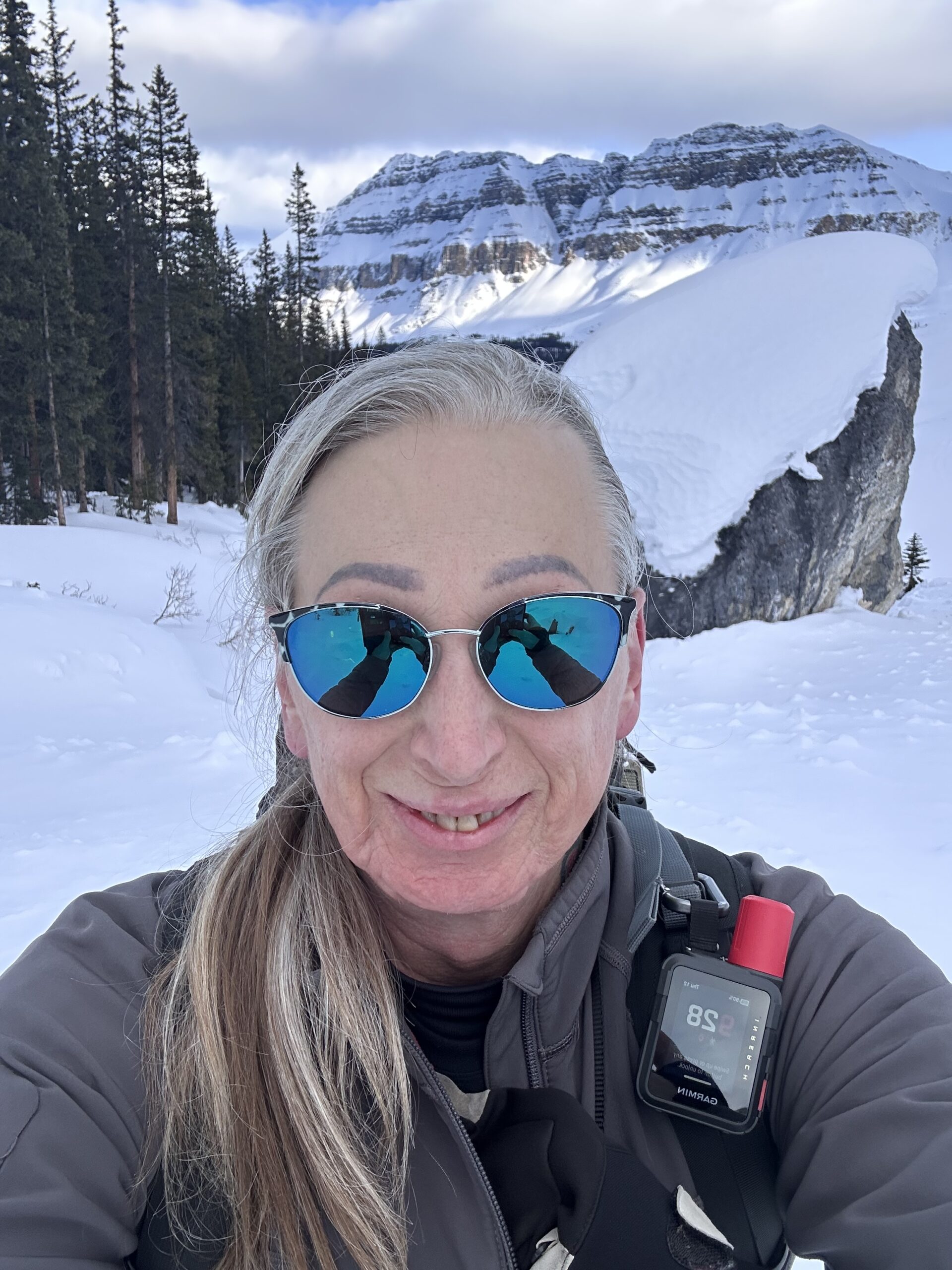
Certified private hiking guide and professional interpretive practitioner based in the Canadian Rockies. With over 25 years of four-season mountain experience, she offers thoughtfully paced hiking experiences that help active adults explore mountain landscapes with care, confidence, and understanding. Meet Niki