Am I Fit Enough to Hike in Banff?
For many people planning a trip to Banff, this question appears early, even if they never say it out loud:
Am I fit enough to hike here?
It is usually not a dramatic fear. It is quieter than that. Will the elevation feel harder than expected? Will the trail ask more of me than I realize? Will I slow the day down for someone else? Will I end up spending more energy managing the effort than enjoying where I am?
These questions shape more decisions than people admit. They influence which hikes feel possible, whether a guide seems worth considering, and sometimes whether someone goes at all.
In most cases, the concern is not misplaced. But it is often being measured by the wrong standard.
When people think about hiking fitness, they usually think in straightforward terms such as cardio, endurance, and strength. Those things matter. But in Banff, Lake Louise, and along the Icefields Parkway, fitness is only one part of how a hiking day actually feels. Pace matters. Elevation matters. Trail structure matters. So does whether the route suits the kind of day you genuinely want to have.
That is one reason two people with similar fitness can have very different experiences on the same trail. One settles in and feels strong. The other never quite finds a rhythm and finishes wondering what went wrong.
Often, it is not fitness alone that explains the difference. It is how the day was chosen, paced, and shaped from the beginning.
Why So Many People Ask If They Are Fit Enough to Hike in Banff
For many active adults, especially after 50, this is not really a question about basic capability. It is a question about uncertainty.
You may already hike regularly. You may stay active all year. You may have experience in other mountain areas and know yourself reasonably well. But Banff is unfamiliar. The scale is different. The elevation is noticeable. Trail descriptions often leave out the part that matters most, which is how the day will actually feel once you are in it.
That uncertainty makes people second-guess themselves.
What they are often really asking is not whether they are capable of walking uphill for a few hours. It is whether the day will feel manageable, enjoyable, and still worth it once the terrain, altitude, and energy demands are all included.
What “Fit Enough” Actually Means on Most Banff Hikes
On most well-defined, non-technical trails in Banff, being fit enough does not mean pushing your body to its edge. It does not require peak conditioning. It does not require speed. It does not require keeping up with someone else.
In most cases, it simply means you can walk steadily for several hours, manage sustained uphill at a moderate effort, recover with short breaks, and stay reasonably comfortable on uneven ground.
That is a quieter threshold than many people imagine.
The problem is that people often assess themselves against the wrong image. They picture dramatic scenery, alpine views, or long mountain distances and assume the day must demand a high level of athleticism. Sometimes it does. Often it does not.
What matters more is whether the route fits the way you actually move.
Why Banff Hikes Can Feel Harder Than Expected
Most hikes do not suddenly become difficult all at once. They become difficult gradually.
The first incline is taken a little too fast. Breathing never quite settles. Water comes later than it should. The body never gets the chance to find a natural rhythm. None of it seems dramatic in the moment, but the strain accumulates quietly.
By the middle of the day, the hike feels heavier than expected.
That is one reason trail labels can be misleading. A route may sound easy or moderate on paper and still feel much more demanding once elevation, pace, terrain, and structure are included. This is very much part of what I explore in Why Easy Hikes in Banff Can Feel Misleading The issue is not always the label itself. It is the difference between the label and the lived experience of the day.
Pace Often Matters More Than People Realize
A common misconception is that feeling tired means you are not fit enough.
Sometimes that is true. More often, the pace simply did not suit you.
Some people need a gradual start. Some settle in best with steady effort and a few natural pauses early on. Others move comfortably once they have had time to warm into the climb. None of that says anything negative about ability. It simply reflects that different hikers move well in different ways.
When the pace does not match your natural rhythm, even a moderate hike can begin to feel harder than it should. That is often when people start questioning themselves. They assume they are too slow or not strong enough, when in reality the day may simply have been structured in a way that worked against them.
If that feeling sounds familiar, Am I Too Slow for Guided Hikes speaks directly to that experience.
Altitude Changes How Hiking in Banff Feels
Even strong hikers notice Banff differently when they arrive from lower elevation.
Banff itself sits high enough for many people to feel it, and many hikes begin higher still. The shift is often subtle, but it matters. Breathing may feel slightly more strained early in the day. Recovery may take longer. Dehydration can arrive sooner than people expect. A pace that would feel perfectly comfortable elsewhere can feel just a little too hard here, especially in the opening part of a hike.
That does not mean you are not fit enough to hike in Banff.
It means you are in a different environment, and the body may need a little more time to settle into it.
This is one reason I take the first part of a hiking day seriously. When the start is handled well, altitude often becomes something the body adapts to rather than something that quietly controls the whole experience.
A Well-Structured Day Can Matter More Than Fitness
This is the part many people do not expect.
A well-structured day can make a moderate hike feel steady, spacious, and entirely manageable. A poorly structured day can make the same route feel compressed, tiring, and more demanding than it needed to be.
Structure includes more than trail choice. It includes how the first thirty minutes are paced, how terrain is sequenced, when breaks happen, how the return is accounted for, and whether the route actually suits the person doing it.
That is why I do not think only in terms of trail ratings. I think about how the whole day will land.
When that is done well, most capable hikers feel far better than they expected. When it is done poorly, even strong people can end up wondering why the day felt harder than it should have. That pattern is part of what I explore in When a Guided Day Feels Harder Than It Should.
A Better Question Than “Am I Fit Enough?”
Sometimes the better question is not whether you are fit enough.
It is whether the day has been chosen well enough.
Is the route appropriate for the kind of day you want? Is the pace realistic? Is there enough margin built in? Does the trail suit your preferences, not just your theoretical ability? Will the day still feel good once the elevation, drive, weather, and return are included?
These questions are often much more useful.
Because many people do not need more fitness. They need a better-matched day.
What Many Active Adults Over 50 Actually Need
For many adults over 50, the question is not really whether they can complete a hike. It is whether they want to do it in a way that feels compressed, performative, or unnecessarily tiring.
At a certain point, the appeal of proving something begins to fade. There is less interest in pushing through discomfort for the sake of a popular route. Less interest in keeping up with a group just because everyone else is moving quickly. Less interest in finishing something simply to say it was done.
What often grows instead is discernment.
A desire to move steadily. To feel good throughout the day. To have enough energy left to enjoy the experience, not just survive it. To finish feeling satisfied rather than depleted.
When a day is structured with that in mind, the question of fitness usually softens very quickly.
This broader fit question also connects closely with Are Guided Hikes Right for Active Adults Over 50 and How to Pace a Hike in the Canadian Rockies both of which support the same core idea from slightly different angles.
You May Already Be More Ready Than You Think
This is the part I most want people to hear.
If you are asking whether you are fit enough to hike in Banff, you may already be bringing more awareness to the day than someone who never questions it at all. Awareness is not weakness. Often it is discernment.
You may not need a different body. You may not need a more ambitious training plan. You may not need to force yourself into a bigger objective.
You may simply need a route that matches your pace, your energy, your preferences, and the kind of day you actually want to have in the mountains.
That is a very different standard from measuring yourself against generic trail descriptions or someone else’s itinerary.
A More Thoughtful Way to Hike in Banff
On a well-paced, well-matched hiking day, something important changes.
Breathing settles. Breaks happen naturally. The trail begins to feel coherent. The return does not feel like something to endure. The day becomes less about managing effort and more about actually being where you are.
That shift is often what people were hoping for all along, even if they did not know how to name it.
If you are still wondering whether you are fit enough to hike in Banff, the answer in many cases is yes. But the deeper answer is that fitness alone is rarely what determines whether the day feels good.
Pace matters. Structure matters. Margin matters. Fit matters.
When those are in place, most capable people are far more ready for the Rockies than they think.
If you are looking for a day shaped around your actual pace and energy rather than a fixed schedule, Do You Need a Hiking Guide in Banff is a useful next step. If you already know you want a more personal approach, you can explore Private Guided Hiking in Banff or begin a conversation
Frequently Asked Questions About Hiking Fitness in Banff
Do you need to be very fit to hike in Banff?
No. Many non-technical hikes in Banff are well within reach for active adults with a reasonable base level of fitness. What matters most is not peak conditioning, but choosing a route and pace that suit the kind of day you want.
Are Banff hikes harder because of altitude?
They can feel harder, yes. Even moderate elevation can affect breathing, recovery, and hydration, especially if you are arriving from lower elevations. That does not usually make Banff hikes unmanageable. It simply means the day may feel different than a similar hike elsewhere.
What is considered fit enough for hiking in Banff?
In most cases, being fit enough means you can walk steadily for several hours, manage some uphill effort, recover with short breaks, and stay comfortable on uneven trails. Most people do not need elite fitness. They need a route that matches their pace, energy, and preferences.
Why do some moderate hikes in Banff feel harder than expected?
Often because of how the day is structured. Pace, elevation gain, uneven terrain, weather, altitude, and route choice all influence how a hike feels. A trail can sound manageable on paper and still feel harder than expected if the day is not well matched from the start.
Are guided hikes in Banff better for active adults over 50?
Often, yes. A guided day can reduce uncertainty and help match the route, pace, and structure to the person rather than forcing everyone into the same pattern. For many active adults over 50, that leads to a steadier, more enjoyable day in the mountains.
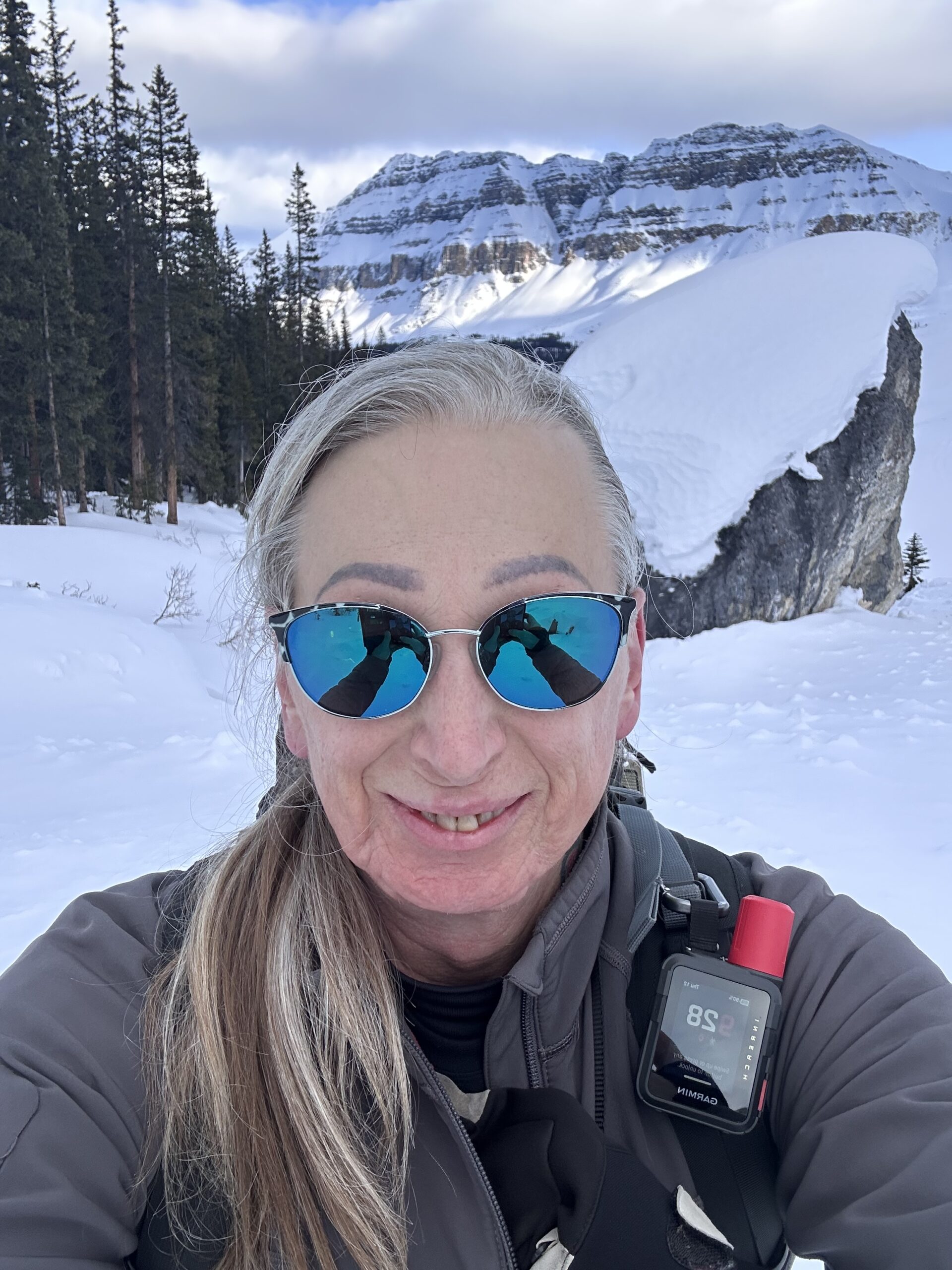
Certified private hiking guide and professional interpretive practitioner based in the Canadian Rockies. With over 25 years of four-season mountain experience, she offers thoughtfully paced hiking experiences that help active adults explore mountain landscapes with care, confidence, and understanding. Meet Niki