Do You Need a Hiking Guide in Banff? When It’s Worth It and When It Isn’t
For many people planning a trip to Banff or the Canadian Rockies, the idea of hiring a hiking guide is not where the planning begins.
It usually starts with simpler questions. When is the best time to visit? Which hikes are worth doing? How difficult will the terrain feel? Are we fit enough for the kind of day we have in mind?
Then, somewhere along the way, another question begins to form more quietly.
Do we need a guide?
In a place like Banff, that question rarely appears because the mountains are inherently inaccessible. More often, it appears when people begin to realize how quickly a hiking day becomes more layered than expected. Trail choice, pacing, elevation, weather, parking, access, crowd pressure, and the simple question of how the day will actually feel over several hours all begin to matter at once.
For visitors considering a private hiking guide in Banff, the question is usually not whether they are capable of walking a trail. It is whether they want help choosing the right hike, setting the right pace, and making the day feel calm rather than overmanaged.
For some visitors, the answer is no. They do not need a guide at all.
For others, it changes the entire experience.
The difference is not always about fitness, and it is not just about navigation. More often, it comes down to how you want your time in the mountains to feel.
You Do Not Always Need a Hiking Guide in Banff
There are many situations where hiking independently in Banff makes complete sense.
If you are comfortable navigating marked trails, planning your own day, adjusting as conditions change, and managing the practical side of mountain travel without it quietly wearing on the experience, you may not need a guide at all. Many visitors enjoy Banff this way, and for some people that independence is part of the point.
A guide is not necessary simply because a trail exists in mountain terrain. And this is not really a question of whether independent hiking is valid. It is.
The better question is whether independence is the experience you actually want for this trip.
Because for many people, especially when time is limited and the mountains are unfamiliar, the issue is not whether they can do it alone. It is whether they want to spend part of the day holding together all the decisions that shape how the day unfolds.
Why This Question Comes Up More Often in Banff
In many places, hiking is relatively straightforward. Banff is not difficult in every sense, but it is layered.
Access can shape the day before it even begins. Parking systems, crowded trailheads, seasonal restrictions, and timing constraints often influence whether the day starts calmly or already slightly compressed. Trails that sound moderate can feel different at elevation. Distance alone rarely tells the full story. Uneven terrain, weather shifts, crowd rhythm, and early pacing often matter more than people expect.
That is one reason this question comes up so often here.
The decision is rarely just, “Can we do this hike?”
It becomes, “Will this day actually feel good from beginning to end?”
That distinction matters.
If you are also considering Lake Louise as part of your trip, this same question often becomes even more specific. Lake Louise has its own access pressures, crowds, elevation, and route choices. For that reason, Best Hikes in Lake Louise for Active Adults and Lake Louise Hikes may be helpful companion reads.
When People Start Thinking About Hiring a Guide
Most people do not begin the planning process assuming they need guided hiking in Banff.
The question usually appears later, once the trip starts to feel more real.
You may be planning your first visit to the Canadian Rockies and realizing how much terrain there is to choose from. You may already be active and capable, but unsure how a full mountain day will actually feel at elevation. You may be traveling with someone who moves at a different pace than you do. You may be looking at access and timing and realizing that parking, trailheads, and route choice are not as simple as they seemed at first glance.
Often the question is not whether you can hike without a guide.
It is whether you want to spend your limited time in Banff managing the day, or living inside it.
That is a different question entirely, and for many people it is the more honest one.
When You Probably Do Not Need a Guide
There are many situations where a hiking guide is unnecessary.
If you enjoy planning your own routes, are comfortable navigating mountain trails, understand how your body tends to respond over a full day, and do not mind adjusting the plan as conditions change, independent hiking may be exactly right for you.
For some travelers, that flexibility is part of the pleasure. They like building the day themselves. They do not mind the uncertainty. In fact, they may enjoy it.
And there are absolutely trails in Banff and nearby areas where this can work well.
You may not need a hiking guide in Banff if you:
- enjoy researching and planning your own hikes
- are comfortable choosing routes in unfamiliar mountain terrain
- understand how elevation, grade, and descent affect your body
- are willing to change plans if weather, access, or crowding affects the day
- prefer full independence over a guided structure
- are mainly looking for transportation, sightseeing stops, or a packaged tour
This article is not meant to persuade everyone that a guide is needed. It is meant to clarify where guiding actually changes the experience, and where it may not.
Where a Hiking Guide in Banff Starts to Make a Real Difference
Where guiding begins to matter is usually not in whether a hike is possible.
It is in how the day holds together.
A self-guided day often begins with a series of small uncertainties. Where do we park? Is this the right trailhead? Will this route feel manageable once we are on it? Are we starting too late? Are we already on the back foot?
By the middle of the day, the questions often shift. Are we pacing this well? Should we keep going or turn around? Is this section supposed to feel this hard? Are we protecting enough energy for the return?
Each of those decisions is manageable in isolation. But over the course of a full mountain day, they accumulate.
The result is that a surprising amount of energy can shift away from the experience itself and into quietly managing the day.
This is where a guide changes something important. Not through anything dramatic, but through a long sequence of smaller decisions made early and well. Route choice is matched to conditions and to the people actually walking it. Pace is set in a way that protects energy instead of spending it too quickly. Timing is shaped before crowding, weather, or effort begin to distort the day.
That is the real difference. Not doing the impossible. Simply helping the day work.
For a closer look at what a private day can feel like in practice, What a Private Guided Hiking Day in Banff Feels Like is a natural next read.
Is a Banff Hiking Guide Worth It?
A Banff hiking guide is usually worth it when the cost of getting the day wrong feels higher than the cost of being professionally supported.
That may sound practical, but it is often emotional too.
Most visitors do not have unlimited hiking days in Banff. They may have one or two days where the weather, their energy, their schedule, and their expectations all need to come together. When that is the case, the value of a guide is not necessarily in doing a harder hike or reaching a more dramatic destination.
The value may be in choosing the right hike in the first place.
It may be in starting at the right time, setting the right pace, noticing when effort is building too quickly, adjusting before the day becomes strained, and finishing with energy and satisfaction rather than regret.
If you already hike, the value of a private guide is not that you cannot find a trail.
It is that you do not have to carry every decision alone in unfamiliar terrain.
If your question is less “Do we need a guide?” and more “Would this be worth it if we can already hike on our own?”, whether a private hiking guide is worth it speaks directly to that concern.
A guided day may be worth it if you want:
- help choosing a hike that fits your ability, interests, and available time
- a pace that feels steady rather than pressured
- support with timing, weather awareness, and route adjustment
- a quieter alternative to a group hiking tour
- a day shaped around one or two people rather than a fixed group itinerary
- interpretation that helps the landscape feel more meaningful
- professional judgment without the feeling of being managed
In that sense, guided hiking is not about giving up independence. It is about deciding how much of the day you want to hold yourself.
What a Guide Does That a Map Cannot
A map can show you where the trail goes.
It cannot tell you how the day is likely to feel.
It cannot tell you whether the route is right for the kind of day you want, how early effort is likely to land, whether crowd timing will change the rhythm of the experience, or how to preserve enough margin that the return still feels good rather than dutiful.
In Banff, guiding is often less about route-finding than people assume.
More often, it is about matching the hike to the day, reading weather and terrain in context, adjusting timing before the trail feels crowded or compressed, and making quiet choices early enough that fatigue, uncertainty, and small mismatches do not have the chance to build.
That is also why guides tend to notice things that do not show up on trail apps or route summaries. If you want more insight into that side of the work, How Hiking Guides Read Mountain Weather in the Rockies and What Hiking Guides Notice in the Canadian Rockies support this article well.
Why Pace, Fit, and Structure Matter More Than Many People Expect
Many visitors are fit enough for the terrain. What often goes wrong is not basic ability. It is mismatch.
The route is slightly off for the kind of day they want. The pace is set a little too high early on. Breaks happen a little too late. Crowd pressure changes the rhythm. The trail sounds manageable on paper but lands differently once elevation, grade, and the full shape of the day are included.
This is one reason the question of fitness is often misunderstood. It is also one reason the day can feel harder than expected even for capable people.
A person can be fit and still choose a hike that is not well matched to the day.
A couple can both be capable and still move at different natural rhythms.
A trail can be described as moderate and still feel more demanding than expected because of heat, elevation, descent, surface, or the accumulated fatigue of travel.
This is where pacing matters.
Good pacing is not simply going slowly. It is distributing effort intelligently so the day has shape, margin, and enough energy left for the return. It is the difference between a hike that feels steady and a hike that slowly becomes something to endure.
If that concern sits anywhere in the background for you, Am I Fit Enough to Hike in Banff? is an important companion article. And if you have ever found yourself wondering whether you are simply too slow for this kind of day, Am I Too Slow for Guided Hikes? speaks to that directly.
Who a Private Hiking Guide in Banff Is Best For
A private hiking guide in Banff is not the right fit for every visitor.
It is best suited to people who want a hiking-focused day and who value judgment, pacing, interpretation, and personal attention more than a packaged sightseeing itinerary.
You may be a good fit for private guided hiking if you are active, curious, and capable, but you do not want to spend your day second-guessing every decision. You may want a hike that feels like it was chosen for you, not for an average visitor on a list. You may want support without being pushed, and structure without losing the feeling of freedom.
Private guided hiking may be a good fit if you:
- are active but unfamiliar with Banff or Canadian Rockies terrain
- want help choosing the right hike for your actual ability and interests
- are traveling as a couple with different natural paces
- prefer a private experience over a group tour
- want thoughtful pacing rather than a rushed day
- have limited time and want one hiking day to go well
- value interpretation, local knowledge, and professional judgment
- want the day to feel steady, spacious, and well held
This is especially true for many active adults over 50 who still want real mountain experiences, but do not want the pressure or compromise that can come with group hiking.
If that sounds familiar, Are Guided Hikes Right for Active Adults Over 50? and Private vs Group Guided Hikes: Which Is Right After 50? both explore that decision more fully.
Who May Be Better Off Hiking Independently
Just as important, private guided hiking may not be the right fit for you.
If you love planning every detail, prefer to move entirely on your own schedule, enjoy navigating uncertainty, and feel confident adjusting your route as the day unfolds, independent hiking may give you exactly the kind of freedom you want.
You may be better off hiking independently if you:
- want full control over the route, timing, and pace
- enjoy making all the planning decisions yourself
- are comfortable with changing weather, crowding, and access issues
- prefer not to have a structured start time or guiding relationship
- are mainly looking for shuttle service, hotel pickup, restaurant stops, or a sightseeing package
That last point is important.
My private guided hiking service is focused on the hiking day itself. It is not a packaged sightseeing tour, transportation service, or full travel-planning product. It is designed for guests who already have transportation or can meet at an agreed location, and who want the mountain day itself to be professionally guided.
That distinction helps keep the experience clear.
The focus is the hike, the pacing, the route choice, the interpretation, and the quality of the day on the trail.
For practical details about how the process works, How It Works and Expectations are the best pages to read next. If you are ready to understand the practical side of the experience, what’s included in a private guided hiking day explains what is and is not included.
Private Guided Hiking Is Different From a Banff Sightseeing Tour
This kind of guided day is different from a packaged sightseeing tour.
A sightseeing tour may be the right choice if you want hotel pickup, transportation, several famous stops, short walks, lake viewpoints, restaurant suggestions, and a broader travel itinerary. For many visitors, that kind of support is exactly what they need.
Private guided hiking serves a different purpose.
It is best suited to guests who want the hiking experience itself to be private, well paced, and professionally held. The day is not built around seeing as many places as possible. It is built around choosing the right hike and experiencing it well.
A sightseeing tour often asks, “How much can we fit into the day?”
A private guided hike asks, “What kind of mountain day actually fits you?”
That is a very different starting point.
If your priority is convenience, transportation, and multiple scenic stops, a broader tour may be the better fit.
If your priority is a hiking-focused day shaped around your pace, comfort, interests, and the actual conditions in the mountains, private guided hiking may make more sense.
For a fuller comparison, how private guided hiking differs from a Banff sightseeing tour explains the difference between a hiking-focused private day and a broader sightseeing itinerary.
Why I Guide Only 1–2 Guests
Private guiding can mean different things depending on who is using the phrase.
In many cases, “private” still means a small group of four, six, or eight people traveling together. That is not how I work.
I guide one or two guests at a time.
That allows for something very specific. Pace can reflect how you actually move, not what a group requires. Small decisions can be adjusted immediately rather than negotiated. There is room for quiet, for observation, for interpretation, and for the kind of responsiveness that disappears once too many needs compete inside the same day.
With larger groups, even well-run ones, the experience inevitably becomes a compromise.
With one or two guests, the day can remain coherent from beginning to end.
If you want the fuller thinking behind that choice, Why I Only Guide 1–2 Guests and What Private Really Means in Guided Hiking are the most relevant next reads.
If You Hike at Different Paces
This is more common than most people think, especially with couples.
One person starts faster. The other settles in more gradually. One prefers fewer breaks. The other moves best at a steadier rhythm. None of this means anyone is weak, difficult, or a poor fit for the mountains. It simply means the day needs to be shaped with a little more care.
In group settings, this often creates subtle pressure. One person waits. One person pushes. Both adjust in ways that do not feel natural.
With one or two guests, this becomes much easier to manage. Pace can be adjusted in real time. Effort can be distributed more intelligently. Breaks can happen before fatigue builds into something larger.
If this feels familiar, Private Hiking in Banff for Couples Who Move at Different Paces and Am I Too Slow for Guided Hikes? both fit naturally here.
Why Private Guided Hiking Feels Different From Group Hiking
For many active adults over 50, the real distinction is not just guided versus self-guided.
It is private versus group.
Group hikes often require people to move inside a fixed structure. Pace is shared. Timing is shared. Trade-offs are constant. Even if the group is well intentioned, the day belongs partly to the group dynamic.
Private guiding changes that.
It allows the route, pace, timing, and overall structure of the day to be shaped around the actual people present. That usually creates a quieter, steadier, more personal day in the mountains.
If that distinction matters to you, Private vs Group Guided Hikes: Which Is Right After 50? and Are Guided Hikes Right for Active Adults Over 50? are both worth reading next.
A Simple Way to Decide
You may benefit from a hiking guide in Banff if you want help choosing the right route, timing the day well, understanding access constraints, setting a sustainable pace, and making good decisions once you are on the trail.
You may also benefit from a guide if you want to get one of your limited hiking days right, are unsure how the terrain will feel over a full day, are traveling with someone at a different pace, or simply want the day to feel steady rather than reactive.
You may not need one if you enjoy planning, are comfortable navigating mountain trails, prefer full independence, and do not mind the possibility that a day may need to be adjusted as it unfolds.
Both approaches can lead to meaningful time in the mountains.
The real question is how much of the day you want to hold yourself.
The Real Value of a Guided Day in Banff
Most visitors to Banff only have a limited number of hiking days.
That matters.
The decision is rarely just whether you can do a hike on your own. It is whether you want to risk one of those days feeling uncertain, rushed, mismatched, or quietly overmanaged when it could instead feel calm, well paced, and coherent from the beginning.
That is where the value of a guided day often becomes much clearer.
Not because the day becomes grander or more dramatic, but because it becomes better held.
A good guided day does not need to feel complicated. It should feel natural. The route should make sense. The pace should feel sustainable. The timing should support the experience. The decisions should be made early enough that they do not become problems later.
That kind of support is often quiet.
But it changes the day.
My Perspective as a Guide
After many seasons guiding in Banff, Lake Louise, Kananaskis, and along the Icefields Parkway, one pattern becomes very clear.
The most memorable days are rarely defined by distance.
They are defined by how the day felt.
Steady. Well timed. Spacious enough to notice the landscape. Coherent from the first hour to the last. Not rushed. Not overbuilt. Not quietly unraveling under the weight of small mismatches that could have been avoided much earlier.
At its best, guiding supports that quietly.
That is the part many people do not see from the outside, but often feel very clearly once they are inside the day.
What Happens Next
If you are considering a guided day, the next step does not need to be a commitment.
It can simply be a conversation.
You do not need to know the exact hike in advance. A better place to begin is with a few practical details: your dates, where you are staying, your hiking background, and the kind of day you are hoping to have.
From there, it becomes much easier to decide whether a guided day makes sense, and what shape that day should take.
If that feels like the right next step, you can explore Private Guided Hiking in Banff, Private Guided Hiking in Kananaskis, or Custom Guided Hiking
You can also begin a conversation if you are still deciding what kind of hiking day would fit your trip.
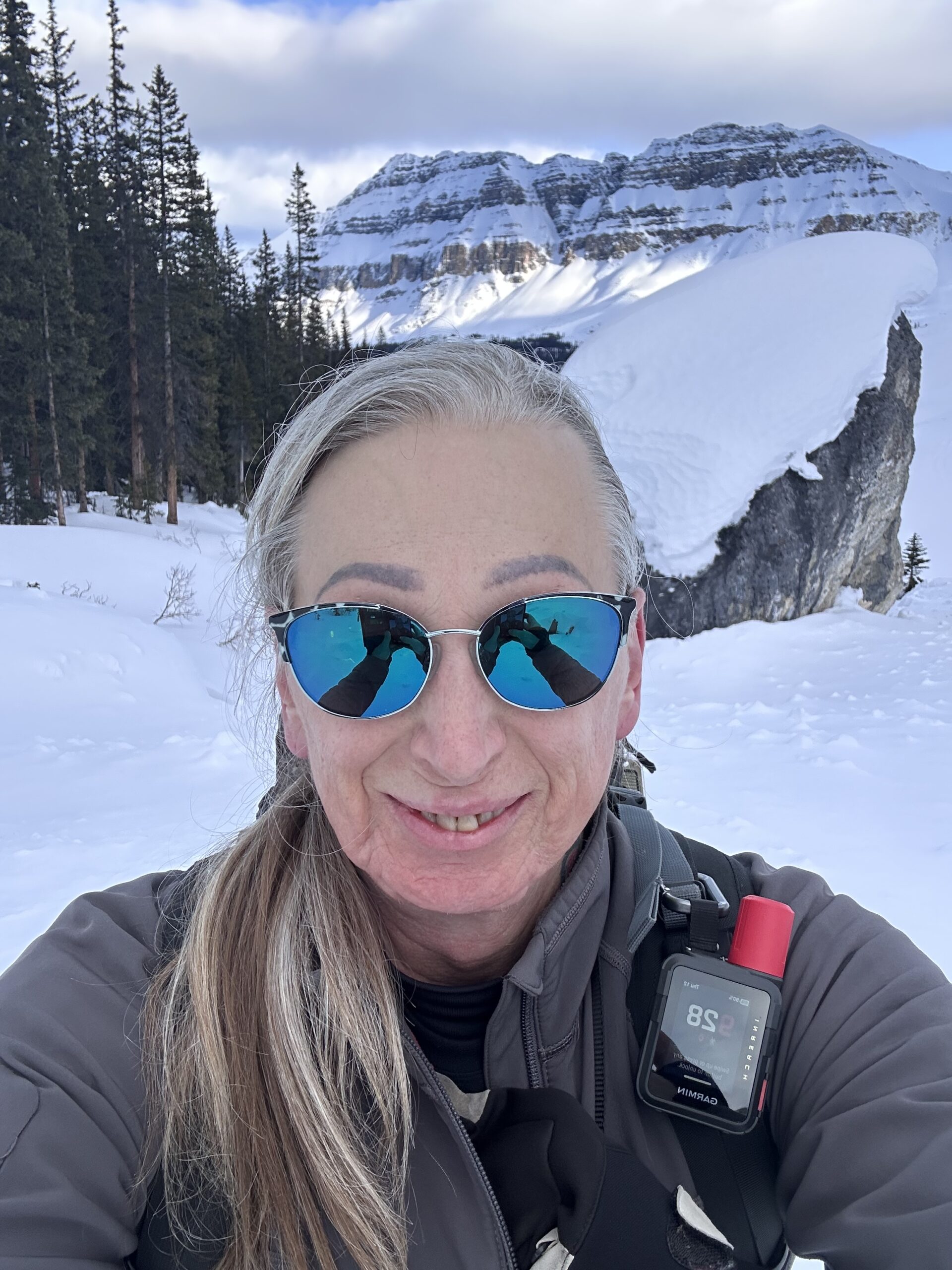
Certified private hiking guide and professional interpretive practitioner based in the Canadian Rockies. With over 25 years of four-season mountain experience, she offers thoughtfully paced hiking experiences that help active adults explore mountain landscapes with care, confidence, and understanding. Meet Niki