A more natural way to share a day in the mountains
Most couples planning a hiking day in Banff are both active. They enjoy being outdoors, they’re capable, and they’re looking forward to the experience.
And yet, there is often something unspoken in the background: they don’t move at exactly the same pace.
One person may naturally walk a little faster, while the other prefers a steadier rhythm. It usually isn’t a dramatic difference, but over the course of a full day in the mountains, it begins to matter. The question is rarely whether you can hike together. It is how to make the day feel good for both of you.
THIS IS MORE COMMON THAN PEOPLE EXPECT
This situation is far more common than most people assume.
It is not really about fitness in a general sense. Two people can be equally active and still move quite differently on the trail. Sometimes the difference comes from natural walking rhythm or stride length. Sometimes it has more to do with how quickly energy is used and recovered, or how each person prefers to pace a longer mountain day.
None of this is a problem. It is simply variation. But it becomes more noticeable once you are moving through uneven terrain for several hours, especially when elevation, footing, and timing all begin to shape the day.
If part of the uncertainty is how mountain terrain will feel over time, you may also want to read:
→ Am I Fit Enough to Hike in Banff
WHAT HAPPENS ON THE TRAIL
Without any structure to support it, small differences in pace tend to show up in subtle ways.
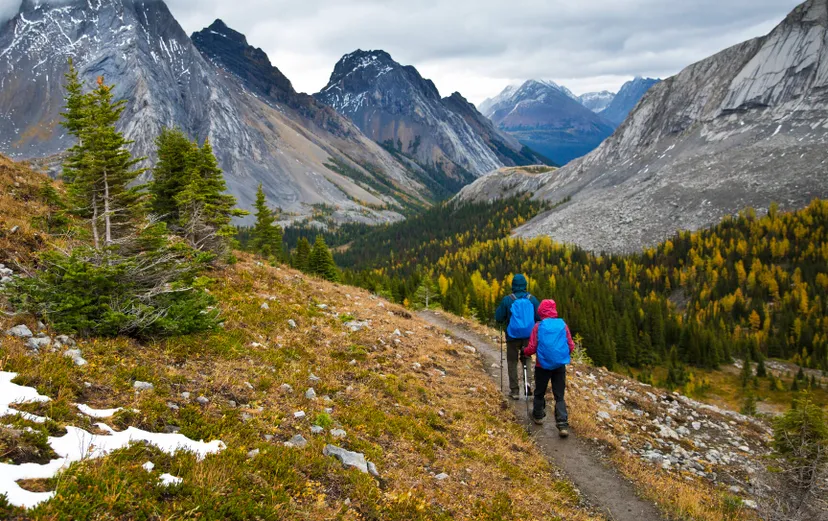
One person moves slightly ahead, then pauses. The other continues steadily, then catches up. Breaks happen, but not always at the moment each person would naturally choose. Over time, the rhythm of the day becomes less consistent. Not dramatically, but enough that the experience begins to feel slightly uneven.
That unevenness often matters more than people expect. A day can still be beautiful and worthwhile, but it may also feel a little more effortful, a little less settled, and a little more managed than it needed to.
WHAT PEOPLE DON’T ALWAYS SAY OUT LOUD
Most couples do not talk about this directly while it is happening, not because it is uncomfortable, but because they are trying to take care of each other.
One person may be thinking, I’m fine, I just need a minute. The other may be thinking, I don’t want to slow things down.So both adjust quietly. They keep moving, match each other as best they can, and let small things pass.
Over the course of several hours, those quiet adjustments can accumulate. The day can begin to feel more effortful than expected, not because of the terrain itself, but because the pacing never quite settles into something that feels natural for both people.
If this feels familiar, you may also want to read:
→ Am I Too Slow for Guided Hikes
WHY GROUP HIKES CAN MAKE THIS HARDER
In a group setting, this dynamic often becomes more pronounced.
The pace is shared across multiple people, which means there is less flexibility to adjust. Both individuals tend to adapt to the group rather than to each other. That can work perfectly well for some hikers, but for couples with different natural rhythms, it often makes the day feel less aligned.
This is also one of the reasons private and group experiences can feel so different in practice.
→ Private vs Group Guided Hikes: Which Is Right After 50?
HOW A PRIVATE DAY CHANGES THIS
A private hiking day allows the structure to shift.
Instead of fitting into a preset pace, the day can reflect how both people actually move. That does not mean every step is managed or that the day becomes overly careful. It means the pace is set early based on how the day begins, small differences in rhythm are accommodated naturally, breaks happen when they are actually needed, and timing adjusts quietly as the day unfolds.
There is no need to match a group and no need to manage each other’s pace in the same way. The structure allows both people to move comfortably within the same day.
If you are unsure what “private” actually means in this context, this explains it more clearly:
→ What Private Really Means in Guided Hiking
And if you’d like a fuller explanation of why I limit each day to one or two guests, you can read more here:
WHAT THIS FEELS LIKE
When pacing aligns well, the difference is noticeable.
The day tends to feel steadier rather than uneven, more continuous than stop-and-go, and calmer rather than managed. Neither person feels as though they are holding the other back, and neither feels the need to push. Energy is used more evenly, and by the end of the day, both people are more likely to feel that the experience worked.
That kind of ease is often subtle, but it changes how the day is remembered.
→ What a Private Guided Hiking Day Feels Like
HOW I GUIDE COUPLES
When guiding couples, much of the work happens in how the day is observed and adjusted in real time.
Early in the hike, I’m paying attention to how each person naturally moves, how quickly energy is being used, and how the terrain is affecting pace. From there, the rhythm of the day can be shaped in a way that works for both people. Sometimes that means a small change in timing. Sometimes it means adjusting the route or how effort is distributed over the course of the hike.
The goal is not to make both people move the same way. It is to allow both people to move well within the same experience.
This is closely tied to how pacing works over a full day in mountain terrain:
→ How to Pace a Hike in the Canadian Rockies
WHEN THIS MATTERS MOST
This tends to matter most when it is your first time hiking together in mountain terrain, when one person is unsure how the day will feel at elevation, when you have limited time and want the day to work well, or when you are looking for a calm, well-paced experience rather than a fast or demanding one.
In these situations, how the day is structured often matters more than the specific route.
DO YOU NEED A GUIDE?
Not always.
Many couples hike independently and have a great experience. But if you are looking for a day that feels well-paced for both of you, with less need to manage pacing between each other, more support choosing the right route and timing, and a more continuous, less interrupted experience, a guide can make a meaningful difference.
If you prefer to move entirely independently, adjust the day as you go, and manage pacing between yourselves, you may not need one. Both approaches can work. The difference is in how much of the day you want to hold yourselves.
If you’re still deciding whether a guided day is the right choice overall, this may help:
→ Do You Need a Hiking Guide in Banff
A GUIDE’S PERSPECTIVE
After many seasons guiding in the Canadian Rockies, one pattern becomes clear.
The most memorable days are rarely defined by distance or destination. They are defined by how the day felt: steady, well-paced, and shared without pressure.
For couples, that often comes down to whether both people were able to move in a way that felt natural.
PRIVATE GUIDED HIKING IN BANFF AND THE CANADIAN ROCKIES
If you’re planning a hiking day together and want something that works well for both of you, the next step is simply to begin a conversation.
You do not need to know the exact hike in advance. We can start with your plans, your experience, and how you each prefer to move through the day. From there, we can design something that fits.
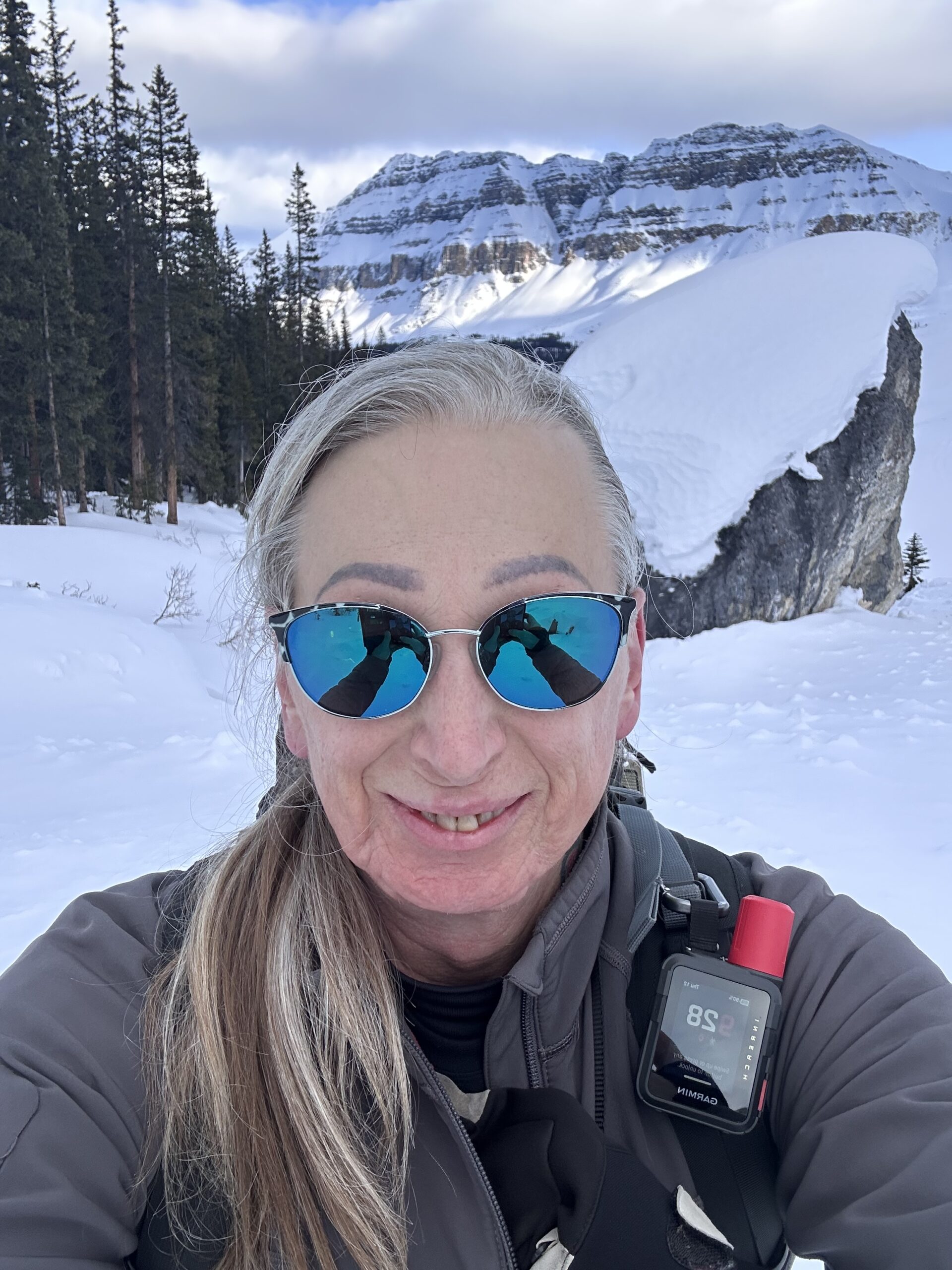
Certified private hiking guide and professional interpretive practitioner based in the Canadian Rockies. With over 25 years of four-season mountain experience, she offers thoughtfully paced hiking experiences that help active adults explore mountain landscapes with care, confidence, and understanding. Meet Niki