Choosing Routes That Give the Day Shape Without Forcing It
The Bow Valley Parkway includes some of the most satisfying hike choices in Banff for guests who want strong scenery, route variety, and a day that does not need to revolve around the park’s most compressed destinations.
Some hikes along the Parkway are shorter and highly accessible. Some are moderate routes through canyon terrain, forest, or lake-and-view landscapes. Others create a fuller hiking day with more climbing and a stronger sense of progression. What makes this area useful is not just the beauty of any one trail, but the range of day styles it supports.
For many guests, this is one of the most practical parts of Banff for thoughtful route selection. It gives you options. And that matters. If you want the broader character of the area itself, begin with Bow Valley Parkway. If you want to step back from individual routes and explore the wider Banff hiking structure, the Banff hub page is the main reference point.
Johnston Canyon
Distance: 5.4 km return to the Upper Falls, longer if continuing beyond
Elevation gain: Minimal to modest
Time: 2 to 3 hours
Difficulty: Easy to moderate
Johnston Canyon is one of the best-known hikes along the Bow Valley Parkway and one of the most heavily visited. It is famous for a reason. The canyon, catwalks, waterfalls, and enclosed rock walls create a dramatic and accessible experience that appeals to a very wide range of visitors.
For some guests, it is worth doing. For others, especially those looking for a quieter or more spacious hiking day, it is not the strongest fit unless timing is handled carefully. This is a good example of why a route can be visually compelling and still not always be the best private guided choice at a given hour or in a given season.
If a guest wants canyon scenery and understands the tradeoff, Johnston Canyon can work. But I would never treat it as the automatic answer simply because it is famous. The right question is whether the guest wants that kind of busy, high-recognition experience or whether the same day would land better elsewhere in the corridor.
Explore Half-Day Guided Hikes in Banff
Moose Meadows and Johnston Area Extensions
Distance: Varies, depending on route choice
Elevation gain: Minimal to moderate
Time: Varies
Difficulty: Easy to moderate
For guests who are drawn to the Johnston area but want something with a little more space or trail variety, nearby extensions and linked options can sometimes create a more balanced day than a simple out-and-back to the falls.
This is where the Bow Valley Parkway often becomes more interesting than its most photographed stop suggests. A guided day can sometimes use the area more intelligently by combining or sequencing routes rather than letting one crowded corridor define the whole outing.
The exact trail choice matters here, but the broader point is that the Parkway often rewards thinking beyond the most obvious stopping point. Sometimes the best day in this part of Banff comes from adjusting the shape of the outing rather than chasing the most recognizable name in its most crowded form.
Stanley Glacier
Distance: 10.4 km return
Elevation gain: 395 m
Time: 3.5 to 4.5 hours
Difficulty: Moderate
Stanley Glacier is one of the strongest moderate hikes along the Bow Valley Parkway and often one of the best overall choices for guests wanting a satisfying mountain day without turning it into an overly demanding objective.
The trail begins in forest, follows creek and burn terrain, and gradually opens toward a broad glacial setting with dramatic rock walls and a strong sense of mountain scale. This progression is part of what makes the hike work so well. The day builds naturally. It does not rely on instant spectacle alone.
For active adults and private guests who want a substantial but manageable outing, Stanley Glacier is often one of the clearest examples of what the Bow Valley Parkway does well. It feels like a real hike, with enough movement and variation to stay engaging, but without the pressure or intensity of Banff’s more compressed flagship zones.
This is a route that tends to leave people feeling they had a proper day in the mountains without needing the day to become bigger than it needed to be.
Explore our Stanley Glacier Half-Day Guided Hike in Banff
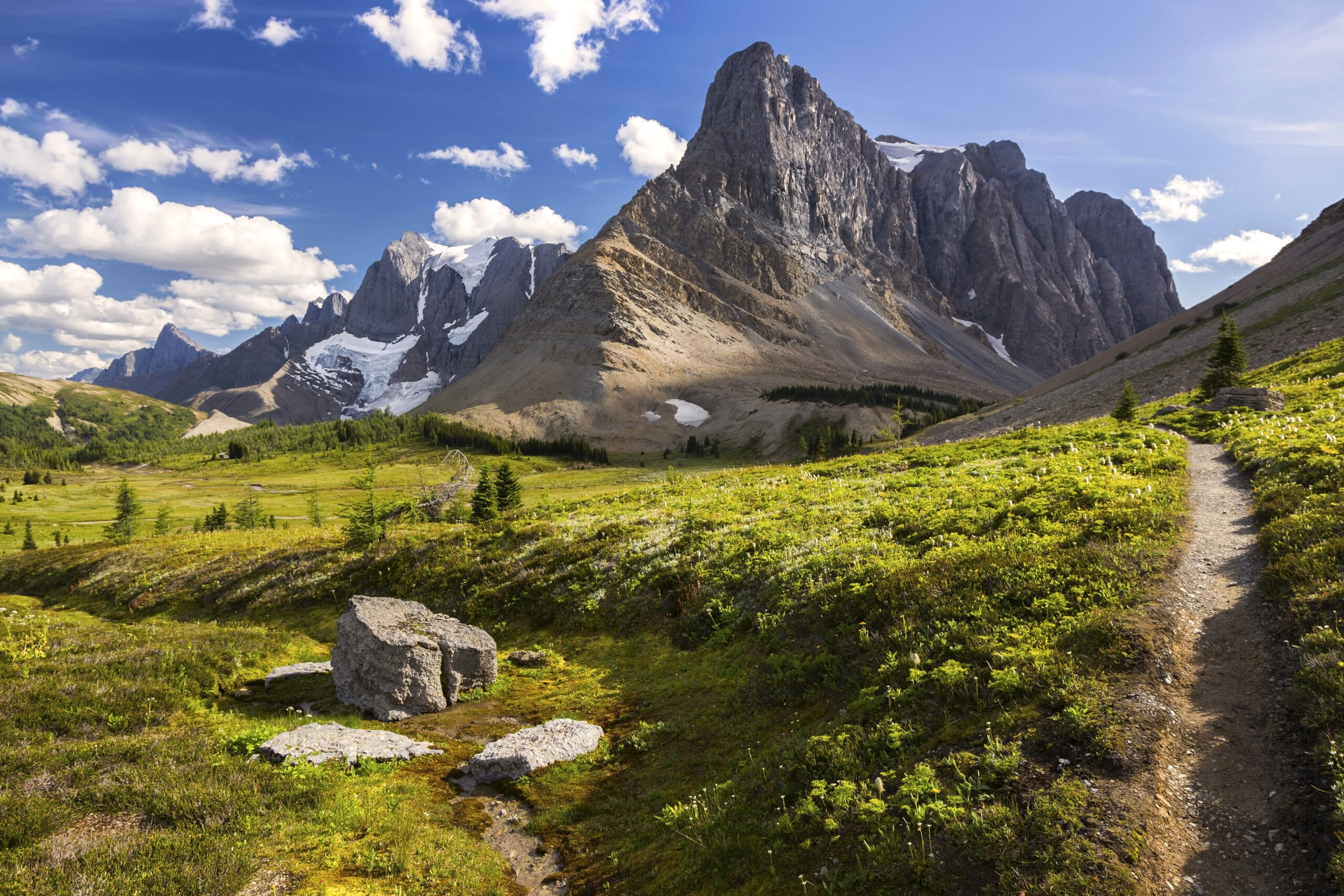
Rockbound Lake
Distance: 15.8 km return
Elevation gain: 760 m
Time: 5 to 7 hours
Difficulty: Challenging
Rockbound Lake is a stronger and longer hike that suits guests who want a fuller day on the Parkway.
The route climbs steadily through forest before reaching a higher basin and lake setting framed by broad mountain scenery. It is less about immediate drama and more about the depth of the outing. The reward comes from the full shape of the day, the physical involvement, and the sense of reaching farther into the landscape.
This hike is not for everyone, and it is not the best choice simply because a guest is fit. But for stronger hikers who want a more substantial trail day outside Banff’s highest-pressure hotspots, it can be an excellent option.
It suits people who enjoy settling into the effort of the day and letting the experience accumulate gradually rather than depending on one singular moment.
Ink Pots via the Johnston Corridor
Distance: about 11.7 km return, depending on turnaround point
Elevation gain: Moderate
Time: 4 to 5 hours
Difficulty: Moderate
The Ink Pots route extends beyond Johnston Canyon into a more open valley setting and offers a very different feel than stopping at the canyon alone.
This is often a better hiking day than Johnston Canyon by itself for guests who want more progression and a less stop-start rhythm once the initial busy section is behind them. The route still shares the access and visitor dynamics of the Johnston area, but it gives the day more substance.
For some hikers, this creates a better balance between iconic scenery and actual trail time. It keeps the distinctive canyon approach but allows the outing to become something more than a popular stop.
That shift matters. For many guests, the day begins to feel more their own once the busiest portion is behind them.
Castle Lookout
Distance: 7.4 km return
Elevation gain: 520 m
Time: 3 to 4 hours
Difficulty: Moderate
Castle Lookout offers one of the better moderate climbing options on the Parkway for guests who want a reasonably short but more physically engaged hike.
The trail climbs through forest to a viewpoint overlooking the Bow Valley and surrounding mountains. It suits hikers who like steady uphill movement and appreciate a clear visual payoff. Compared with the longer glacier or lake hikes in the corridor, this can be a more compact way to get a satisfying half-day effort.
This is a useful route for guests who want a trail that feels more like a hike than a walk, but who do not need a full-day commitment. It often works well when someone wants a more focused effort without building the whole day around a longer objective.
Helen Lake
Distance: 12 km return
Elevation gain: 455 m
Time: 6 to 7 hours
Difficulty: Moderate
Helen Lake sits near the upper Bow Valley Parkway and can function as a bridge between the Parkway and the broader Icefields Parkway side of the Banff landscape.
The route climbs steadily into open subalpine terrain and reaches a beautiful alpine lake beneath broad mountain slopes. It offers a different visual tone than the lower corridor hikes, with more openness and a stronger high-country feel.
Depending on how you ultimately divide your cluster, this route could live here or under Icefields Parkway Hikes. If you keep it here, it helps show the full range of what the Bow Valley Parkway corridor can offer. It also works well for hikers who want the feeling of moving into more open country without making the day entirely about exposure or a major alpine push.
For many guests, that makes it one of the most satisfying routes in the corridor.
Learn More About our Full-Day Helen Lake Hike in Banff
Choosing the Right Kind of Hike on the Bow Valley Parkway
Not every Bow Valley Parkway hike is trying to do the same thing, and that is part of what makes this corridor so useful.
Some hikes are best for shorter scenic outings. Some create a moderate mountain day with good progression and a satisfying mix of scenery. Others suit stronger hikers who want a longer route and more physical involvement. The beauty of the Parkway is that it gives you options without forcing every good day into the same shape.
Johnston Canyon is the obvious shorter scenic choice, especially for guests drawn to canyon and waterfall terrain. Stanley Glacier is often the best all-around moderate hike for guests wanting a substantial but manageable day with varied scenery. Castle Lookout works well for hikers who want a more compact climbing objective with a clear view payoff. Ink Pots suits guests who like the Johnston area but want more trail depth than the canyon alone provides. Rockbound Lake is better for stronger hikers who want a longer and more demanding day. Helen Lake can work very well for hikers who want a moderate alpine-feeling route with openness and a stronger sense of elevation.
The strongest choice is not always the most famous or the most ambitious. It is the one that gives the day the right shape. If route matching like that matters to you, Best Hikes in Banff for Active Adults is a natural next step.
Seasonal Notes and Access Realities
The Bow Valley Parkway often gives more seasonal flexibility than some of Banff’s most compressed destinations, but that does not mean every trail is equally good all season.
Lower routes can be useful earlier in the year. Mid-elevation hikes often come into shape as summer progresses. In peak summer, visitor pressure still matters, especially on the best-known trails like Johnston Canyon. In fall, the Parkway can be especially appealing for guests who want cooler conditions and a slightly calmer overall tone.
This is one reason I often think of the Bow Valley Parkway as a strong balancing area within a Banff trip. It gives you more options, and that often leads to a better-matched day.
Planning a Hiking Day Along the Bow Valley Parkway
Planning a hiking day on the Bow Valley Parkway usually begins with one useful advantage: you do not have to organize the entire experience around one single, high-pressure destination.
That opens up better choices. Do you want a shorter scenic outing or a fuller hiking day? Are you happy on busier signature trails, or would you rather choose a route with more space? Do you want canyon terrain, lake scenery, glacier views, or a straightforward climb to a viewpoint? And would this area work best as a contrast to a Lake Louise day or as your main Banff hiking focus?
Those questions matter because the Parkway tends to reward thoughtful selection more than simple name recognition. It is one of the places in Banff where a good day can often be built by matching route style to the guest rather than by steering everyone toward the same headline objective.
That is one of its quiet strengths. It lets the day take a more natural shape.
What to Know Before Setting Out
The Bow Valley Parkway may feel more distributed than some other parts of Banff, but it is still mountain terrain with all the usual realities: changing weather, wildlife, closures, variable footing, and seasonal differences in trail quality.
It is also a corridor where specific trailheads and route choices matter. Two hikes on the Parkway can produce very different kinds of days, even if they are geographically close.
That is one of the reasons guiding can work especially well here. The value lies in route selection, timing, pacing, and shaping a day that fits the guest rather than simply sending everyone to the best-known stop. If you are considering that option, Do You Need a Hiking Guide in Banff is the best place to begin.
A Guide’s Perspective
The Bow Valley Parkway is one of the areas where I often feel I can build a very good Banff hiking day without forcing it.
There is enough variety here to choose thoughtfully. If a guest wants a moderate day with strong scenery, there are good options. If they want something shorter, that can be done. If they want a fuller effort away from the highest-pressure destinations, the Parkway can often provide it.
That flexibility is the real strength of the area. It lets the day be shaped around quality rather than hype. And when interpretation is part of the day, the corridor often becomes richer still. Because the landscape unfolds in stages, guests have room to notice more, understand more, and let the day gather meaning gradually.
That kind of experience is one of the reasons I value this part of Banff so highly.
If you are considering a private guided hiking day near Banff, you can start with Private Guided Hiking in Banff to understand the broader service area, view Hikes & Pricing to compare current guided hike options, visit the Private Guided Hiking FAQ for practical questions about pace, preparation, route choice, logistics, and what to expect, or Begin a Conversation if you would like help choosing the right route for your pace, timing, access, and current conditions.
Frequently Asked Questions About Bow Valley Parkway Hikes
What are the best hikes on the Bow Valley Parkway?
That depends on the kind of day you want. Johnston Canyon, Stanley Glacier, Castle Lookout, Rockbound Lake, Ink Pots, and Helen Lake each suit different goals.
Is Johnston Canyon worth it?
Sometimes, yes. It is visually distinctive and popular for a reason, but it is also one of the most crowded routes in the corridor. Timing and expectations matter.
What is the best moderate hike on the Bow Valley Parkway?
For many guests, Stanley Glacier is one of the strongest moderate options because it offers a substantial but manageable day with varied scenery.
Are Bow Valley Parkway hikes good for active adults over 50?
Very often, yes. The corridor includes a useful range of hikes that can be matched carefully to pace, energy, and preferred day style.
Is the Bow Valley Parkway a better choice than Lake Louise?
Sometimes. If you want a less compressed and more flexible day, it can be. If you specifically want Lake Louise’s iconic basin scenery, then Lake Louise may still be the better fit.
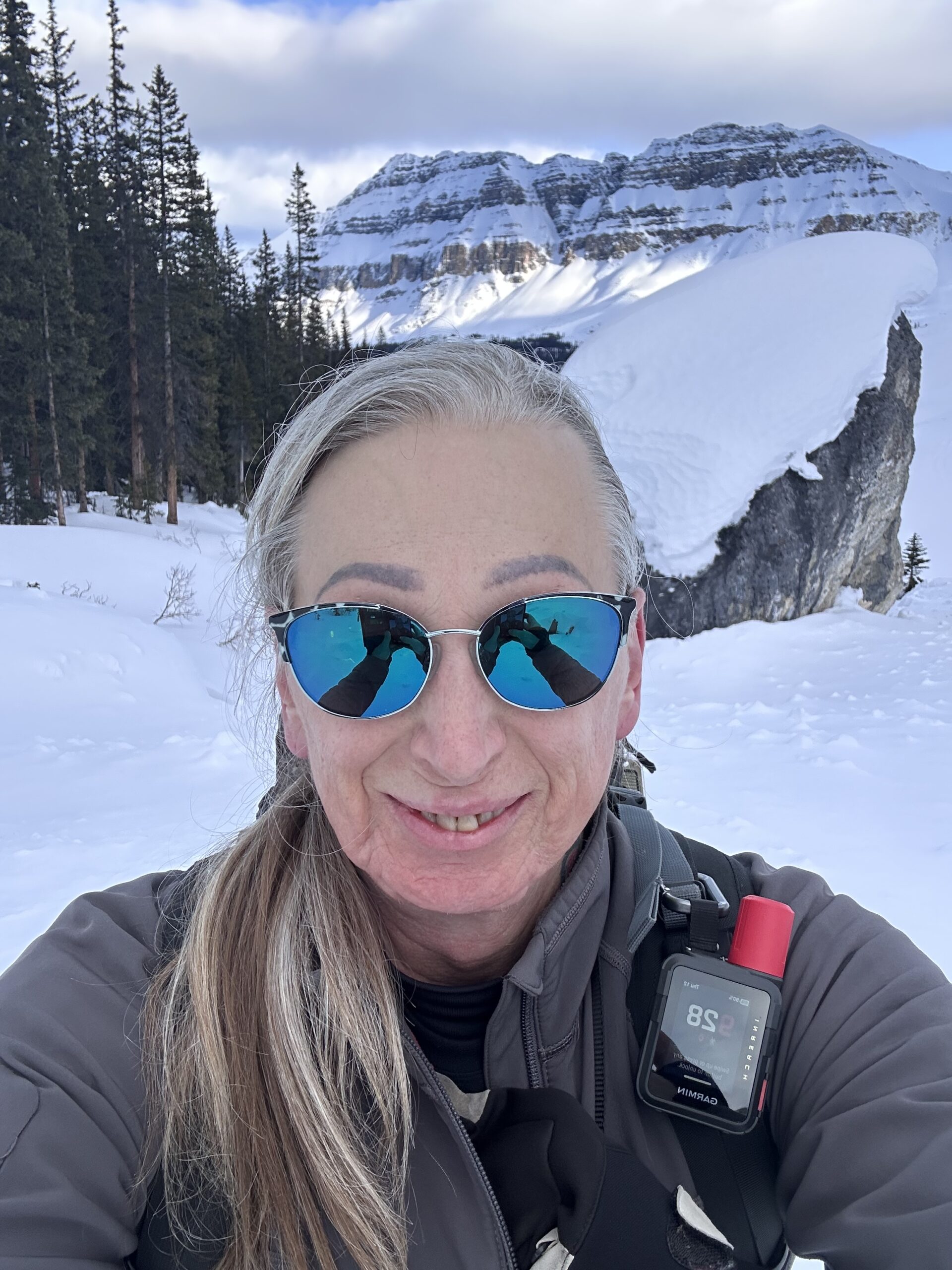
Certified private hiking guide and professional interpretive practitioner based in the Canadian Rockies. With over 25 years of four-season mountain experience, she offers thoughtfully paced hiking experiences that help active adults explore mountain landscapes with care, confidence, and understanding. Meet Niki