On a well-guided day, most people don’t think about risk at all.
They’re present. They’re relaxed. The pace feels natural. Decisions don’t feel heavy or rushed. The day unfolds without friction.
That isn’t because risk is absent.
It’s because it’s being held, quietly, early, and deliberately, so guests don’t have to manage it themselves.
Risk Is Not the Guest’s Job
One of the clearest markers of professional guiding is this: guests shouldn’t have to think about risk in order to feel safe.
That doesn’t mean risk doesn’t exist. Mountains, weather, terrain, timing, fatigue, all of these are real and always in play.
But the work of recognizing, interpreting, and responding to those factors belongs to the guide.
When guests are asked, explicitly or subtly, to help manage risk, something changes in the experience. Attention narrows. Relaxation disappears. People start second-guessing themselves and the day.
Good guiding removes that burden.
Not by oversimplifying the environment, but by taking responsibility for reading it well.
The Most Important Decisions Happen Early
From the outside, guiding can look reactive: adjusting plans, responding to conditions, making calls on the fly.
From the inside, most of the real work happens before anything needs to change.
Early decisions matter more than late corrections.
That includes:
-
choosing routes that leave options rather than force commitment
-
setting a pace that preserves energy instead of spending it
-
timing the day to avoid pressure rather than reacting to it
-
selecting objectives that match conditions, not just intentions
When these decisions are made early, the day feels smooth. When they’re deferred, everything becomes tighter later on.
Guests may never notice those early choices—but they feel the result of them.
If you want to see what that kind of early calibration looks like on the trail, What Hiking Guides Notice in the Canadian Rockies shows how those decisions often begin before guests would have any reason to notice them.
Margin Is What Creates Calm
Margin is not extra. It’s essential. It is the structural layer that keeps a mountain day from tightening under pressure. I describe that more fully in Margin Is What Makes a Day Feel Calm
Margin shows up as:
-
time that isn’t fully accounted for
-
distance that doesn’t need to be completed
-
options that remain available
-
decisions that don’t feel urgent
Without margin, even small changes feel disruptive. With margin, the day can adapt quietly without anyone feeling managed or redirected.
This is why comfort-forward pacing matters.
It’s not about going slowly. It’s about moving in a way that preserves choice.
When margin exists, the guide doesn’t need to explain every decision. The day holds together on its own.
Judgment Over Urgency
Urgency is easy to recognize. Judgment is quieter.
Urgency pushes a day forward because something has already narrowed. Judgment keeps things wide enough that urgency never takes over.
Professional guiding relies on judgment that is:
-
conservative without being restrictive
-
flexible without being vague
-
decisive without being dramatic
That judgment is informed by experience, pattern recognition, and attention, not by reacting to what’s happening in the moment. It is also what defines conservative mountain guiding in places like Banff and along the Icefields Parkway.
It is also part of what conservative guiding looks like in the mountains, where the best decisions usually prevent urgency rather than respond to it.
That includes reading weather, terrain, and timing long before they become obvious problems, which is part of how hiking guides read mountain weather in the Rockies.
When judgment is steady, guests sense it immediately. They may not be able to name it, but they trust it.
And trust changes how people move through a day.
Why the Best Safety Work Goes Unnoticed
When safety is handled well, there’s nothing to point to.
No close calls.
No big explanations.
No moments that require reassurance afterward.
The absence of drama isn’t luck. It’s design.
Most guests never know:
-
which options were quietly ruled out early
-
how timing choices reduced pressure later
-
how pacing preserved both energy and attention
-
how conservative decisions kept the day coherent
They don’t need to know.
Their experience is defined not by what almost happened, but by what never needed to happen at all.
What Guests Actually Feel Instead
When risk is held quietly, guests often describe the day in simple terms:
-
“It just felt easy.”
-
“Nothing felt rushed.”
-
“I didn’t have to think about anything.”
-
“The day made sense.”
These aren’t accidental outcomes.
They’re the result of a guide taking responsibility for the invisible work, so guests can stay present, curious, and at ease.
From the guest side, this is often what people are trying to name when they say a guided day felt better than expected, or when they realize another day felt harder than it should have. When a Guided Day Feels Harder Than It Should looks at that contrast more directly.
From My Side of the Trail
From my perspective, good guiding isn’t about managing moments of danger.
It’s about structuring the day so those moments never arise.
That means paying attention early. Choosing restraint over ambition. Preserving margin. Letting judgment do its work quietly, without needing to announce itself.
When that happens, the land can be experienced without tension. Decisions feel natural. And guests don’t have to carry anything except their own awareness of where they are.
That’s how risk is meant to be held.
Not loudly.
Not dramatically.
That judgment is informed by experience, pattern recognition, and attention, not by reacting to what’s happening in the moment. It is also what defines conservative mountain guiding in places like Banff and along the Icefields Parkway.
If you’re exploring private hiking in the Rockies and want a day shaped by this kind of early, quiet judgment, you can learn more about Private Guided Hiking in the Canadian Rockies
If it feels like the right fit, the next step is simple to Begin a Conversation.
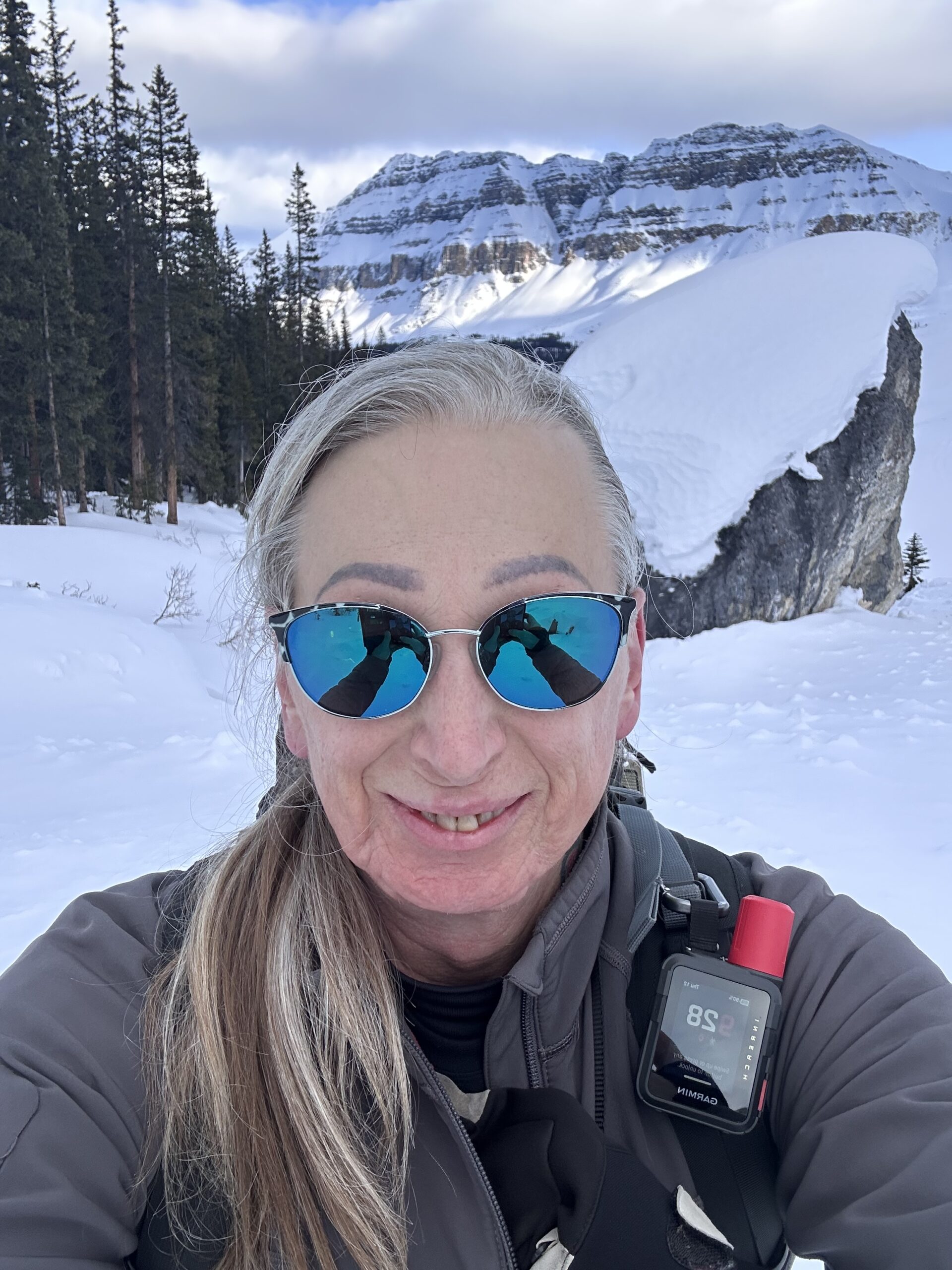
Certified private hiking guide and professional interpretive practitioner based in the Canadian Rockies. With over 25 years of four-season mountain experience, she offers thoughtfully paced hiking experiences that help active adults explore mountain landscapes with care, confidence, and understanding. Meet Niki