Not all private guided hikes are the same. This is how a private day is designed and guided in my practice.
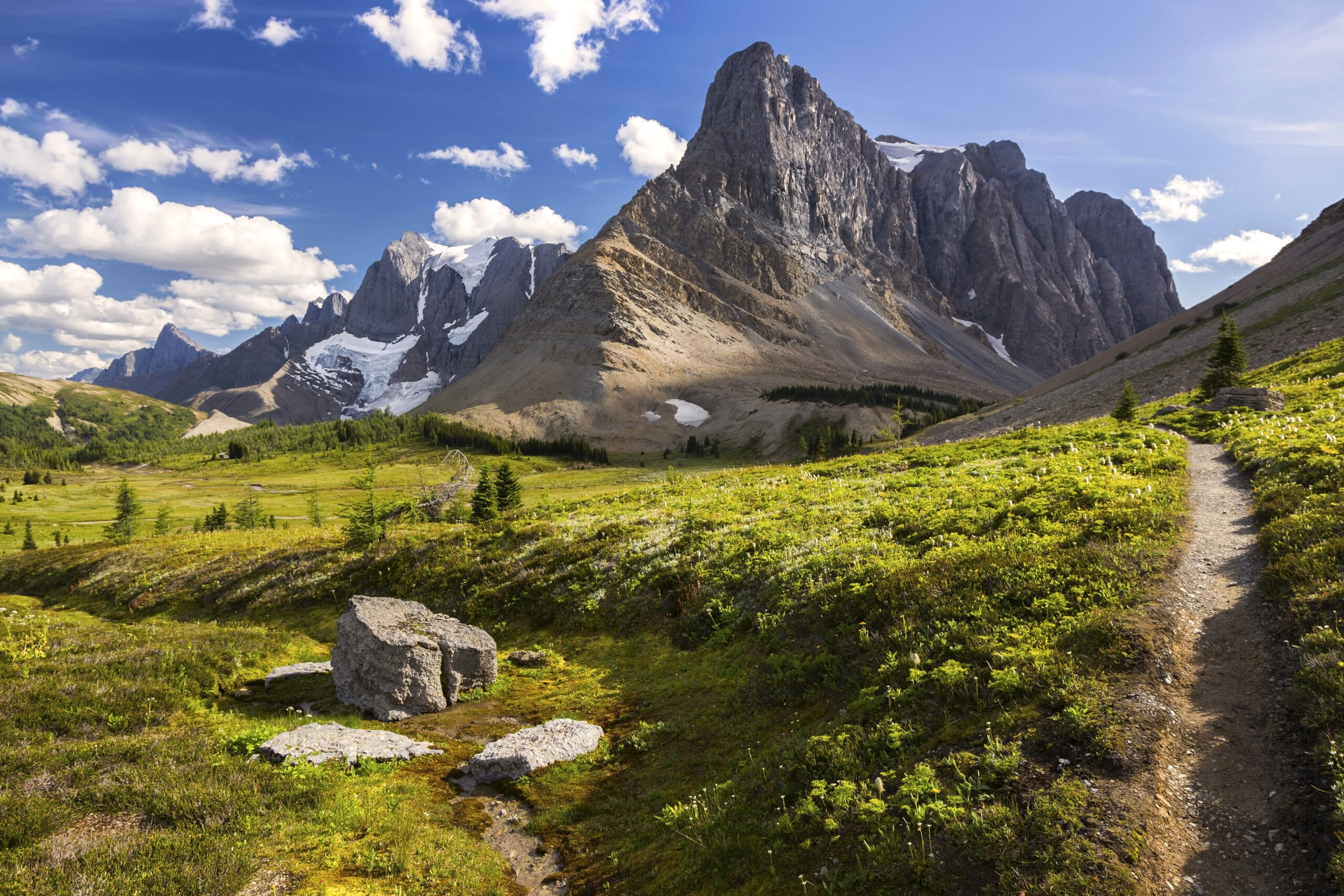
Morning light reaches the trailhead slowly in the mountains.
The air is still cool. Packs are set down for a moment. Layers are adjusted before walking begins. There is no sense of needing to hurry, no subtle pressure to get moving before your body has fully arrived.
You stand there for a moment, looking up the trail, and the day does not feel like something you need to catch up to.
It feels like there is room to enter it.
That is often the first difference people notice, though they may not name it right away.
A private guided day does not begin with urgency. It begins with orientation. Not just to the trail, but to the weather, the pace, the light, your energy, and the tone the day will take from the very first few minutes.
For many guests, the most surprising part is how little pressure they feel once the day begins.
THE DAY STARTS BEFORE THE FIRST STEP
Most people assume the experience begins at the trailhead.
In reality, it begins earlier.
Before the hike, we have already talked through the practical things that quietly shape how the day will feel: how you tend to warm up, what kind of pace feels natural to you, how comfortable you are with elevation, how long you want to be out, what kind of landscape you’re hoping to move through.
Not in abstract terms. In lived ones.
What has felt good on other hikes.
What hasn’t.
Whether you like long steady climbs or shorter efforts with more pauses.
Whether you enjoy conversation on the trail or more quiet.
Whether a day feels better when it unfolds gently or begins with a stronger climb.
You do not need to arrive already knowing exactly which hike is right or what kind of route you “should” do.
That part is already being held.
The route is not chosen because it is iconic, efficient, or easy to market. It is chosen because of how it is likely to feel to walk that day, in those conditions, with that pace, in that season.
There is usually a primary plan and a quieter backup that stays in the background. Not as uncertainty, but as spaciousness. As room. As a way of keeping the day from tightening if it does not need to.
This is part of how How Good Guiding Holds Risk Quietly works in practice. Most of the important decisions are made before anything becomes a problem.
THE FIRST THIRTY MINUTES FEEL DIFFERENT
The first part of the trail is often where people realize this day is going to feel different.
Not because anything dramatic happens.
Because nothing does.
The pace is a little slower than most people would set for themselves if they were trying to “get into it.” Breathing settles before it has to recover. Muscles warm before they are asked to work harder. Joints have time to negotiate the grade. The body is not catching up to the day. It is entering it.
You notice this most clearly in what is absent.
There is no need to prove you’re stronger than you feel.
No need to match someone else’s stride.
No need to wonder whether asking for an early pause would be inconvenient.
Often, we stop sooner than expected. Not because anyone has fallen behind, but because a well-paced mountain day preserves itself early.
You sit before you are tired enough to need it. You take a drink before thirst becomes noticeable. A layer comes off or stays on before the body has to compensate for getting it wrong.
Those are small things.
But in the mountains, small things accumulate.
That is part of why Margin Is What Makes a Day Feel Calm. Not because margin is abstract, but because it is felt in the body as the absence of unnecessary pressure.
YOU DON’T HAVE TO KEEP UP — OR HOLD BACK
On many guided hikes, even well-run ones, there is some version of comparison in the day.
Someone moves a little faster uphill.
Someone else settles in more slowly.
The front and back of the group begin to define themselves.
The pace starts belonging to the structure rather than to the people inside it.
On a private day, that comparison never really takes hold.
There is no one ahead to catch.
No one behind to wait for.
No group rhythm to fit yourself into.
If you move steadily, the day stays steady.
If you prefer a slower warm-up, the day begins there.
If you feel stronger once the trail opens, the pace can open too.
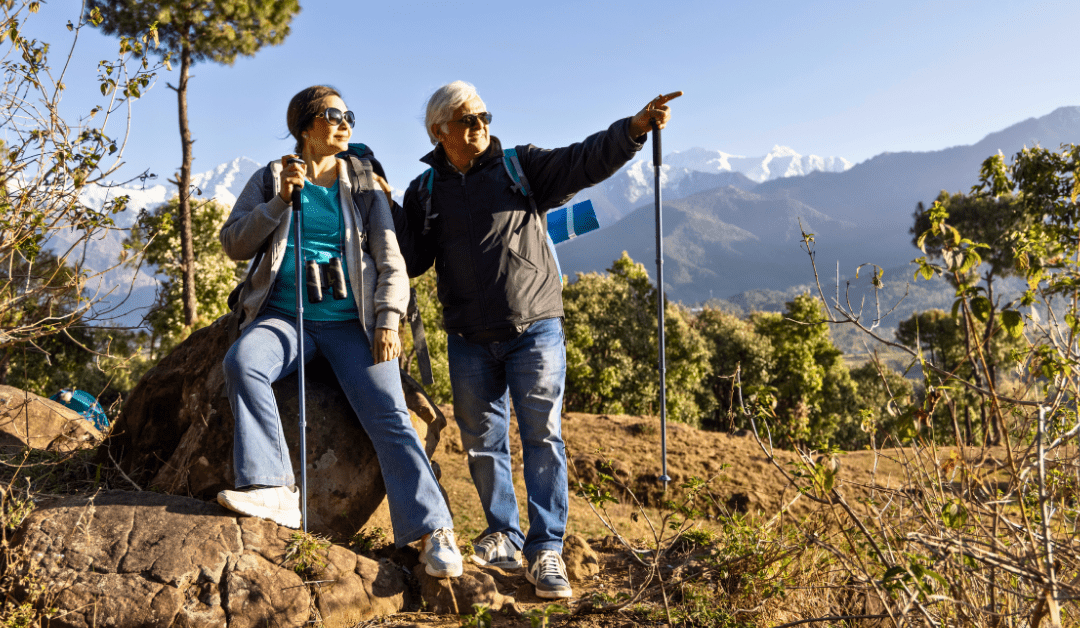
You don’t need to wonder whether you are slowing anyone down. You don’t need to push slightly harder than feels right just to reassure yourself that you belong there.
For many guests, this is where a familiar question quietly disappears:
Am I too slow for guided hikes?
Usually, it was never about pace in the first place. It was about structure.
If that question has ever come up for you, Am I Too Slow for Guided Hikes? explores why it happens and why it so often has less to do with ability than people assume.
BREAKS ACTUALLY FEEL LIKE "BREAKS"
This is another place where the feel of the day changes.
On many hikes, breaks are brief and functional. You stop because you have to. You stand because sitting feels like too much trouble. You listen, adjust a strap, take a quick drink, and keep going.
On a private day, breaks are not interruptions to the experience. They are part of it.
You sit on a rock warmed by early sun, or on a log just off the trail where the wind drops. A thermos opens. Tea is poured. Packs rest on the ground instead of hanging from shoulders. No one is watching the break as a delay.
You are not borrowing a few minutes from the day.
The break belongs to the day.
Layers are adjusted before you feel chilled. Water is prompted before dryness turns into depletion. Small practical questions—bathroom breaks, comfort, whether to add a layer now or later—are handled early enough that they never become awkward or stressful.
You are not left guessing when the next pause will come, or whether asking for one would change the tone of the day.
Nothing is rushed. Nothing important is left unnamed.
THE DAY ADJUSTS WITHOUT FEELING ADJUSTED
Mountain days rarely stay exactly as imagined.
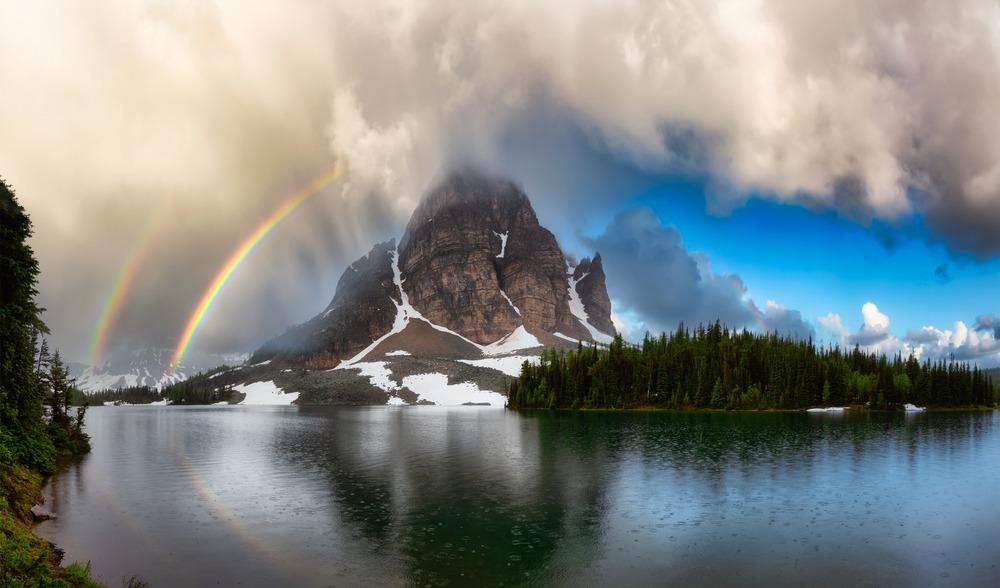
Light changes. Wind moves differently across open ground. Clouds begin to organize themselves. The trail becomes busier than expected. A section of terrain asks a little more of the body than it seemed likely to on paper.
On a well-guided day, these things are noticed before they become issues.
A slightly slower section appears.
A longer seated break happens in shelter rather than in exposure.
A route choice shifts a little.
A high point is interpreted differently.
The day turns, almost without announcing that it has turned.
What most guests feel is not management.
They feel continuity.
The day still feels like itself. It still feels coherent. Nothing has become tense. Nothing has narrowed.
That is often what experienced guides are watching continuously: the patterns that shape how a day will feel an hour from now, not just what is obvious in the moment. I describe that more fully in What Hiking Guides Notice in the Canadian Rockies.
YOU NOTICE MORE BECAUSE YOU’RE NOT MANAGING THE DAY
As the day settles, attention changes.
At first, many people are still tracking themselves a little:
How does this pace feel?
How much climbing is left?
Am I doing fine?
Should I say something if I need to stop?
But when the structure holds, that self-monitoring begins to soften.
And when it softens, the landscape comes forward.
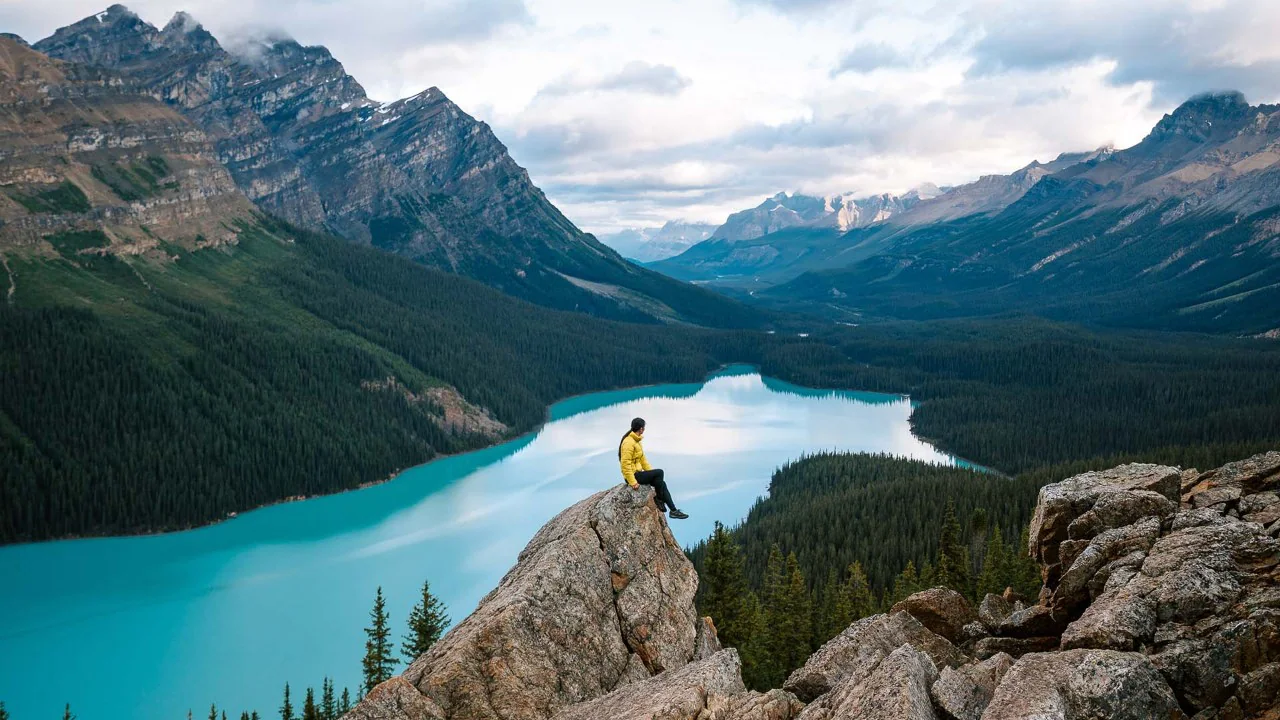
You notice how light moves across a slope differently than it did an hour earlier. You begin to see the grain of the rock underfoot instead of only the effort required to cross it. Wind through subalpine trees becomes something you hear rather than something you brace against. The trail stops feeling like a task and starts feeling like a place.
Interpretation can be part of that if you want it.
The story of glacial valleys.
Why one slope carries different vegetation than another.
How weather shapes access, colour, and movement through these mountains.
Where wildlife is more likely to move, and why.
Or the day can remain quieter.
There is no script to follow. No performance of information. The experience opens based on your interest and what the landscape is offering in that moment.
The day begins to feel less like something you have to get through and more like something you are fully inside.
ENERGY LASTS THROUGH THE RETURN
The return is where many mountain days reveal whether they were well designed.
This is often when earlier choices begin to show themselves.
If the first climb was pushed too hard, it shows here.
If hydration was delayed, it shows here.
If breaks were too few or too short, it shows here.
If the pace belonged to the itinerary instead of the body, it shows here.
On a well-paced private day, the return feels different.
Not effortless.
Not weightless.
But still coherent.
There is still enough energy for footing. Enough attention for descent. Enough ease that the last part of the trail feels like the completion of the day, not the part you have to endure to be done.
And this is often the moment something becomes clear.
It wasn’t fitness.
It wasn’t the trail alone.
It was how the day was structured from the beginning.
Many guests finish the day feeling not only satisfied, but still fully present for the rest of their evening. Not wrung out. Not vaguely overdone. Just complete.
WHAT THIS MEANS FOR YOU
If you have ever wondered:
Am I fit enough?
Am I too slow?
Will I keep up?
Will the day feel rushed?
Will I spend the whole time trying not to be a problem?
Those questions usually do not come from lack of ability.
They come from past experiences where the structure of the day did not fit the person inside it.
A private guided day is built differently.
Not easier.
Not smaller.
Not slower for the sake of slowness.
But more aligned.
If you are unsure what “fit enough” really means in mountain terrain, Am I Fit Enough to Hike in Banff? offers a clearer way to think about it.
For the right person, the difference in a private day is often felt almost immediately: less pressure, less self-monitoring, more steadiness, and a stronger sense that the day actually fits.
If you’re deciding whether to choose a guided day in the first place, this page walks through that clearly:
→ Do You Need a Hiking Guide in Banff
A SIMPLE NEXT STEP
If this sounds like the kind of day you have been hoping for, the next step is not choosing a hike.
It is understanding how a private day is structured and whether it feels like the right fit for you.
You can learn more about how these days are designed here:
→ Private Guided Hiking in the Canadian Rockies
Or, if you prefer, we can begin with a simple conversation.
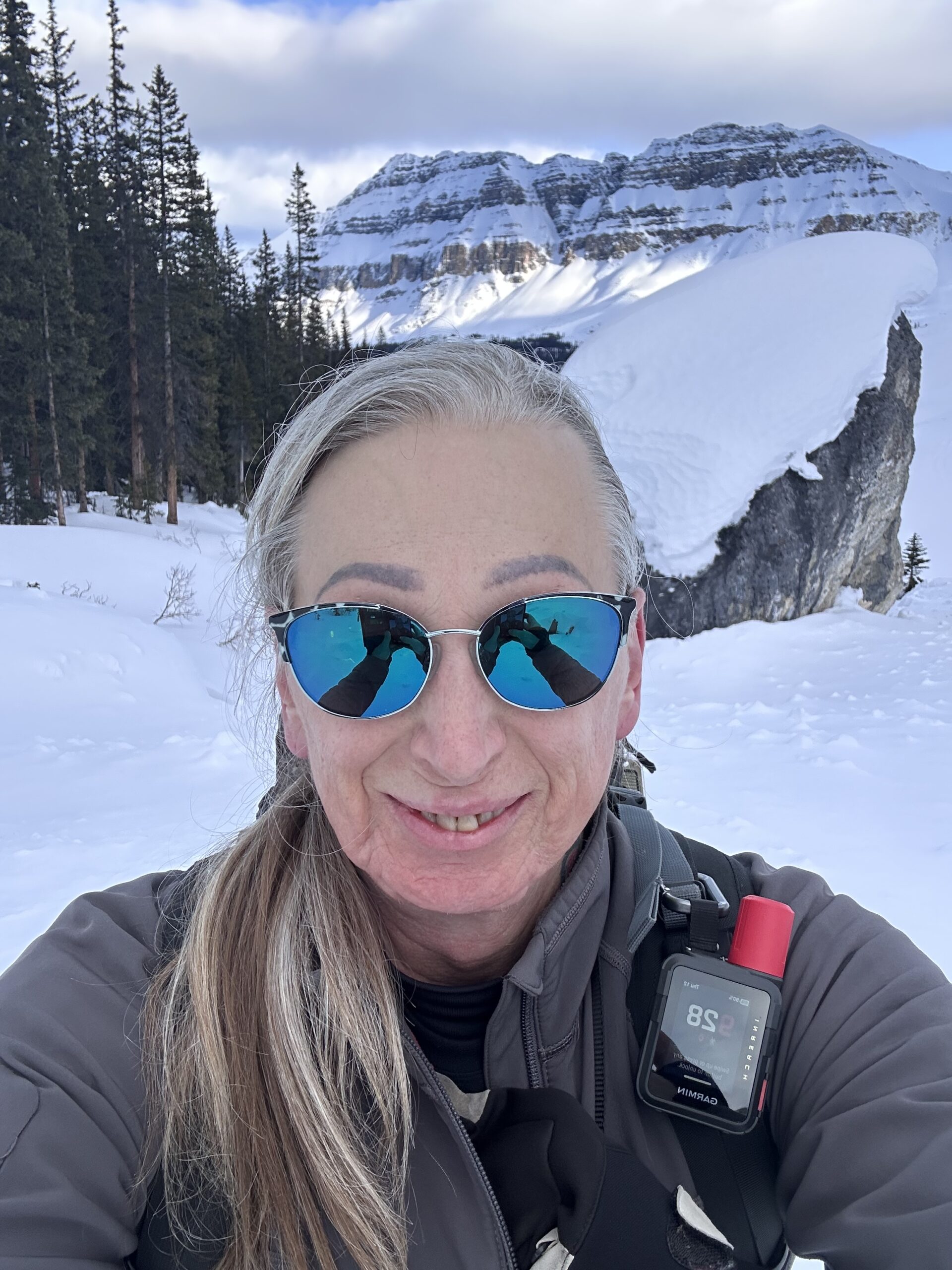
Certified private hiking guide and professional interpretive practitioner based in the Canadian Rockies. With over 25 years of four-season mountain experience, she offers thoughtfully paced hiking experiences that help active adults explore mountain landscapes with care, confidence, and understanding. Meet Niki