Choosing the right hike in the Canadian Rockies is not the same as choosing the most famous hike.
It is not simply a matter of picking the trail with the best photos, the highest rating, the most dramatic lake, or the most enthusiastic description online.
For private guided hiking, the question is different.
The question is not, “What is the best hike?”
The better question is:
What is the right hike for these guests, on this day, in these conditions, with this amount of time, energy, confidence, and curiosity?
That is a very different starting point.
A trail can be beautiful and still be wrong for the day. A hike can be famous and still be poorly matched. A route can look moderate on paper and feel very different once elevation, weather, descent, crowds, trail surface, access, and travel fatigue are included.
This is where private guiding begins long before we reach the trailhead.
The work is not only walking with guests. It is choosing well enough that the day has a chance to feel steady, meaningful, and coherent from beginning to end.
If you are wondering what is included in a private guided hiking day, What’s Included in a Private Guided Hiking Day in Banff or Kananaskis? explains the practical structure of the service. This article goes deeper into the judgment behind route choice.
This Is About Route Choice, Not Just Guiding Style
Before going further, it helps to make one distinction clear.
This article is not meant to explain everything about how I guide.
My broader guiding approach includes planning, communication, pacing, interpretation, conservative decision-making, guest care, Leave No Trace, and how the day is held once we are on the trail. If you want that wider picture, How I Guide is the best page to read.
This article is narrower.
It focuses on one specific part of the work:
How the right hike is chosen before the day begins.
That choice matters because the route shapes almost everything that follows. It shapes the pace, the mood, the effort, the timing, the amount of margin, the opportunities for interpretation, and how well the day fits the people having it.
A well-guided day does not begin when we start walking.
It begins with choosing well.
I Start With the People, Not the Trail
The first decision is never the trail.
The first decision is understanding the people who will be walking it.
That includes the obvious things, such as hiking background, general fitness, recent activity, comfort with elevation gain, and how much time guests want to spend on trail. But it also includes the quieter details that often shape the day more than people expect.
How do they usually move? Do they start quickly or settle in gradually? Are they comfortable descending? Are they travelling as a couple with different natural paces? Are they arriving after several busy travel days? Do they want something scenic and steady, or do they want a more physically engaging day? Are they hoping for quiet, interpretation, confidence, spaciousness, challenge, or simply a well-held experience in unfamiliar terrain?
Those details matter.
A hike is not chosen for an abstract visitor.
It is chosen for real people.
That is one of the biggest differences between choosing from a list and choosing with a private guide. A list begins with the trail. Private guiding begins with fit.
For many active adults over 50, this distinction is especially important. The issue is rarely whether someone is capable in a general sense. It is whether the route, pace, timing, and return are matched well enough that the day feels good as a whole.
If fitness or pace is part of the question, Am I Fit Enough to Hike in Banff? and Am I Too Slow for Guided Hikes? are useful companion articles.
The Right Hike Depends on the Kind of Day You Want
Before choosing a hike, I want to understand what kind of day the guest is actually hoping for.
Some people want big scenery. Some want quiet. Some want flowers, wildlife signs, geology, forest, water, alpine views, or a sense of space. Some want to feel physically satisfied. Others want a day that feels calm, restorative, and unhurried.
Those are not the same day.
A hike that is perfect for one guest may be wrong for another, even if both people are fit enough to complete it.
This is why the emotional tone of the day matters.
Do you want the day to feel expansive? Quiet? Interpretive? Confidence-building? Gentle but not dull? Active but not rushed? Scenic without being crowded? Do you want to move steadily, or do you want time to pause and notice?
These are not soft questions. They are practical guiding questions.
They influence the route, the start time, the pace, the number of stops, the terrain, the region, and how much margin we build into the day.
A meaningful hiking day is not only about where you go.
It is about how the day feels while you are inside it.
If you are still deciding whether this kind of supported day is right for you, Is a Private Hiking Guide Worth It If You Can Hike on Your Own? speaks directly to that question.
I Look at the Whole Day, Not Just the Hike
One of the most common mistakes in hiking planning is treating the trail as if it exists by itself.
It does not.
The hike is only one part of the day.
There is also the drive, the trailhead, the parking situation, the start time, the weather pattern, the guests’ travel fatigue, the return, the descent, the next day’s plans, and the overall pace of the trip.
A route may be physically appropriate but still wrong because it requires too much driving. Another may be famous but not worth the access pressure. A shorter hike may actually create a better mountain day because there is more space for interpretation, pacing, and a calm return.
This is especially true in the Canadian Rockies, where Banff, Lake Louise, Kananaskis, the Icefields Parkway, the Bow Valley, and nearby provincial parks all have different access realities.
Choosing well means looking at the whole day.
Not just the destination.
Not just the mileage.
Not just the elevation gain.
The question is whether the entire day works.
If transportation and access are part of your planning, Do You Need a Car for a Private Guided Hike in Banff or Kananaskis? explains how distance, meeting points, trailheads, and drive time shape the experience.
Where You Are Staying Matters
Where you are staying can change what hike makes sense.
A guest staying in Banff may have different options than someone staying in Canmore, Lake Louise, Field, or farther along the Icefields Parkway. A hike that looks reasonable on a map may add too much road time once the whole day is considered. Another hike, closer to where guests are based, may offer a better experience simply because the day has more room to breathe.
This is one reason I do not choose hikes in isolation.
Banff has iconic scenery and well-known trails, but it also has crowd pressure, parking issues, access constraints, and heavy demand around certain places. Kananaskis can offer more space and variety, but it is often more vehicle-dependent and less obvious to first-time visitors. Lake Louise can be spectacular, but timing and access matter. The Icefields Parkway can feel immense and unforgettable, but distance has to be considered honestly.
The right region depends on the guests, the day, and the practical shape of the trip.
Sometimes the best choice is not to drive farther.
Sometimes it is to choose better.
If you are comparing regions, Banff vs Kananaskis for Hiking is a useful supporting article.
Distance Is Not Just a Number
Distance matters, but not in the way many people think.
A hike is not defined only by kilometres.
A short hike can feel demanding if it is steep, exposed, hot, crowded, loose underfoot, or hard on the descent. A longer hike can feel surprisingly comfortable if the grade is steady, the footing is good, the pace is right, and the day has enough margin.
Distance also includes the drive.
A trail that is farther away may be worth it if the conditions and experience justify the travel. But sometimes the added road time changes the feel of the whole day. A hike that would be beautiful in isolation may become less appealing if the drive makes the day feel compressed.
This is where route choice becomes more nuanced than online descriptions allow.
The question is not only, “How long is the hike?”
The better questions are:
How does the distance unfold?
How much of the effort is in the climb?
What will the descent feel like?
How much driving comes before and after?
How much energy should be protected for the return?
Will the day still feel good after the viewpoint?
That is the kind of judgment that helps a private hiking day feel well matched.
For more on pacing and effort, How to Pace a Hike in the Canadian Rockies and Travel Pace After 50 in the Canadian Rockies both connect closely.
The Descent Matters as Much as the Destination
Many people choose hikes by looking at the destination.
A lake. A ridge. A viewpoint. A waterfall. A pass.
That is understandable. Destinations are easy to imagine.
But as a guide, I am also thinking about the return.
The descent often tells the truth about whether a hike was well chosen.
Loose surfaces, steep grades, tired legs, knees, hips, balance, heat, and mental fatigue can all change how the second half of the day feels. A hike that feels exciting on the way up may feel very different if the descent is longer, rougher, or more demanding than expected.
This matters for everyone, but it can matter especially for active adults over 50 who are still strong and capable, yet more thoughtful about recovery, footing, and how the day feels afterward.
A good hiking day should not only work at the destination.
It should work on the way back.
That is one reason the right hike may be less dramatic than the famous hike, but better matched. It may offer enough beauty, enough effort, enough interest, and enough margin that the whole day feels satisfying.
Not just the high point.
If this concern is familiar, Why Easy Hikes in Banff Can Feel Misleading is a useful supporting article.
Weather Can Change the Right Hike
Weather is not a background detail in the Canadian Rockies.
It is part of the decision.
The right hike on a calm, clear morning may not be the right hike on a windy afternoon. A route that feels perfect in cool conditions may feel too exposed in heat. A trail that is reasonable in stable weather may be less appealing if storms are building, smoke is affecting visibility, or wind is stronger at elevation.
I do not choose a hike simply because it was a good idea a week earlier.
The choice has to be alive to the day.
That may mean choosing a lower route, a more sheltered trail, a different aspect, a shorter objective, or a region where conditions look more favourable. It may mean beginning earlier, changing expectations, or choosing a route with better options to adjust.
This is not about being fearful.
It is about paying attention.
A private guided day has more room for this kind of adjustment because the day is not locked into a large group itinerary or a fixed sightseeing circuit. The hike can be shaped around what the mountains are actually doing.
For more on this, How Hiking Guides Read Mountain Weather in the Rockies is the best supporting article.
Crowds and Access Shape the Day Before It Begins
Crowding is not just something that happens once you arrive.
It shapes the decision before the day begins.
Some trails are popular because they are beautiful, accessible, and heavily promoted. That does not make them bad choices. But it does mean timing, access, parking, and atmosphere need to be considered honestly.
A crowded trail may still be worth doing if it fits the guests and the timing is right. But sometimes the better private guided day is found somewhere quieter, less obvious, or simply better matched to the experience the guests want.
This is not about chasing secrecy.
It is about protecting the quality of the day.
If the goal is calm, spaciousness, interpretation, or a sense of presence, a crowded trail may not support that. If the goal is to experience a famous place and the guests understand the trade-offs, then a popular trail may still make sense.
The key is honesty.
Crowds are not just an inconvenience. They change pace, rhythm, sound, timing, parking, and how much space the day has to unfold.
If crowding is part of your planning, Why Popular Hikes in Banff and Lake Louise Feel So Crowded and Scenic Hikes in Banff That Aren’t Overcrowded both support this conversation.
I Consider Margin Before Ambition
One of the most important parts of choosing the right hike is deciding how much margin the day needs.
Margin is the space that allows the day to remain calm when something changes.
It may be extra time, a gentler pace, a route with options, a shorter objective, a more sheltered trail, or simply the decision not to build the day too tightly.
This is where private guiding differs from ordinary trip planning.
It is easy to choose a hike based on what looks impressive.
It is harder, and more professional, to choose a hike that leaves enough room for the day to unfold well.
Margin matters because mountains are dynamic. Guests are human. Weather changes. Energy shifts. Trails feel different than expected. Parking takes longer. A descent asks more than the climb. A beautiful viewpoint invites more time than planned.
If the day has no margin, every small change becomes pressure.
If the day has enough margin, the same changes can be absorbed.
That is often what makes a guided day feel calm.
For a fuller reflection on this, Margin Is What Makes a Day Feel Calm and How Good Guiding Holds Risk Quietly are directly connected.
The Right Hike Should Match the Relationship Between Guests
When two people hike together, the right route needs to fit both of them.
That sounds obvious, but it is often overlooked.
Couples do not always move at the same pace. One person may be more confident. One may prefer more stops. One may be stronger on climbs. One may find descents harder. One may want challenge while the other wants ease. One may be focused on photography, wildlife, or interpretation, while the other is focused on the physical rhythm of the hike.
None of that is a problem.
But it needs to be considered.
In private guiding, the goal is not to average the two people into a generic pace. The goal is to shape a day that lets both guests feel included, respected, and well matched.
That may influence the route, the distance, the terrain, the pace, the break rhythm, and the overall tone of the day.
A good route choice can reduce the subtle tension that sometimes appears when people who love each other move differently in the mountains.
If this is part of your trip, Private Hiking in Banff for Couples Who Move at Different Paces is the most relevant supporting article.
Interpretation Is Part of the Route Choice
Interpretation is not something added after the hike is chosen.
It is part of choosing the hike.
Different trails invite different kinds of attention. Some are rich in geology. Some reveal plant communities, fire history, wildlife movement, glacial shaping, human pressure, or the way tourism changes a place over time. Some offer space for quiet reflection. Some are better for conversation. Some are better for noticing details slowly.
If guests are curious about ecology, wildlife, landforms, or the story of the landscape, that can influence the route.
A meaningful hiking day is not always the one with the biggest view.
Sometimes it is the one that helps guests see more clearly.
This is one of the ways private guided hiking can differ from simply following a trail description. The route is not only a physical path. It is an interpretive opportunity.
The landscape becomes more than scenery.
It becomes a place with relationships, patterns, pressures, and meaning.
If this side of hiking interests you, What Hiking Guides Notice in the Canadian Rockies and Wildlife Corridors in the Bow Valley and Tourism Pressure are useful companion reads.
Sometimes the Best Decision Is the Hike We Do Not Choose
Good guiding is not only about choosing where to go.
It is also about knowing what not to choose.
Sometimes the hike guests first imagine is not the one that will serve them best. It may be too crowded, too long for the available time, too exposed for the forecast, too far from where they are staying, too demanding on descent, or too fixed in their imagination because of online photos.
That does not mean the hike is bad.
It means it may not be right for this day.
This is one of the hardest things for online planning to resolve. The internet is excellent at making hikes look desirable. It is less helpful at deciding whether they are appropriate.
A private guide can help hold that distinction.
The point is not to remove ambition or make the day smaller.
The point is to choose with enough honesty that the experience has a better chance of feeling good from beginning to end.
Sometimes the best-guided decision is quiet.
It is the route not chosen.
The later start avoided.
The extra driving declined.
The famous trail set aside.
The gentler option chosen because it gives the day more space.
Those choices are part of the craft.
Private Guiding Makes Route Choice More Responsive
A private guided hiking day allows route choice to be more responsive than a group tour or fixed itinerary.
With one or two guests, decisions can be made around the people who are actually there. The pace can adjust. The objective can shift. The day can respond to weather, energy, interest, and trail conditions.
That does not mean the day is vague or unplanned.
It means the plan is intelligent enough to adapt.
This is one of the main reasons private guided hiking works well for guests who want support without feeling controlled. The day has structure, but it also has room. There is a plan, but not a rigid script.
That is especially important in the Canadian Rockies, where conditions, access, and crowd pressure can change the feel of a day quickly.
A private guided day can remain focused on fit.
Not on group logistics.
Not on a vehicle itinerary.
Not on a list of stops.
The hike, the people, and the conditions stay at the centre.
If you are comparing different kinds of guided experiences, Private vs Group Guided Hikes: Which Is Right After 50? and Private Guided Hiking vs Banff Sightseeing Tours: Which Is Right for You? help clarify the difference.
How This Differs From Choosing From a Trail List
Trail lists are useful.
I write them too.
They help visitors understand the range of possibilities, compare areas, and begin to imagine what kind of hiking might fit their trip.
But a list can only go so far.
A list cannot know how you slept last night, how your knees feel on descent, whether your partner moves at the same pace, how smoke is affecting views, whether the trailhead will be overwhelmed, or whether the route that looked perfect online will feel too exposed in the forecasted heat.
A list can suggest possibilities.
A guide helps choose.
Those are different things.
If you are browsing options, articles such as Best Hikes in Banff for Active Adults, Best Hikes in Lake Louise for Active Adults, and Best Hikes in the Canadian Rockies can be helpful starting points.
But the private guided day itself is chosen more personally.
It begins with the guest, the conditions, and the kind of mountain experience that would actually fit.
What You Are Really Paying For
When you hire a private hiking guide, you are not only paying for someone to walk with you.
You are paying for the judgment that shapes the day before the walking begins.
You are paying for the route that fits better than the one that sounded impressive. You are paying for the start time that protects the experience. You are paying for the pacing that keeps the return in mind. You are paying for the weather call, the crowd adjustment, the quieter option, the descent consideration, and the interpretive thread that helps the landscape become more meaningful.
For capable hikers, this can be the most important part.
The value is not that you cannot hike on your own.
The value is that you do not have to hold every decision alone in unfamiliar terrain.
If you are wrestling with that question, Is a Private Hiking Guide Worth It If You Can Hike on Your Own? speaks directly to it.
What Happens Next
You do not need to know the exact hike before reaching out.
In fact, it is often better if you do not arrive with the day already fixed around one trail.
A better place to begin is with a few practical details: your dates, where you are staying, whether you have transportation, your hiking background, your pace, and the kind of mountain day you are hoping to have.
From there, the route can be chosen more intelligently.
You can explore Private Guided Hiking in Banff, Private Guided Hiking in Kananaskis, or Custom Guided Hiking.
You can also review How It Works, Expectations, and How I Guide to understand the broader guiding approach.
If you are unsure what hike is right for you, that is a good reason to begin a conversation.
Final Thoughts
Choosing the right hike in the Canadian Rockies is not simply a search problem.
It is a judgment problem.
The internet can help you find beautiful trails. It can show you photos, distances, rankings, reviews, and lists. But it cannot fully answer whether a hike is right for you, on this day, in these conditions, with your pace, your comfort, your energy, and your hopes for the experience.
That is where private guiding makes a real difference.
Not by making the day more complicated.
By making it better matched.
The right hike is not always the most famous one. It is not always the longest one, the quietest one, or the easiest one.
The right hike is the one that fits the people, the place, the conditions, and the kind of day that wants to unfold.
That is the work behind a private guided hiking day.
And when it is done well, much of that work feels invisible.
The day simply feels right.
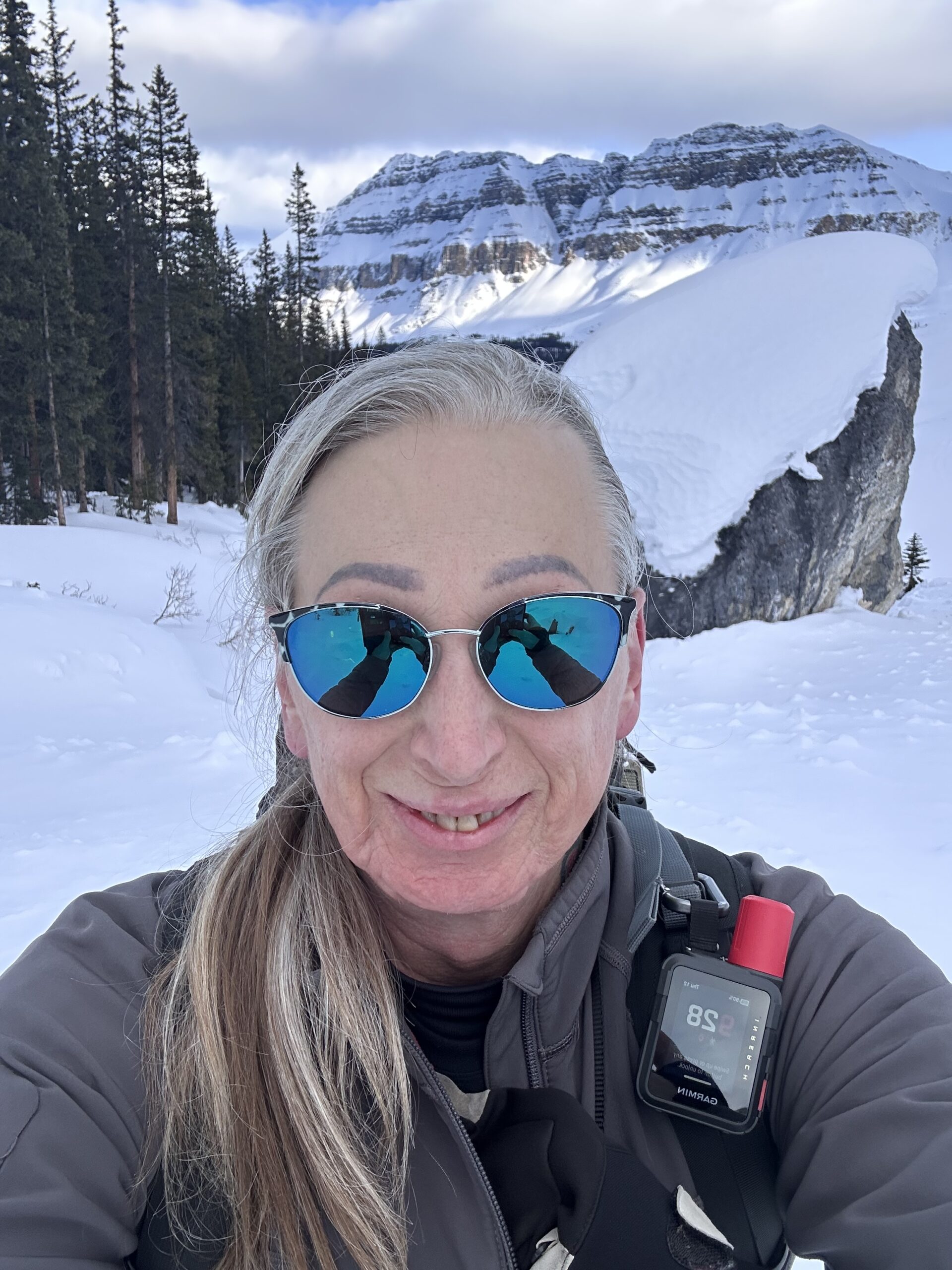
Certified private hiking guide and professional interpretive practitioner based in the Canadian Rockies. With over 25 years of four-season mountain experience, she offers thoughtfully paced hiking experiences that help active adults explore mountain landscapes with care, confidence, and understanding. Meet Niki